A cooler feel today with a wind coming from the north. The dryness continues. Hardly a cloud in the sky and still no rain forecast for several days. Overall butterfly numbers were noticeably down on Wednesday, though Gatekeeper is still the most numerous, just ahead of Chalk Hill Blue, while Meadow Brown numbers seem to be increasing again. A few of each of Ringlet, Common Blue, Small Blue and Small Heath were seen, with 2 Marbled White and single Brimstone, Brown Argus and Speckled Wood (Pararge aegeria). The last-mentioned was a very fresh specimen, probably marking the start of the summer brood of this species.
Three day-flying moths were also seen, Mint Moth (Pyrausta aurata), Jersey Tiger (Euplagia quadripunctaria) and Hummingbird Hawk-moth (Macroglossum stellatarum), the last one a first for the Downs having only seen my first 3 weeks ago in Dorset.
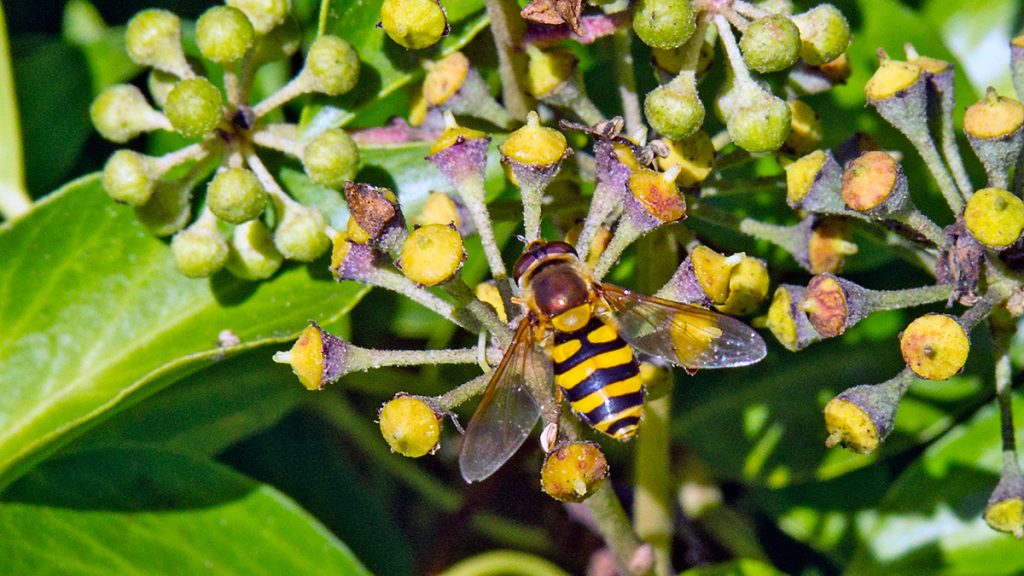
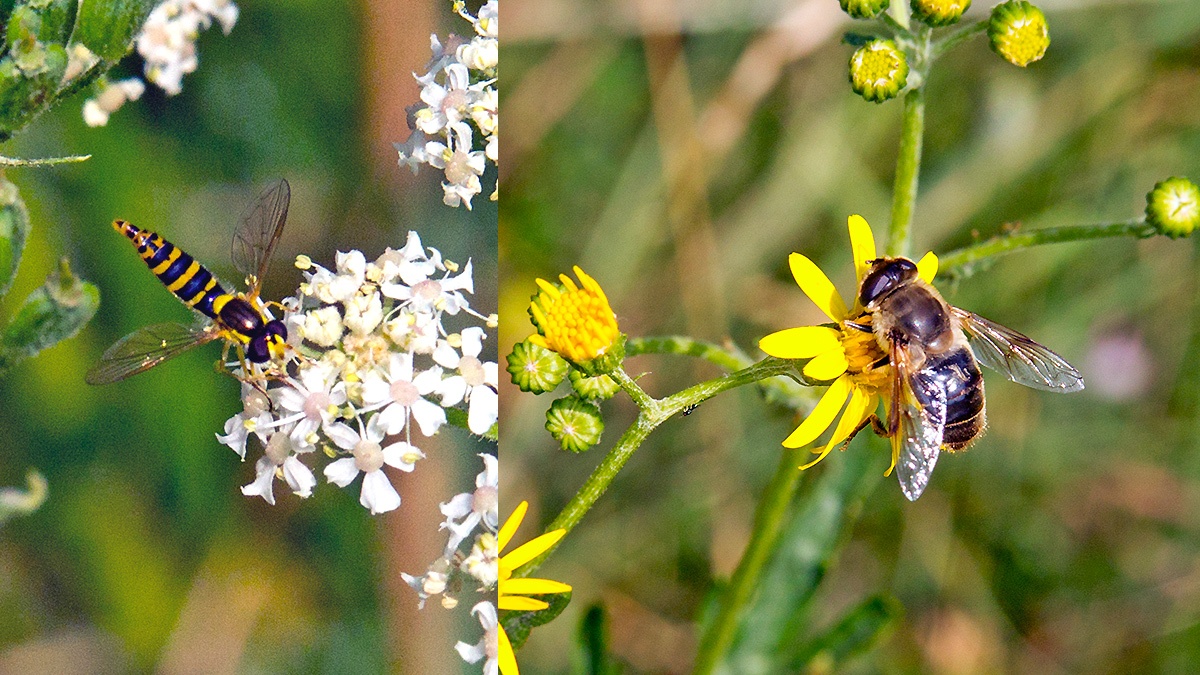
Two female hoverflies were seen feeding, a Long Hoverfly (Sphaerophoria scripta) on Common Hogweed and a Common Drone Fly (Eristalis tenax) on Common Ragwort.
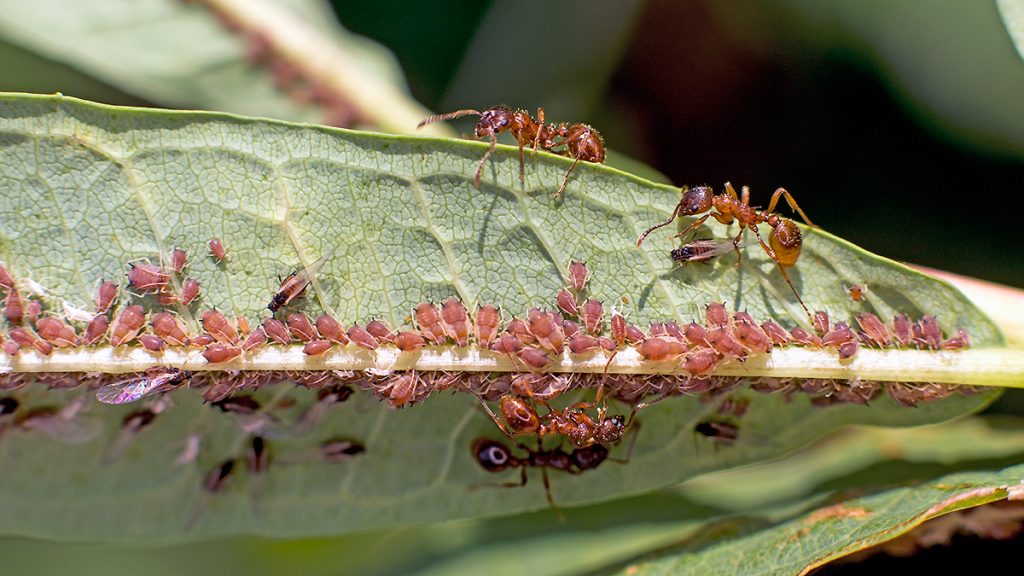
I first recorded the Dogwood – Rosebay Willowherb Aphid (Aphis salicariae) on leaves of a Rosebay Willowherb just 3 days ago. Today I found a second plant with these aphids on several leaves, all of which had Common Red Ant (Myrmica rubra) in attendance. The ants ‘farm’ the aphids, keeping them safe from predatory species such as hoverfly and ladybird larvae, in return for the sweet honeydew which the aphids excrete as a waste product of eating the sap of the willowherb leaves.
![Speckled Wood [Pararge aegeria]](https://downsdiary.uk/wp-content/gallery/jul_2026/NG9_1123_EOS-1D_TheDowns_18Jul2026.jpg "Speckled Wood [Pararge aegeria]")
![Mint Moth [Pyrausta aurata]](https://downsdiary.uk/wp-content/gallery/lepidoptera-3-moths/NG7_4089_EOS-1D_BansteadDowns_03Aug2021.jpg "Mint Moth [Pyrausta aurata]")
![Jersey Tiger [Euplagia quadripunctaria quadripunctaria]](https://downsdiary.uk/wp-content/gallery/aug_2025/NG8_2868_EOS-1D_TheDowns_02Aug2025.jpg "Jersey Tiger [Euplagia quadripunctaria quadripunctaria]")
![Hummingbird Hawk-moth [Macroglossum stellatarum]](https://downsdiary.uk/wp-content/gallery/jul_2026/NG9_1114_EOS-1D_TheDowns_18Jul2026.jpg "Hummingbird Hawk-moth [Macroglossum stellatarum]")
![Dogwood - Rosebay Willowherb Aphid [Aphis salicariae]](https://downsdiary.uk/wp-content/gallery/jul_2026/BD2_6159_7D_TheDowns_18Jul2026.jpg "Dogwood - Rosebay Willowherb Aphid [Aphis salicariae]")
A Domestic Plum (Prunus domestica) tree has many fruit that are already quite ripe but covered with varying amounts of droplets of a translucent, amber-coloured sap, a substance called cerasin. This gelatinous sap is exuded as a defence mechanism when the tissue of the fruit is pierced or damaged. The presence of the sap is accompanied in some plums by premature shrivelling. The most likely cause of this is boring by a larva of the Plum Moth (Grapholita funebrana), but could also be due to piercing by wasps or pecking by birds. The fruit in my image also shows numerous pale spots, an early signs of a fungal infection.
![Common Plum [Prunus domestica]](https://downsdiary.uk/wp-content/gallery/jul_2026/NG9_1076_EOS-1D_TheDowns_18Jul2026.jpg "Common Plum [Prunus domestica]")
<<<< Previous page | Next Page >>>>