A cloudless, warm morning, with weather forecasters predicting the hottest day of the year so far. The insect population of the Downs has responded.
The first Brimstone (Gonepteryx rhamni) butterfly appeared during the warm spell in the last week of February and for a few days the weather coaxed a few more out of hibernation, but this was short-lived and no more were seen until today. It seems that all the hibernating Brimstone got the e-mail announcing the arrival of spring and there were dozens, if not hundreds, all over the Downs this morning. A single Comma (Polygonia c-album) was also seen, a very worn-looking specimen. Either it overwintered in this state or has been around for few weeks already. Brimstone and Comma are two of the five main butterfly species that overwinter as adults in the UK. The other three are Small Tortoiseshell (noted on 5th March), Peacock and Red Admiral.
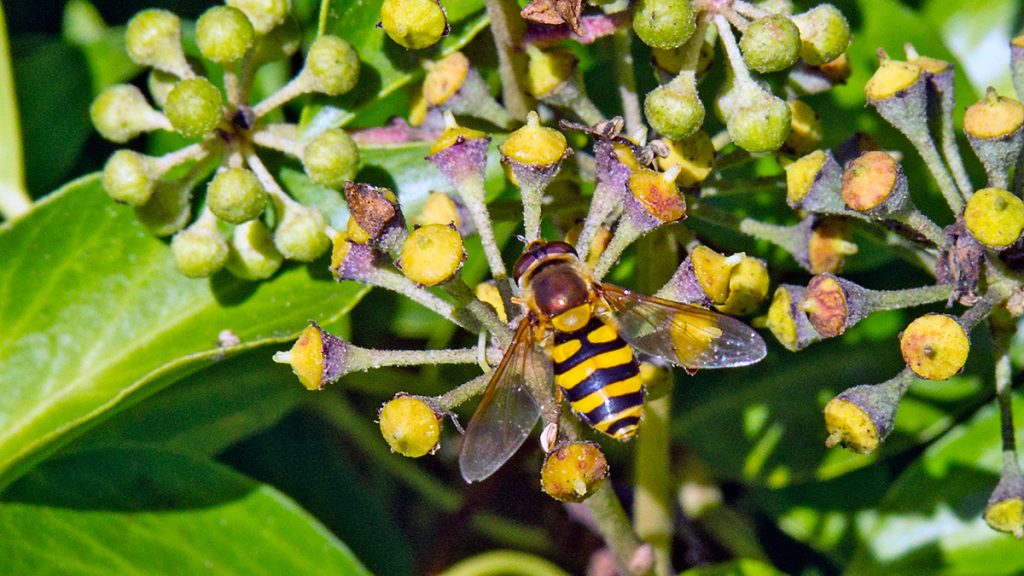
Many other insects were on the wing today in the warm weather, particularly flies. Three that were photographed were two hoverflies, Chequered Hoverfly (Melanostoma scalare) and Parasyrphus punctulatus, and a muscid fly (House Fly family), the Face Fly (Musca autumnalis), so named because it is often seen in large numbers on the face of cows.
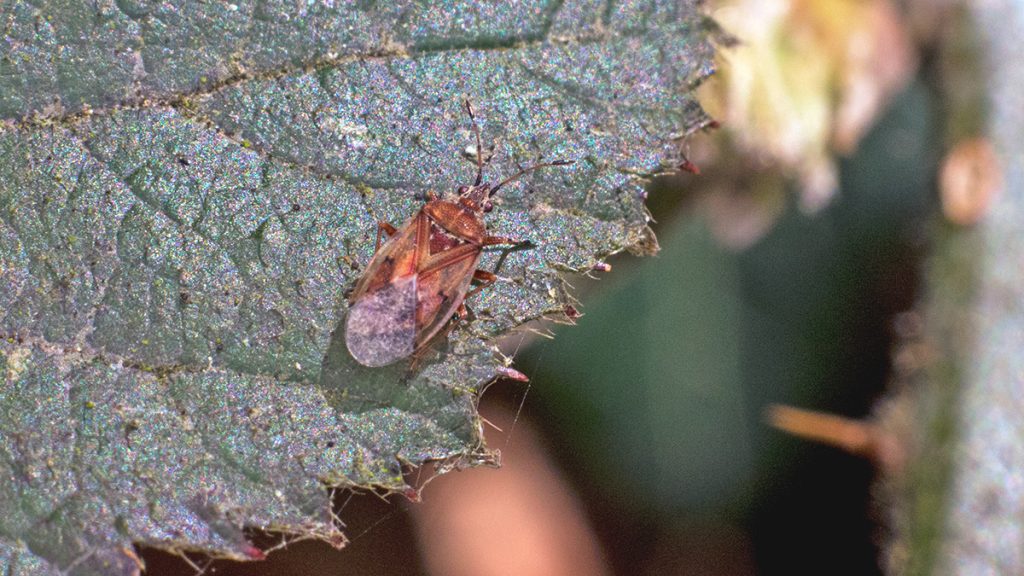
A bug encountered regularly during the winter in their overwintering state, as tight clusters, particularly on sycamore terminal buds was the Birch Catkin Bug (Kleidocerys resedae). Several were found this morning quite active on bramble leaves.
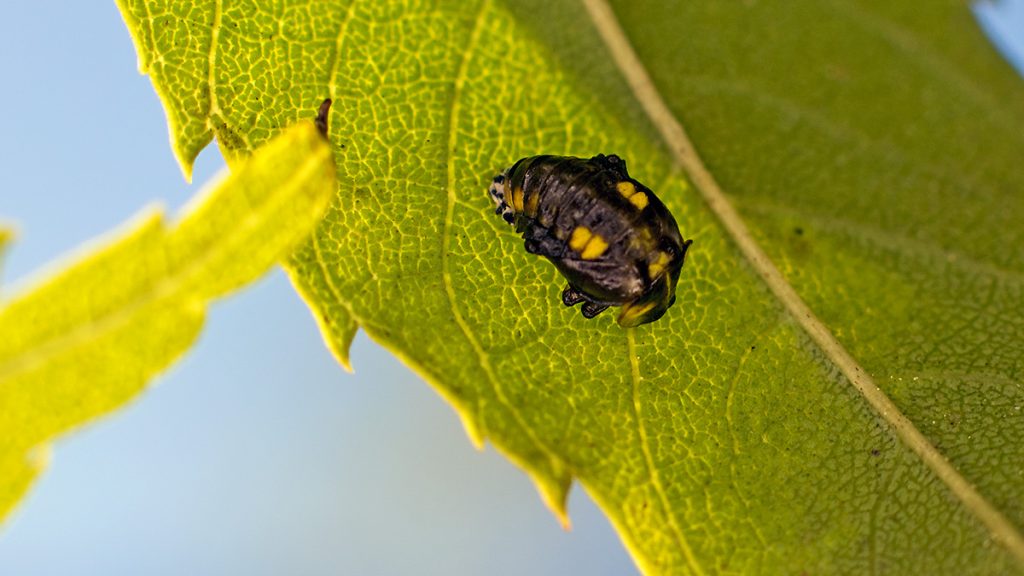
Another insect out in large numbers, especially on celandine flowers and bramble leaves, is the Seven-spot Ladybird (Coccinella septempunctata). The empty cocoon of a Praon species of Braconid parasitic wasp was located on the underside of an ivy leaf. The attached exoskeleton of the parasitised aphid has probably long since fallen off. This cocoon was flanked by two tiny (1mm) globular springtails, probably of the species Dicyrtomina minuta.
Two arachnids were also found under leaves, a Platform Hammock Spider (Neriene peltata) on the underside of an ivy leaf and a pair of mating Castor Bean Tick (Ixodes ricinus).
![Comma [Polygonia c-album]](https://downsdiary.uk/wp-content/gallery/mar_2026/NG8_6231_EOS-1D_TheDowns_18Mar2026.jpg "Comma [Polygonia c-album]")
![Chequered Hoverfly [Melanostoma scalare]](https://downsdiary.uk/wp-content/gallery/mar_2026/BD2_1406_7D_TheDowns_18Mar2026.jpg "Chequered Hoverfly [Melanostoma scalare]")
![hoverfly [Parasyrphus punctulatus]](https://downsdiary.uk/wp-content/gallery/mar_2026/NG8_6240_EOS-1D_TheDowns_18Mar2026.jpg "hoverfly [Parasyrphus punctulatus]")
![Face Fly [Musca autumnalis]](https://downsdiary.uk/wp-content/gallery/mar_2026/BD2_1414_7D_TheDowns_18Mar2026.jpg "Face Fly [Musca autumnalis]")
![Birch Catkin Bug [Kleidocerys resedae]](https://downsdiary.uk/wp-content/gallery/mar_2026/BD2_1468_7D_TheDowns_18Mar2026.jpg "Birch Catkin Bug [Kleidocerys resedae]")
![Seven-spot Ladybird [Coccinella septempunctata]](https://downsdiary.uk/wp-content/gallery/mar_2026/BD2_1427-32_7D_TheDowns_18Mar2026.jpg "Seven-spot Ladybird [Coccinella septempunctata]")
![globular springtail [Dicyrtomina minuta]](https://downsdiary.uk/wp-content/gallery/mar_2026/BD2_1471_7D_TheDowns_18Mar2026.jpg "globular springtail [Dicyrtomina minuta]")
![Platform Hammock Spider [Neriene peltata]](https://downsdiary.uk/wp-content/gallery/mar_2026/BD2_1453-56_7D_TheDowns_18Mar2026.jpg "Platform Hammock Spider [Neriene peltata]")
![Castor Bean Tick [Ixodes ricinus]](https://downsdiary.uk/wp-content/gallery/mar_2026/BD2_1442_7D_TheDowns_18Mar2026.jpg "Castor Bean Tick [Ixodes ricinus]")
As for flowers and trees, Dog’s Mercury (Mercurialis perennis) is starting to flower. Dog’s Mercury is dioecious, so each plant is either male or female. My images are of male flowers. Much more visible than three days ago, Daisy (Bellis perennis) is now springing up all over the grassland areas. Compare these fully open Daisy flowers with the same plant photographed as the flowers first appeared on 15th March.
Horse Chestnut (Aesculus hippocastanum) buds are now beginning to open. Have you ever handled horse chestnut buds and found them sticky to the touch? If not, give it a try, you’ll see what I mean.
Why are horse chestnut buds so sticky?
![Dog's Mercury [Mercurialis perennis]](https://downsdiary.uk/wp-content/gallery/mar_2026/NG8_6242_EOS-1D_TheDowns_18Mar2026.jpg "Dog's Mercury [Mercurialis perennis]")
![Dog's Mercury [Mercurialis perennis]](https://downsdiary.uk/wp-content/gallery/mar_2026/BD2_1421_7D_TheDowns_18Mar2026.jpg "Dog's Mercury [Mercurialis perennis]")
![Common Daisy [Bellis perennis]](https://downsdiary.uk/wp-content/gallery/mar_2026/NG8_6252_EOS-1D_TheDowns_18Mar2026.jpg "Common Daisy [Bellis perennis]")
![Horse Chestnut [Aesculus hippocastanum]](https://downsdiary.uk/wp-content/gallery/mar_2026/NG8_6256_EOS-1D_TheDowns_18Mar2026.jpg "Horse Chestnut [Aesculus hippocastanum]")
<<<< Previous page | Next Page >>>>