Yesterday’s warm weather and sunshine continued today, but while there were still a lot of Brimstone on the wing numbers were well down on yesterday. Like yesterday I added a single Comma, this one, though, in pristine condition, as well as 2 Peacock (Aglais io). That leaves only the Red Admiral of the overwintering butterflies to be seen this spring.
In a crevice in the bark of a tree trunk I came across the eggs of the Vapourer Moth (Orgyia antiqua). The eggs are usually laid in tight a mass on the empty cocoon of the female moth, although that is not apparent in my image. The female Vapourer Moth is flightless and spends her life on the cocoon she spins after pupation. After laying her eggs onto the surface of the cocoon she dies shortly afterwards. These eggs will have overwintered and the moth caterpillars will no doubt hatch very soon.
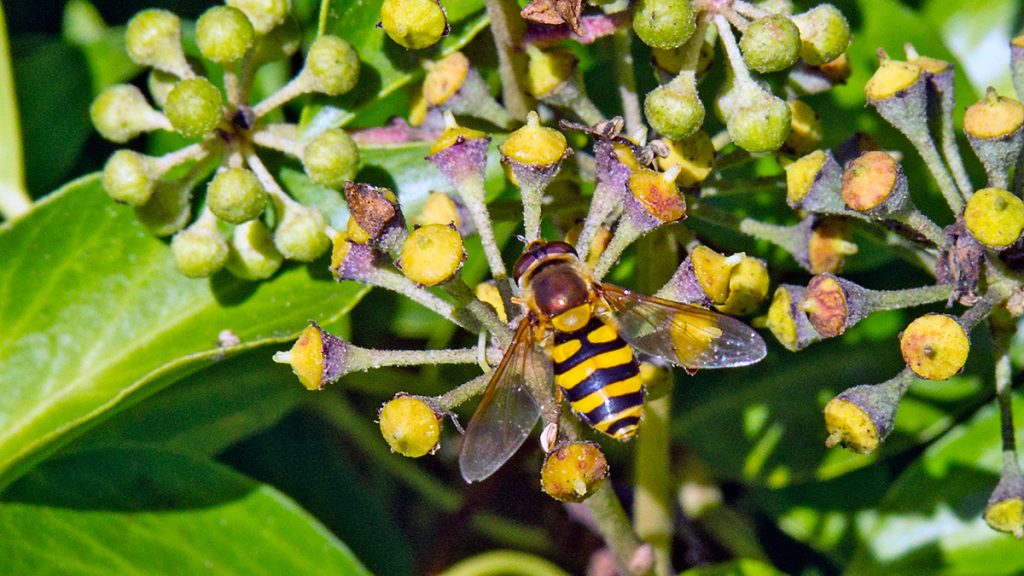
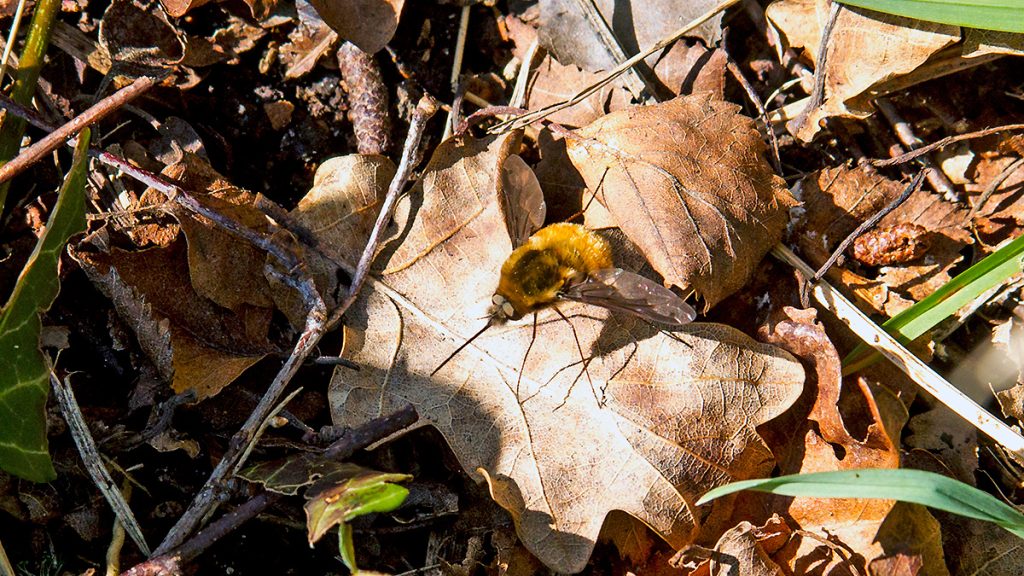
Like yesterday too, there were flies swarming everywhere. I added two more hoverflies with Spring Epistrophe (Epistrophe eligans) and Common Banded Hoverfly (Syrphus ribesii). The male of the latter is almost inseparable from S. vitripennis, so I have opted for the more common of the two on the Downs. Two further flies photographed were Dark-edged Bee-fly (Bombylius major) and Common Bluebottle (Calliphora vicina).
My usual search of the undersides of evergreen leaves produced a tiny comb-footed spider (Theridion varians).
Latest trees/shrubs to start leafing are Common Hazel (Corylus avellana) and Common Dogwood (Cornus sanguinea).
![Peacock [Aglais io]](https://downsdiary.uk/wp-content/gallery/mar_2026/NG8_6296_EOS-1D_TheDowns_19Mar2026.jpg "Peacock [Aglais io]")
![Vapourer Moth [Orgyia antiqua]](https://downsdiary.uk/wp-content/gallery/mar_2026/BD2_1495_7D_TheDowns_19Mar2026.jpg "Vapourer Moth [Orgyia antiqua]")
![Spring Epistrophe [Epistrophe eligans]](https://downsdiary.uk/wp-content/gallery/mar_2026/NG8_6274_EOS-1D_TheDowns_19Mar2026.jpg "Spring Epistrophe [Epistrophe eligans]")
![Common Banded Hoverfly [Syrphus ribesii ?]](https://downsdiary.uk/wp-content/gallery/mar_2026/NG8_6262_EOS-1D_TheDowns_19Mar2026.jpg "Common Banded Hoverfly [Syrphus ribesii ?]")
![Dark-edged Bee-fly [Bombylius major]](https://downsdiary.uk/wp-content/gallery/mar_2026/NG8_6286_EOS-1D_TheDowns_19Mar2026.jpg "Dark-edged Bee-fly [Bombylius major]")
![Common Bluebottle [Calliphora vicina]](https://downsdiary.uk/wp-content/gallery/mar_2026/NG8_6277_EOS-1D_TheDowns_19Mar2026.jpg "Common Bluebottle [Calliphora vicina]")
![comb-footed spider [Theridion varians]](https://downsdiary.uk/wp-content/gallery/mar_2026/BD2_1491_7D_TheDowns_19Mar2026.jpg "comb-footed spider [Theridion varians]")
![Common Hazel [Corylus avellana] and Common Dogwood [Cornus sanguinea]](https://downsdiary.uk/wp-content/gallery/mar_2026/NG8_6258-9_EOS-1D_TheDowns_19Mar2026.jpg "Common Hazel [Corylus avellana] and Common Dogwood [Cornus sanguinea]")
![Common Bluebottle [Calliphora vicina]](https://downsdiary.uk/wp-content/gallery/diptera/NG8_6277_EOS-1D_TheDowns_19Mar2026.jpg "Common Bluebottle [Calliphora vicina]")
Nature Note for the Day
The Dark-edged (a.k.a. Greater) Bee-fly is so-called because with its hairy thorax and abdomen it resembles a bee. It uses this camouflage to get close to and lays its eggs beside the entrance to the nest of a mining bee (genus Andrena). These are solitary bees living in underground nest chambers, often close together giving the impression of a large colony. Once hatched the bee-fly larvae crawl into the bee’s nest and parasitise the mining bee’s larvae, eventually killing them.
The Bee-fly has a fearsome-looking stinger, or does it? No, it’s a long stiff tongue for drinking nectar from flowers.
<<<< Previous page | Next Page >>>>