It may be cold and underfoot conditions are getting somewhat soggy, but there is still much to be seen on the Downs.
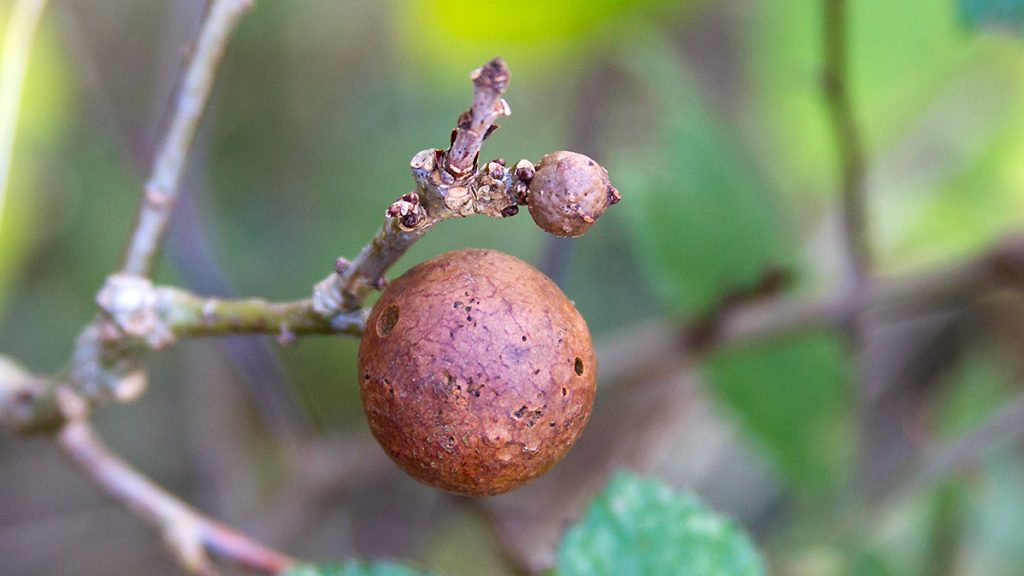
First find of the day on an almost completely defoliated oak sapling (the few remaining leaves confirmed the ID) were Oak Marble Galls. I missed out on seeing any of this type of gall during the summer and found these because of the current sparse foliage. Superficially resembling Oak Apple galls, they are smaller, smoother and more spherical, tending to occur in clusters rather than singly. They are formed by chemical modification of a leaf bud when a female Marble Gall Wasp (Andricus kollari) lays her eggs in the bud, usually in May or June. Each gall eventually contains just a single wasp larva that develops and emerges as an adult wasp in September via the obvious ‘wormhole’ seen in the galls in my images.
![Oak Marble Gall [Andricus kollari]](https://downsdiary.uk/wp-content/gallery/nov_2025/NG8_5281_EOS-1D_TheDowns_25Nov2025.jpg "Oak Marble Gall [Andricus kollari]")
![Oak Marble Gall [Andricus kollari]](https://downsdiary.uk/wp-content/gallery/nov_2025/NG8_5284_EOS-1D_TheDowns_25Nov2025.jpg "Oak Marble Gall [Andricus kollari]")
While searching the trunk, branches and leaves of another oak tree for anything of interest I became aware of a lot of movement above me. A foraging group of at least a dozen Long-tailed Tit (Aegithalos caudatus) were working their way through the tree. As usual I had the wrong lens on the camera for bird photography but managed one shot that I would categorise as a ‘good ID shot’.
![Long-tailed Tit [Aegithalos caudatus]](https://downsdiary.uk/wp-content/gallery/nov_2025/NG8_5314_EOS-1D_TheDowns_25Nov2025.jpg "Long-tailed Tit [Aegithalos caudatus]")
While many of the holly trees and bushes are resplendent with their red berries, I managed to find one with clusters of tight flower buds, which will remain like this throughout the winter and begin opening in late Spring. Look carefully at the image and you notice that each cluster of buds is home to some Birch Catkin Bugs that have chosen this spot to overwinter.
![Holly [Ilex aquifolium]](https://downsdiary.uk/wp-content/gallery/nov_2025/NG8_5288_EOS-1D_TheDowns_25Nov2025.jpg "Holly [Ilex aquifolium]")
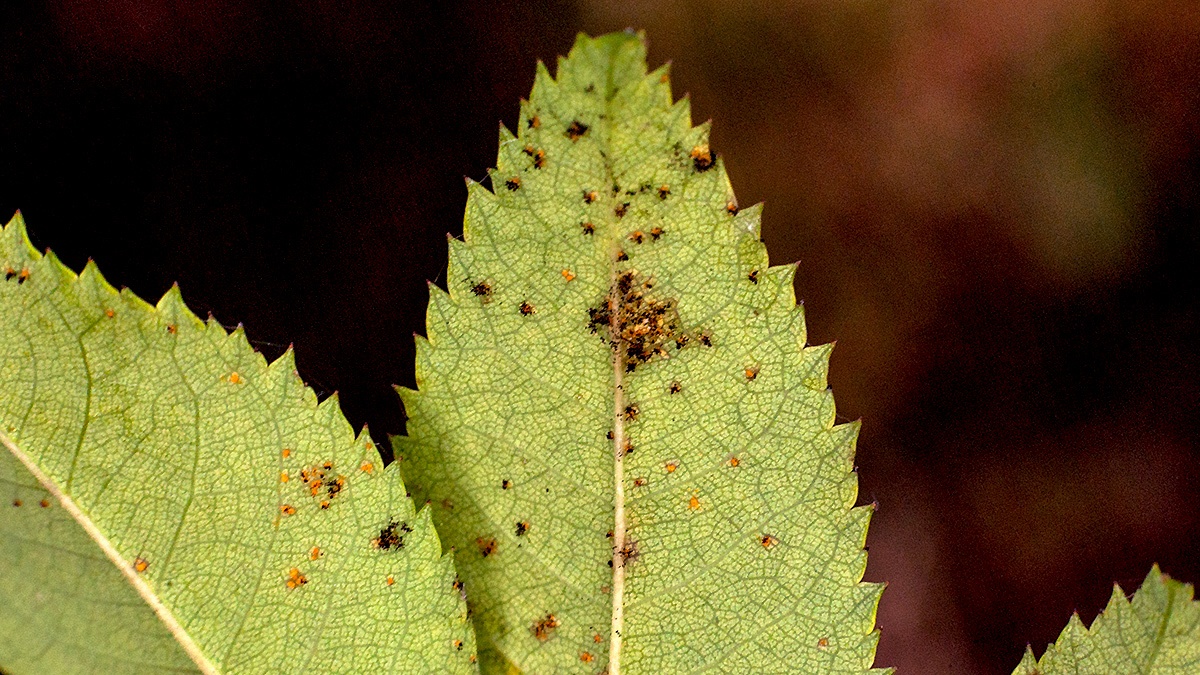
On the fungus front I found some Rose Rust (Phragmidium tuberculatum) on the underside of the leaves of a Dog Rose (Rosa canina). The small orange ‘pustules’ seen in the image may represent one of the development stages in rust fungi, the uredia, the spore-producing structures in rust fungi, with the black areas starting to ring them being the next developmental stage, the telia. The telia are the overwintering form of the fungus.
What I believe to be Hairy Curtain Crust (Stereum hirsutum) was found on an uprooted tree trunk and Birch Polypore (Fomitopsis betulina) on a fallen birch trunk. On another birch trunk I found numerous tiny spots of fungus, which I believe may be Crimped Gill (Plicaturopsis crispa ?). It allowed me to further test my light ring on macro shots. For reference the field width in the posted image is about 20 mm. In another image of this fungus I found something that I had not realised was there when taking the photo, a tiny slender springtail, possibly Entomobrya nicoleti.
![Hairy Curtain Crust [Stereum hirsutum?]](https://downsdiary.uk/wp-content/gallery/nov_2025/JO8V4626_EOS-1D_TheDowns_25Nov2025.jpg "Hairy Curtain Crust [Stereum hirsutum?]")
![Birch Polypore [Fomitopsis betulina]](https://downsdiary.uk/wp-content/gallery/nov_2025/NG8_5296_EOS-1D_TheDowns_25Nov2025.jpg "Birch Polypore [Fomitopsis betulina]")
![Birch Polypore [Fomitopsis betulina]](https://downsdiary.uk/wp-content/gallery/nov_2025/NG8_5300_EOS-1D_TheDowns_25Nov2025.jpg "Birch Polypore [Fomitopsis betulina]")
![Crimped Gill [Plicaturopsis crispa ?]](https://downsdiary.uk/wp-content/gallery/nov_2025/NG8_5306-JO8V4644_EOS-1D_TheDowns_25Nov2025.jpg "Crimped Gill [Plicaturopsis crispa ?]")
![Oak-leaf Pinwheel [Collybiopsis quercophila]](https://downsdiary.uk/wp-content/gallery/nov_2025/NG8_5168_EOS-1D_TheDowns_12Nov2025.jpg "Oak-leaf Pinwheel [Collybiopsis quercophila]")
![slender springtail [Entomobrya nicoleti ?]](https://downsdiary.uk/wp-content/gallery/nov_2025/JO8V4637_EOS-1D_TheDowns_25Nov2025.jpg "slender springtail [Entomobrya nicoleti ?]")
Nature note for the day
The Long-tailed Tit can often be seen at this time of year in mixed foraging flocks with other tits and goldcrests. While superficially resembling the other common tits such as the Blue Tit, Great Tit and Coal Tit, the Long-tailed Tit is not as its name might imply a tit. The name was probably given to reflect that superficial similarity and the way that they move around trees while feeding just like the ‘real tits’. The tits belong to the family Paridae (that –idae ending in taxonomy usually implies family level), but the Long-tailed Tit is a member of the family Aegithalidae, known as the bushtits.
You may still think that they must be closely related. Just remember what ‘family level’ means. Crows, Magpies, Jays and Jackdaws all belong to the crow family Corvidae. Thrushes and Blackbirds belong to the thrush family Turdidae. So, the Long-tailed Tit is no more closely related at family level to the Blue Tit than a Crow or a Blackbird!
<<<< Previous page | Next Page >>>>