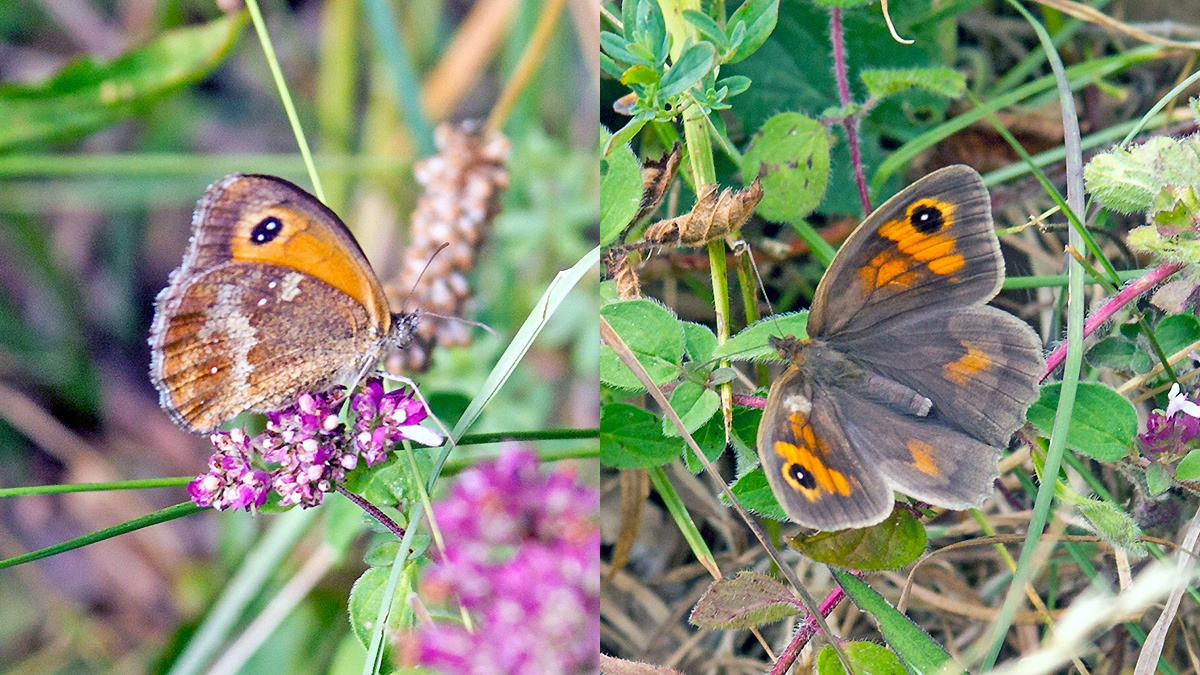
I concentrated today on the small portion of the Downs east of Sutton Lane, so not as representative of the ‘big picture’ as usual. Butterflies were largely restricted to Meadow Brown (Maniola jurtina) and Gatekeeper (Pyronia tithonus), with a few Small and Green-veined Whites.
Jersey Tiger (Euplagia quadripunctaria) was seen yet again. They do seem to be around in much bigger numbers this year than the past few years. Another moth spotted was a Common Grass-moth (Agriphila tristella).
A rather old Buff-tailed Bumblebee (Bombus terrestris) demonstrated how careful one needs to be with ID when colours start to fade, the deep yellow banding now no more than a very pale lemon.
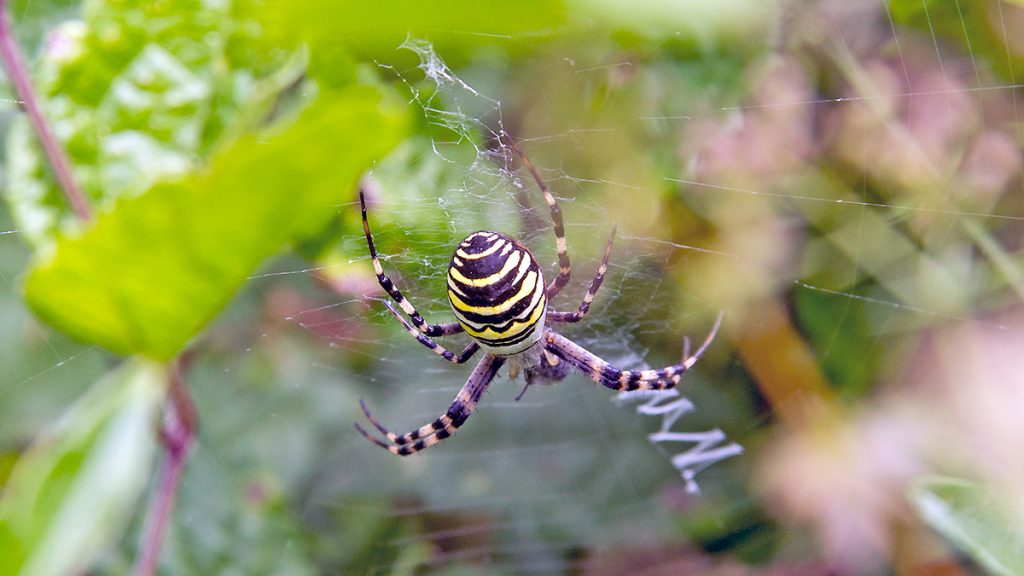
The two best spots of the day were undoubtedly a Rufous Grasshopper (Gomphocerippus rufus) and a female Wasp Spider (Argiope bruennichi). The grasshopper is regarded as ‘nationally scarce’, occurring only in southern England on dry grassland with calcareous soils (i.e. over chalk or limestone). It is easily separated from other common grasshoppers by its clubbed antennae with white tips. The spider is a relatively recent arrival in the UK and is established in southern England but gradually expanding its range northwards.
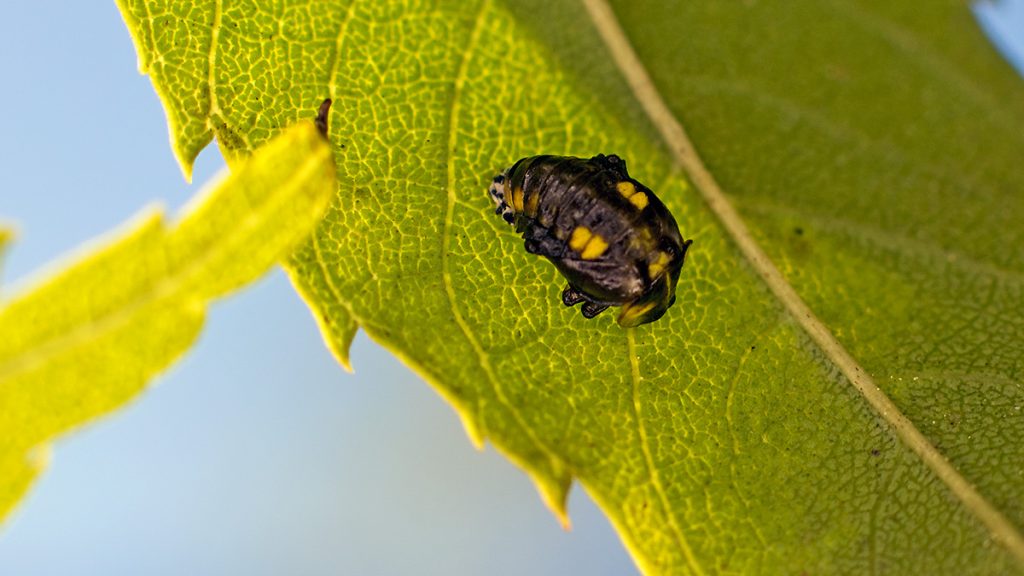
While photographing a Harlequin Ladybird (Harmonia axyridis f. spectabilis) on the stem of a Wild Parsnip I realised that higher up the stem was a colony of aphids. This is probably the reason the ladybird is there, as an adult ladybird can devour 10 – 50 aphids every day and up to 5,000 in its lifetime. The aphids here are, I believe, Willow-umbellifer Aphid (Cavariella pastinacae), although the resolution of the image is not good enough to rule out C. theobaldi, the Willow-parsnip Aphid.
![Jersey Tiger [Euplagia quadripunctaria]](https://downsdiary.uk/wp-content/gallery/jul_2026/NG9_1477_EOS-1D_TheDowns_27Jul2026.jpg "Jersey Tiger [Euplagia quadripunctaria]")
![Common Grass-moth [Agriphila tristella]](https://downsdiary.uk/wp-content/gallery/jul_2026/BD2_6271_7D_TheDowns_27Jul2026.jpg "Common Grass-moth [Agriphila tristella]")
![Buff-tailed Bumblebee [Bombus terrestris]](https://downsdiary.uk/wp-content/gallery/jul_2026/NG9_1456_EOS-1D_TheDowns_27Jul2026.jpg "Buff-tailed Bumblebee [Bombus terrestris]")
![Rufous Grasshopper [Gomphocerippus rufus]](https://downsdiary.uk/wp-content/gallery/jul_2026/NG9_1465_EOS-1D_TheDowns_27Jul2026.jpg "Rufous Grasshopper [Gomphocerippus rufus]")
![Wasp Spider [Argiope bruennichi]](https://downsdiary.uk/wp-content/gallery/jul_2026/NG9_1463_EOS-1D_TheDowns_27Jul2026.jpg "Wasp Spider [Argiope bruennichi]")
![Harlequin Ladybird [Harmonia axyridis f. spectabilis]](https://downsdiary.uk/wp-content/gallery/jul_2026/NG9_1445_EOS-1D_TheDowns_27Jul2026.jpg "Harlequin Ladybird [Harmonia axyridis f. spectabilis]")
![Willow-umbellifer Aphid [Cavariella pastinacae]](https://downsdiary.uk/wp-content/gallery/jul_2026/NG9_1444_EOS-1D_TheDowns_27Jul2026.jpg "Willow-umbellifer Aphid [Cavariella pastinacae]")
Wildflower of the day is Dark Mullein (Verbascum nigrum).
[ P.S. 30 July – I have been told that this may be the first record of Dark Mullein on Banstead Downs ]
![Dark Mullein [Verbascum nigrum]](https://downsdiary.uk/wp-content/gallery/jul_2026/NG9_1459_EOS-1D_TheDowns_27Jul2026.jpg "Dark Mullein [Verbascum nigrum]")
Nature Note for the Day
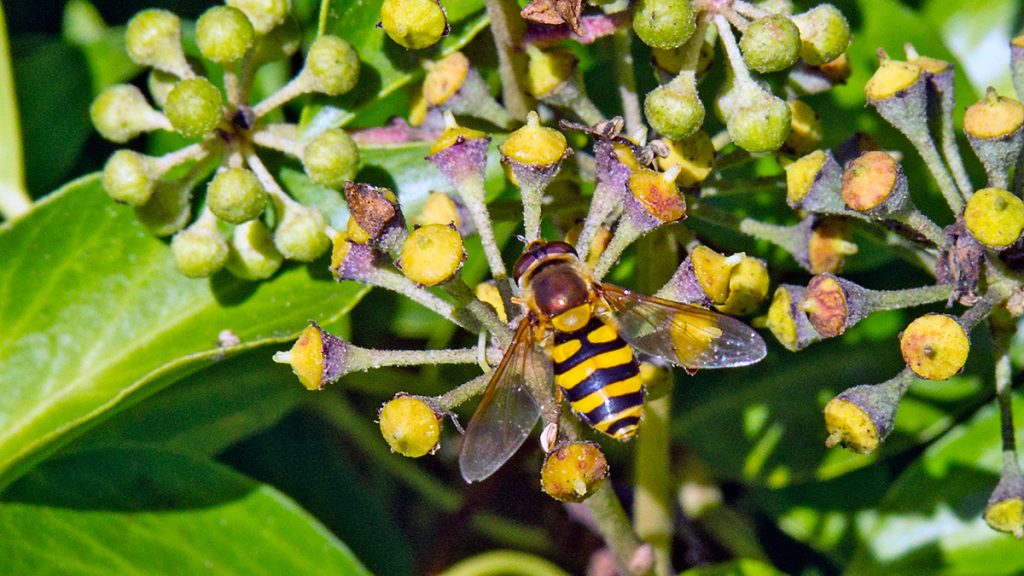
Three of the subjects of my photos today have aposematic colouring – I’ll leave you to work out which.
So, what is aposematic colouring?
It is a natural defence mechanism in which animals use bright, high-contrast colours and patterns, such as red, yellow, black and white stripes or spots, to warn potential predators that they are toxic, venomous, or taste bad. These bright colours advertise the animal’s presence, acting as the exact opposite of camouflage. Another local example with which you will be familiar, and of which I have posted images, is the larva of the Cinnabar Moth, those black and yellow striped caterpillars seen on Common Ragwort flowers. Not only insects use this mechanism. Poison dart frogs from the tropical forests of Central and South America also come in a bewildering array of colours and patterns. The black and white colouring of skunks is yet another example.
What does ‘aposematic’ mean?
It derives from two Greek words, apo, meaning ‘away (from)’ and sema, meaning ‘sign’. So, the literal meaning would be ‘a sign to stay away’, or loosely ‘do not eat me’ or ‘do not touch me’.
![Cinnabar Moth [Tyria jacobaeae]](https://downsdiary.uk/wp-content/gallery/lepidoptera-3-moths/4A_8823_EOS-1D_BansteadCommon_28Jun2015.jpg "Cinnabar Moth [Tyria jacobaeae]")
![Strawberry Poison-dart Frog [Oophaga pumilio]](https://downsdiary.uk/wp-content/gallery/jul_2026/NG8_7132_EOS-1D_OTSLaSelva_07Apr2022.jpg "Strawberry Poison-dart Frog [Oophaga pumilio]")
<<<< Previous page | Next Page >>>>