Meadow Brown is no longer the dominant butterfly species. That honour now goes to Small Copper, with all 8 that I noted being very fresh-looking individuals, whereas the 5 Meadow Brown were worn and faded. Apart from these two I saw 4 Small White, 3 Common Blue, 2 Small Heath and a single Brown Argus (Aricia agestis). So with only a total of 23 butterflies and 6 species we are definitely headed into the last week or so of the flight season.
I finally managed to get a reasonable photo of a Common Grass-moth (Agriphila tristella). I stir up dozens of these out of the grass as I walk along. Usually, they will settle again very quickly but nestled in the grass, with intervening blades of grass making clear views impossible. Those that do settle out in the open are quite skittish, flying again at the least movement. So, to have one that landed out in the open and remained still long enough for me to use manual focus rather than my default ‘auto’ setting, a luxury I don’t usually have, was quite a rarity.
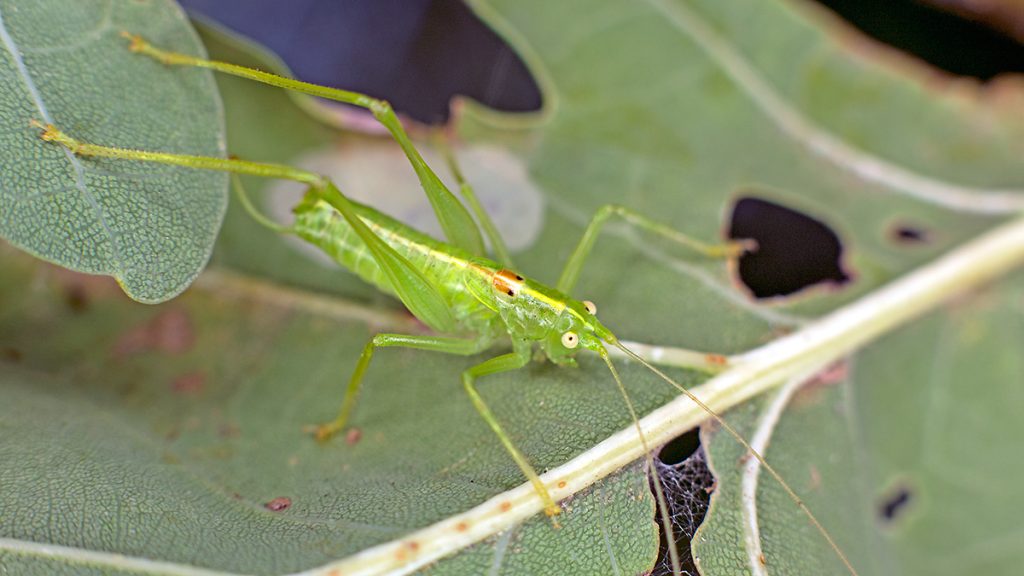
Sighting of the day, a new species for me, was a Southern Oak Bush-cricket (Meconema meridionale), unsurprisingly on an Oak leaf. I have seen the very similar Oak Bush-cricket (M. thalassinum) before. The main difference between the two is that M. meridionale adults have vestigial wings, whereas M. thalassinum adults are fully winged.
Another Oak tree sported a leaf mine formed by the larva of the Shoulder-spot Dot moth (Stigmella basiguttella), which I could hardly miss as it was beautifully backlit at head height.
A late instar nymph of the Green Shieldbug (Palomena prasina) was found on a Sycamore.
One clearing was, rather unusually, swarming with dragonflies. Not a single one paused to rest anywhere that was easy to photograph. I picked out one large Southern Hawker, but the rest were smaller, either blue or yellow/brown, I’m guessing male and female of the same species. Probably commonest and therefore most likely would be Broad-bodied Chaser, but without a photograph I have no way of knowing for sure.
A pair of Common Buzzard were circling the main grassland and surrounding woodland for at least an hour.
![Brown Argus [Aricia agestis]](https://downsdiary.uk/wp-content/gallery/sep_2026/NG9_2109_EOS-1D_TheDowns_01Sep2026.jpg "Brown Argus [Aricia agestis]")
![Common Grass-moth [Agriphila tristella]](https://downsdiary.uk/wp-content/gallery/sep_2026/NG9_2125_EOS-1D_TheDowns_01Sep2026.jpg "Common Grass-moth [Agriphila tristella]")
![Southern Oak Bush-cricket [Meconema meridionale]](https://downsdiary.uk/wp-content/gallery/sep_2026/BD2_6499_7D_TheDowns_01Sep2026.jpg "Southern Oak Bush-cricket [Meconema meridionale]")
![Shoulder-spot Dot moth [Stigmella basiguttella]](https://downsdiary.uk/wp-content/gallery/sep_2026/NG9_2110_EOS-1D_TheDowns_01Sep2026.jpg "Shoulder-spot Dot moth [Stigmella basiguttella]")
![Green Shieldbug [Palomena prasina]](https://downsdiary.uk/wp-content/gallery/sep_2026/NG9_2112_EOS-1D_TheDowns_01Sep2026.jpg "Green Shieldbug [Palomena prasina]")
An appropriate image for today, the first day of meteorological autumn, is of a Black Bryony (Dioscorea communis) vine, sporting yellowed autumnal leaves and bearing clusters of red berries, both of which stand out against the green background of the ivy/hawthorn/dogwood through which it is climbing.
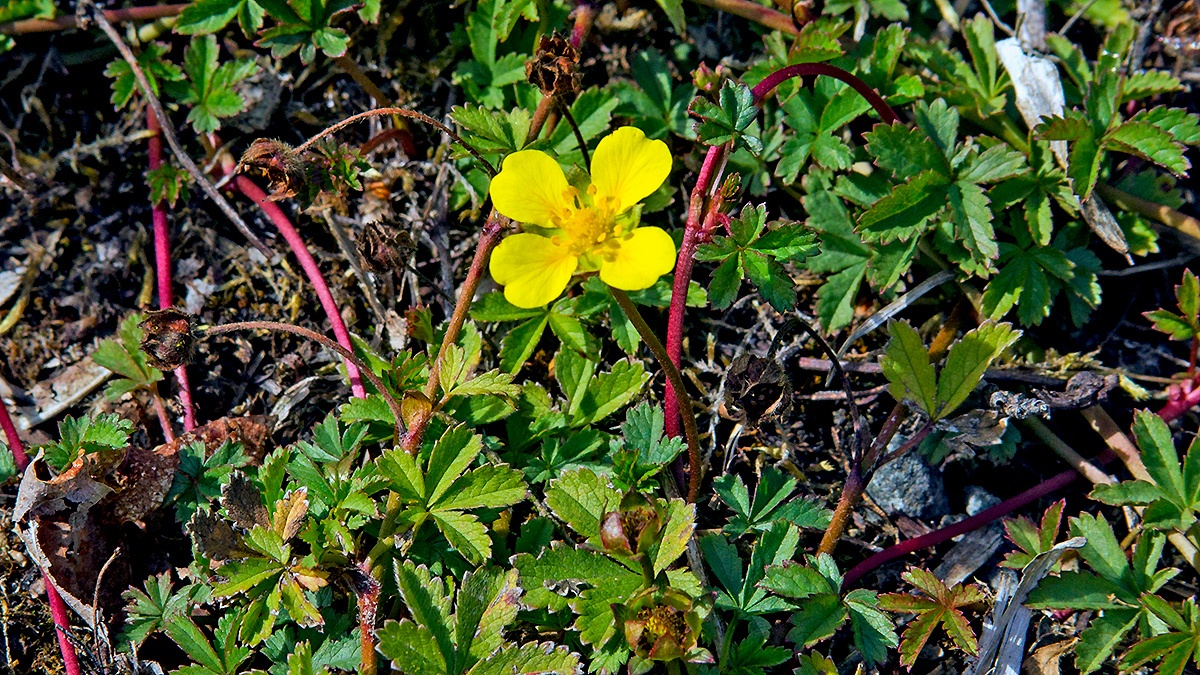
One flower taking advantage of the recent rain to produce new blooms is Creeping Cinquefoil (Potentilla reptans).
![Black Bryony [Dioscorea communis]](https://downsdiary.uk/wp-content/gallery/sep_2026/NG9_2115_EOS-1D_TheDowns_01Sep2026.jpg "Black Bryony [Dioscorea communis]")
![Creeping Cinquefoil [Potentilla reptans]](https://downsdiary.uk/wp-content/gallery/sep_2026/NG9_2119_EOS-1D_TheDowns_01Sep2026.jpg "Creeping Cinquefoil [Potentilla reptans]")
<<<< Previous page | Next Page >>>>