After five days of very unseasonal weather, with gusty winds and intermittent showers (I don’t like being caught in a sudden heavy shower with a camera slung over each shoulder) I decided it was time to get back onto the Downs this morning. However, with overcast, breezy conditions still, there was not too much insect movement.
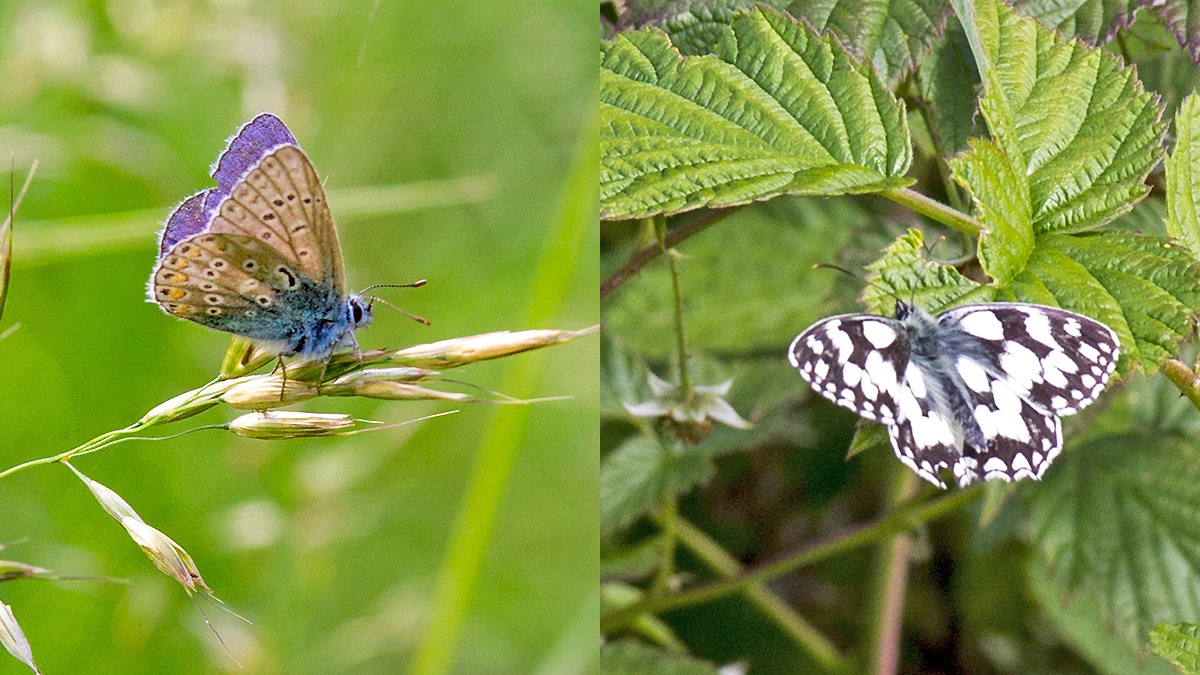
I counted only 10 butterflies, 3 Meadow Brown, 2 Small Heath and 2 Common Blue (Polyommatus icarus). However, I did add a new species to the mix with 3 Marbled White (Melanargia galathea), my first this season.
A Buffish Mining Bee (Andrena nigroaenea) was seen collecting pollen from Common Hogweed (Heracleum sphondylium) flowers. Closer inspection of one of my images revealed the presence close to the bee of a tiny false flower beetle (Anaspis maculata).
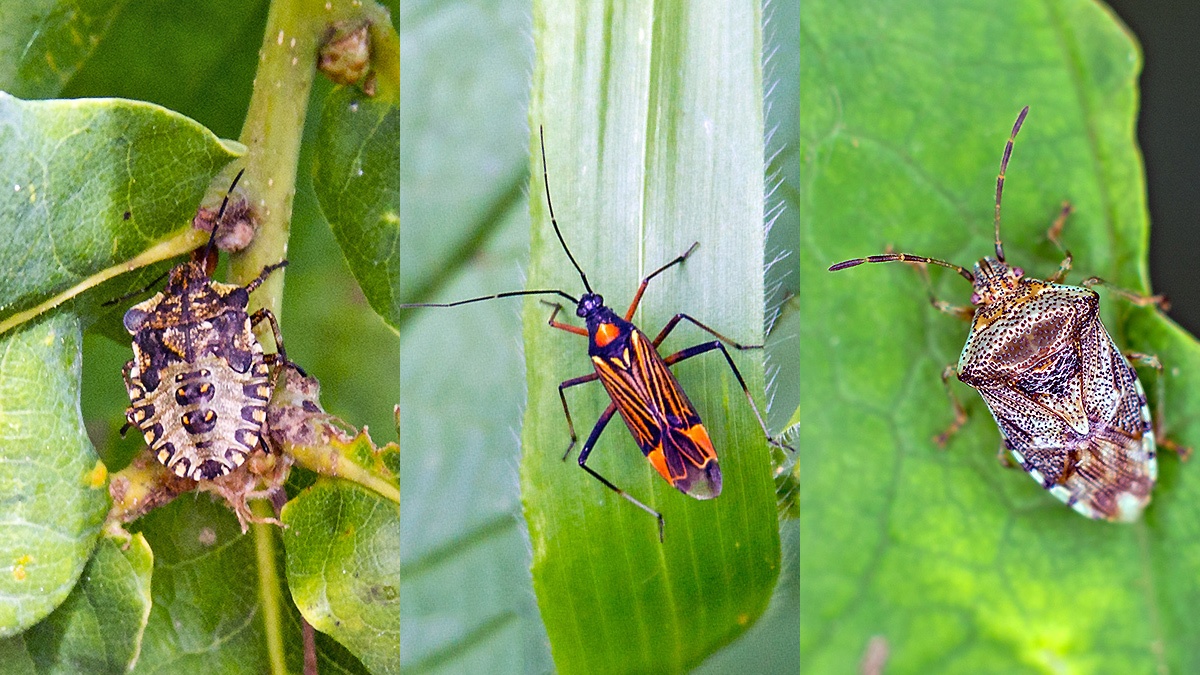
It seems like every Hogweed flower also has a Trivial Plant Bug (Closterotomus trivialis) crawling over it. Other bugs seen were Fine-streaked Bugkin (Miris striatus), Parent Bug (Elasmucha grisea) and Forest Bug (Pentatoma rufipes).
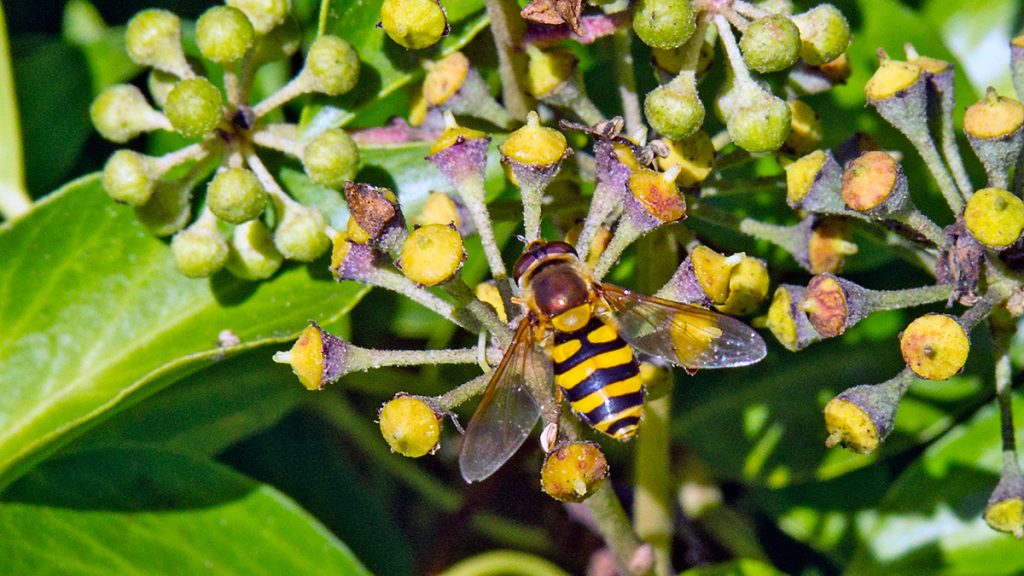
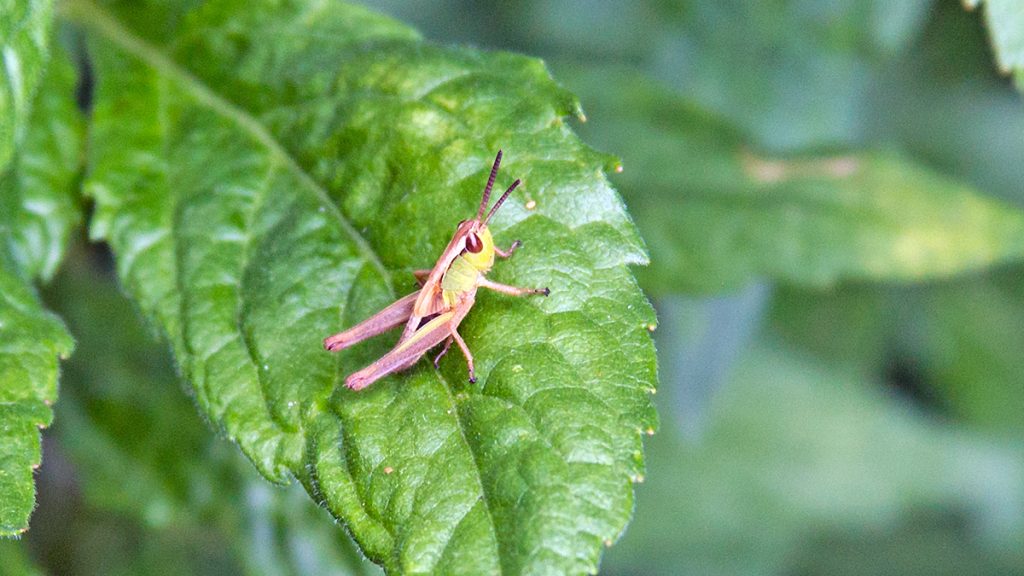
I noted my first Marmalade Hoverfly (Episyrphus balteatus) of the season, some two weeks later than the first seen last year (on 28th May), as well as my first Meadow Grasshopper (Pseudochorthippus parallelus).
I have posted images of several insect species on Garlic Mustard (Alliaria petiolata) in the past few weeks, including Black Bean Aphid, but today it was a different aphid, the Mealy Cabbage Aphid (Brevicoryne brassicae). This is an aphid with a white waxy coat covering it that frequents only members of the Brassicaceae (Cabbage) family. Severe infestations can cause major damage to commercial crops.
A Bedeguar Gall caused by the gall wasp Diplolepis rosae was found on a young Dog Rose (Rosa canina). The gall develops as a chemically induced distortion as a reaction to the female wasp laying eggs in an unopened leaf axillary or terminal bud. Each gall contains one or more chambers in which the grubs emerging from the eggs develop.
Another gall found was the pea gall of the Willow Gall Sawfly (Euura pedunculi) on the underside of a Goat Willow (Salix caprea) leaf.
![Buffish Mining Bee [Andrena nigroaenea]](https://downsdiary.uk/wp-content/gallery/jun_2026/NG8_9434-43_EOS-1D_TheDowns_10Jun2026.jpg "Buffish Mining Bee [Andrena nigroaenea]")
![Marmalade Hoverfly [Episyrphus balteatus]](https://downsdiary.uk/wp-content/gallery/may_2025/IMG_1341_60D_TheDowns_28May2025.jpg "Marmalade Hoverfly [Episyrphus balteatus]")
![Meadow Grasshopper [Pseudochorthippus parallelus]](https://downsdiary.uk/wp-content/gallery/jun_2026/NG8_9422_EOS-1D_TheDowns_10Jun2026.jpg "Meadow Grasshopper [Pseudochorthippus parallelus]")
![Mealy Cabbage Aphid [Brevicoryne brassicae]](https://downsdiary.uk/wp-content/gallery/jun_2026/BD2_5976_7D_TheDowns_10Jun2026.jpg "Mealy Cabbage Aphid [Brevicoryne brassicae]")
![Bedeguar Gall Wasp [Diplolepis rosae]](https://downsdiary.uk/wp-content/gallery/jun_2026/NG8_9467_EOS-1D_TheDowns_10Jun2026.jpg "Bedeguar Gall Wasp [Diplolepis rosae]")
![Willow Gall Sawfly [Euura pedunculi]](https://downsdiary.uk/wp-content/gallery/jun_2026/NG8_9429_EOS-1D_TheDowns_10Jun2026.jpg "Willow Gall Sawfly [Euura pedunculi]")
Some plants recorded for the first time this year were False Oat Grass (Arrhenatherum elatius), Broad-leaved Thyme (Thymus pulegioides) and two of those similar-looking yellow composites, Nipplewort (Lapsana communis) and Rough Hawkbit (Leontodon hispidus).
Some Common Vetch (Vicia sativa) is already bearing mature seed pods.
![False Oat Grass [Arrhenatherum elatius]](https://downsdiary.uk/wp-content/gallery/jun_2026/NG8_9408_EOS-1D_TheDowns_10Jun2026.jpg "False Oat Grass [Arrhenatherum elatius]")
![Broad-leaved Thyme [Thymus pulegioides]](https://downsdiary.uk/wp-content/gallery/jun_2026/NG8_9447-8_EOS-1D_TheDowns_10Jun2026.jpg "Broad-leaved Thyme [Thymus pulegioides]")
![Nipplewort [Lapsana communis]](https://downsdiary.uk/wp-content/gallery/jun_2026/NG8_9430-1-2_EOS-1D_TheDowns_10Jun2026.jpg "Nipplewort [Lapsana communis]")
![Rough Hawkbit [Leontodon hispidus]](https://downsdiary.uk/wp-content/gallery/jun_2026/NG8_9451-2-4_EOS-1D_TheDowns_10Jun2026.jpg "Rough Hawkbit [Leontodon hispidus]")
![Common Vetch [Vicia sativa]](https://downsdiary.uk/wp-content/gallery/jun_2026/NG8_9417_EOS-1D_TheDowns_10Jun2026.jpg "Common Vetch [Vicia sativa]")
<<<< Previous page | Next Page >>>>