Four days since my last excursion onto the Downs, during which time there has been some much-welcomed rain. Hogweed flowers on which I was photographing insects at waist height just those four days ago are now eye-level!
I spotted my first Common Swift (Apus apus) of the summer over the main grassland, at least 4 birds, but quite high up. Last summer’s first sighting was on 7th June, so almost a year ago to the day. It was also on 7th June last year that I recorded my first Barn Swallow (Hirundo rustica) of the summer, so I must keep a lookout for their arrival too.
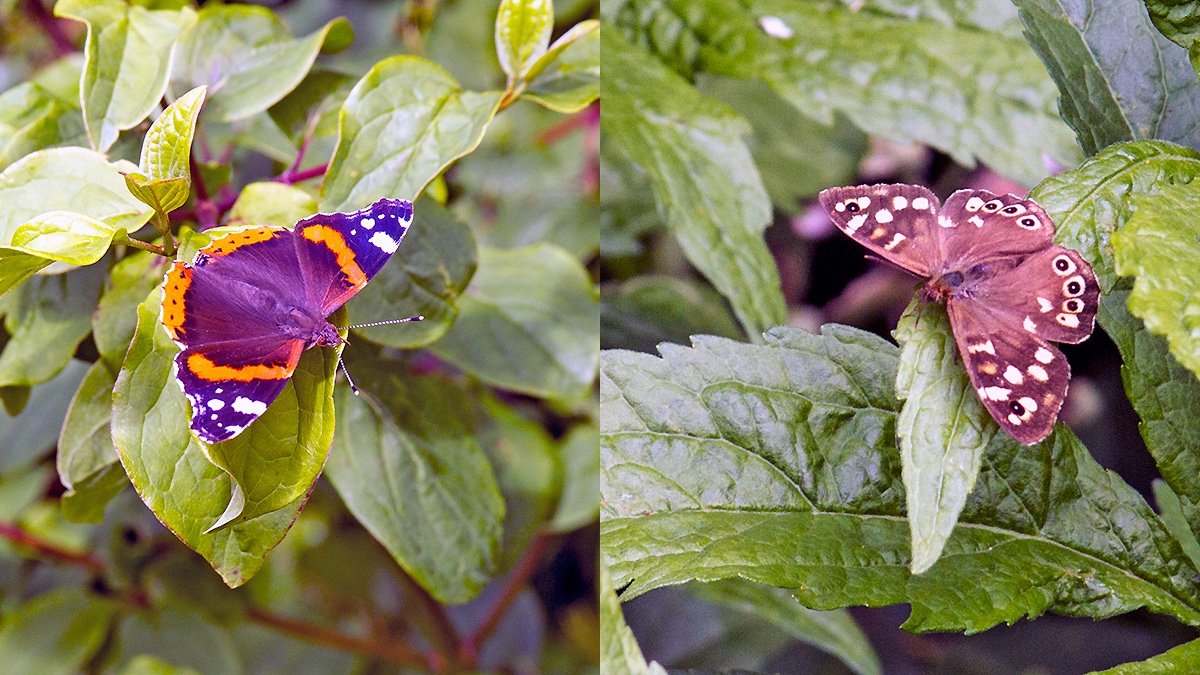
I had set out in sunshine and a light breeze hoping that this might coax out the butterflies, but it soon clouded over and the breeze became interspersed with some quite strong gusts of wind. Total butterfly count was a disappointing 6, comprising 3 Meadow Brown, 2 Speckled Wood (Pararge aegeria) and 1 Red Admiral (Vanessa atalanta).
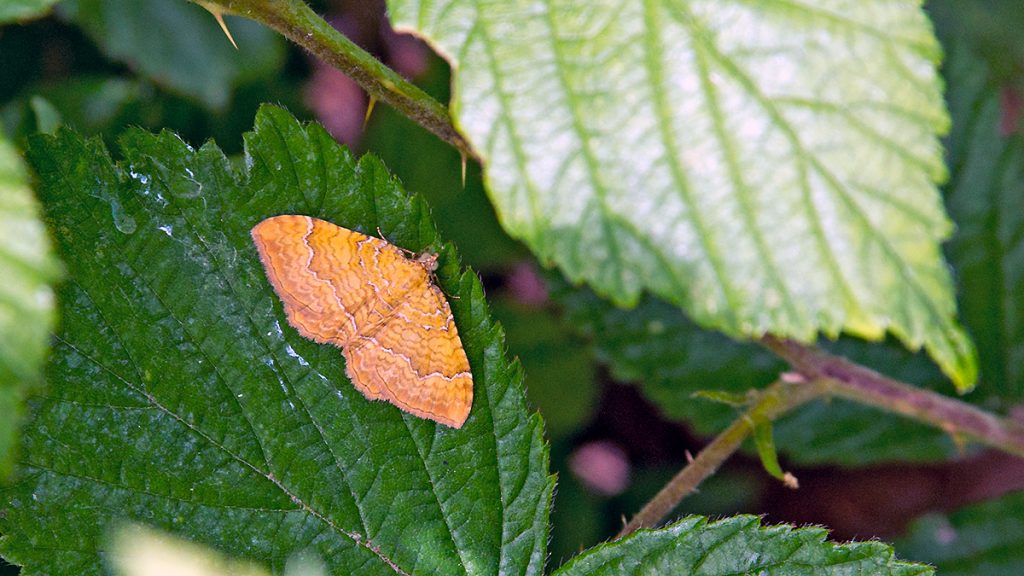
I also found a Yellow Shell (Camptogramma bilineata) moth on brambles (Rubus sp.).
![Yellow Shell [Camptogramma bilineata]](https://downsdiary.uk/wp-content/gallery/jun_2026/NG8_9276_EOS-1D_TheDowns_05Jun2026.jpg "Yellow Shell [Camptogramma bilineata]")
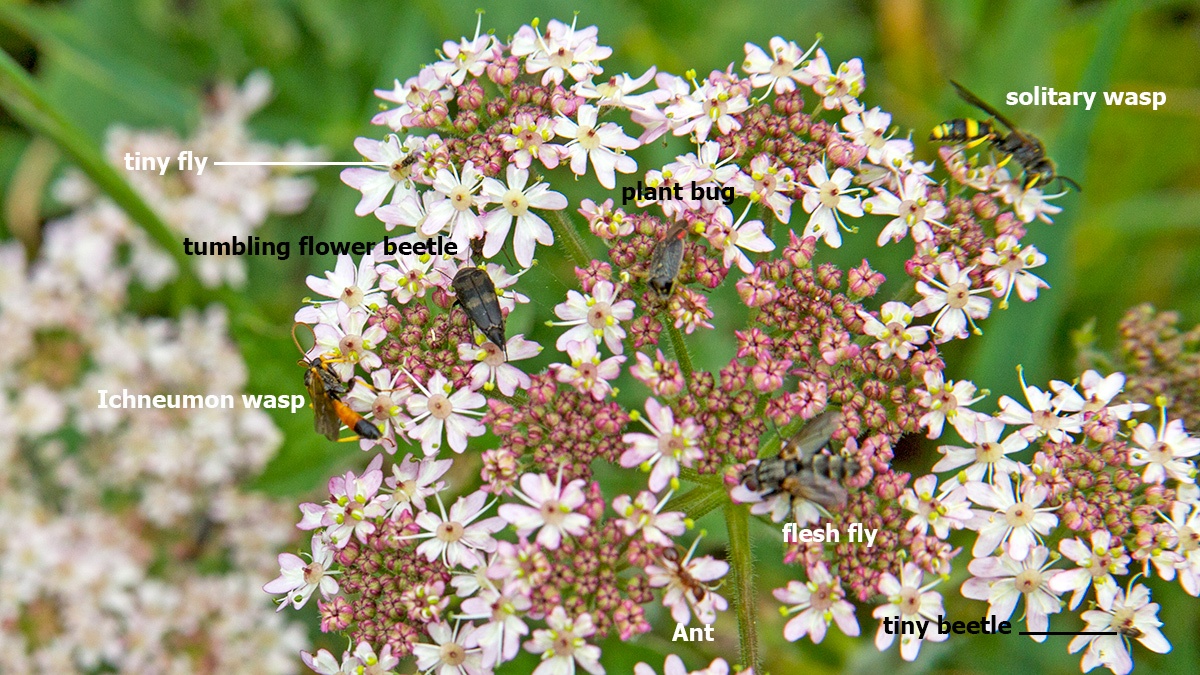
Most of the action today centred around Common Hogweed (Heracleum sphondylium) flowers. On one head of flowers I picked out 8 different insect species.
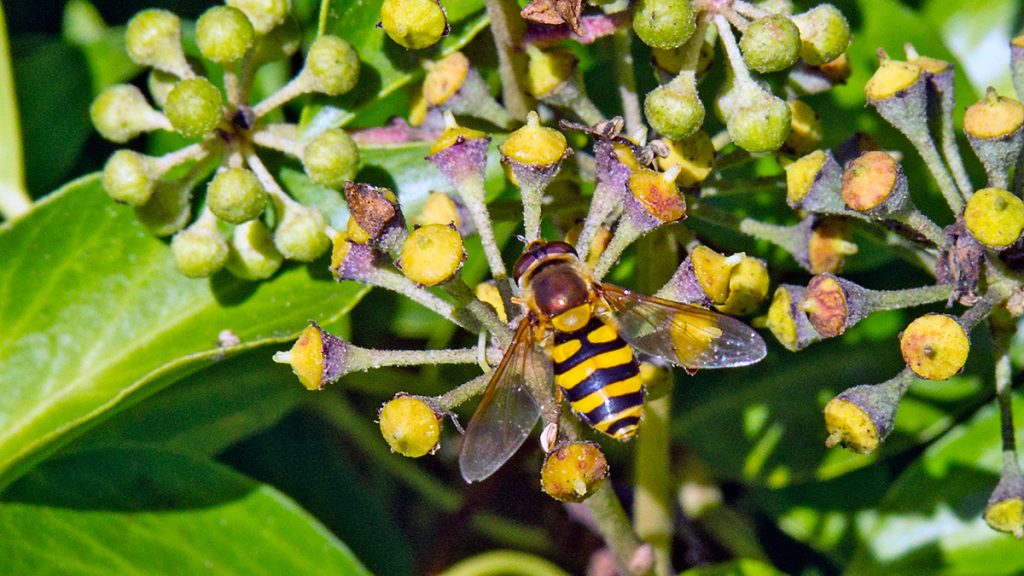
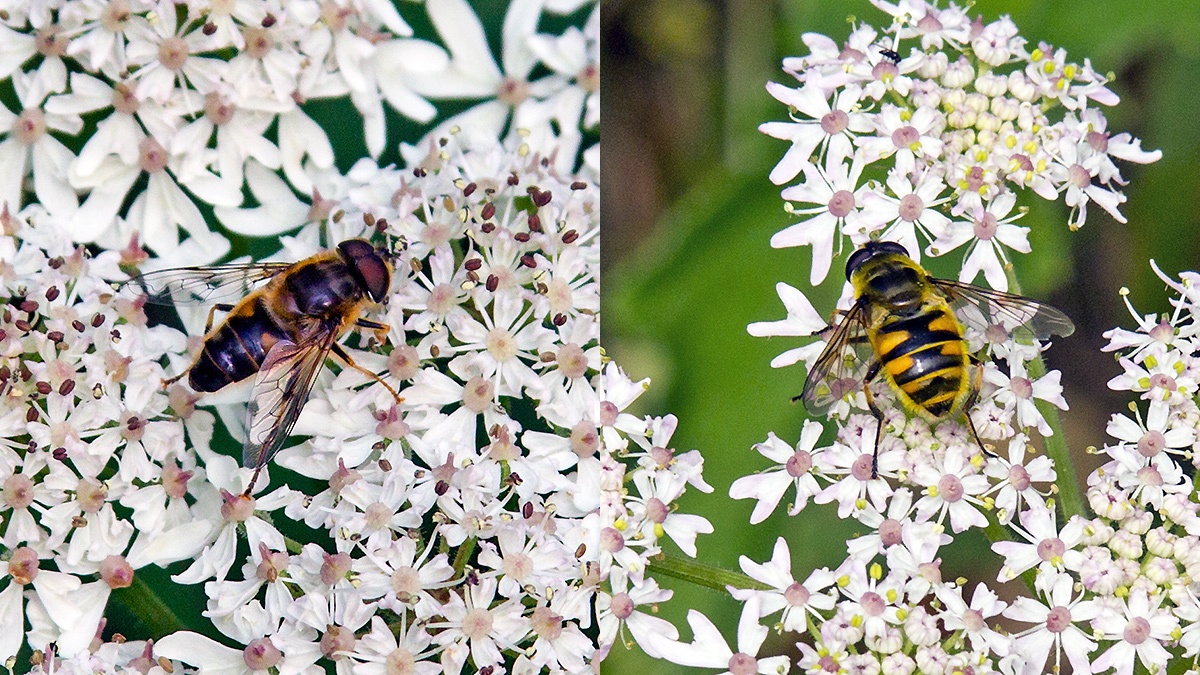
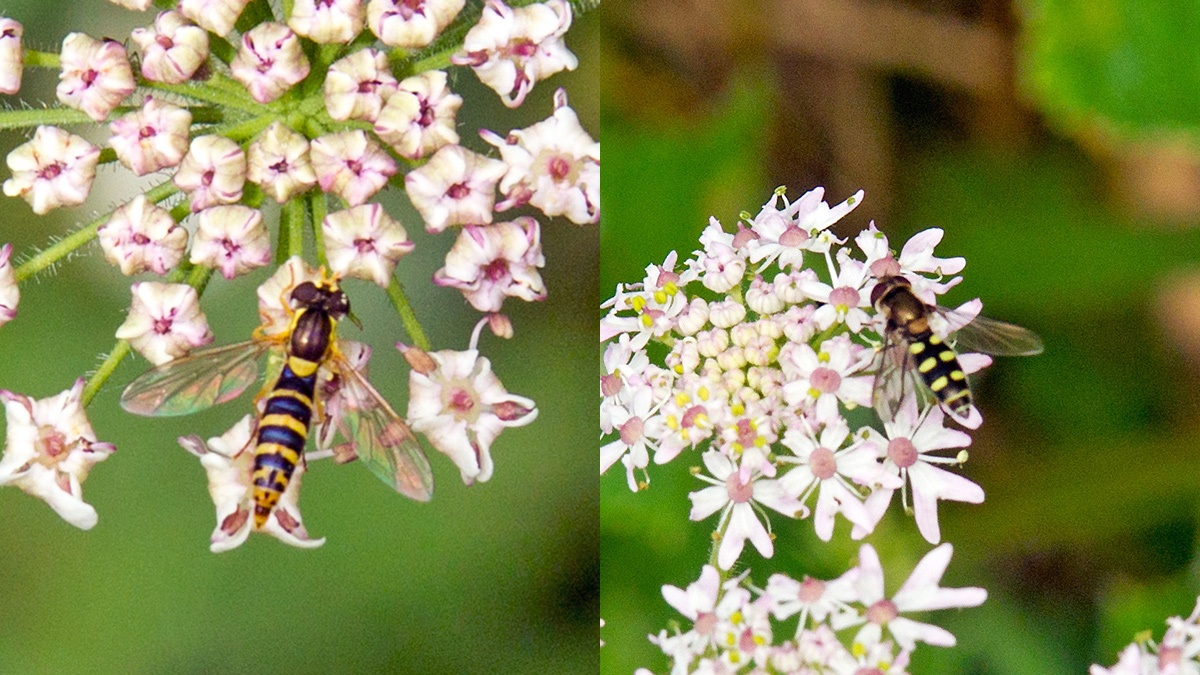
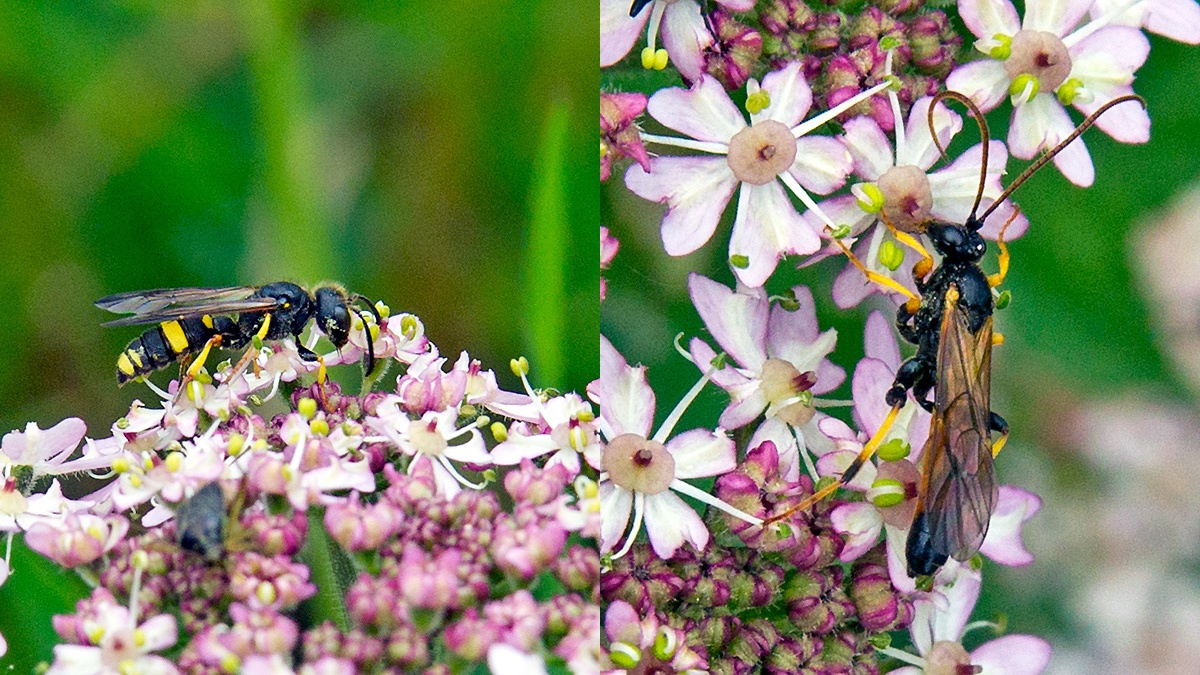
Insects photographed on Common Hogweed were 4 different hoverflies, Tapered Drone Fly (Eristalis pertinax), Batman Hoverfly (Myathropa florea), Long Hoverfly (Sphaerophoria scripta) and Bare-eyed Halfband (Melangyna labiatarum), as well as 2 wasps, Ornate Tailed Digger Wasp (Cerceris rybyensis) and an ichneumonid wasp (possibly Cosmoconus sp.), a Ladybird Fly (Gymnosoma rotundatum), a Common Greenbottle (Lucilia sericata) and a Pearly Green Lacewing (Chrysopa perla).
Beetles noted on the Hogweed but not photographed were Swollen-thighed Beetle, Red-tipped Flower Beetle, the soldier beetle Cantharis flavilabris and the tumbling flower beetle Variimorda villosa.
These were just the species that I bothered to try and identify, which shows how important Hogweed is to pollinating insects.
![Ladybird Fly [Gymnosoma rotundatum]](https://downsdiary.uk/wp-content/gallery/jun_2026/NG8_9292_EOS-1D_TheDowns_05Jun2026.jpg "Ladybird Fly [Gymnosoma rotundatum]")
![Common Greenbottle [Lucilia sericata]](https://downsdiary.uk/wp-content/gallery/jun_2026/NG8_9263_EOS-1D_TheDowns_05Jun2026.jpg "Common Greenbottle [Lucilia sericata]")
![Pearly Green Lacewing [Chrysopa perla]](https://downsdiary.uk/wp-content/gallery/jun_2026/NG8_9317_EOS-1D_TheDowns_05Jun2026.jpg "Pearly Green Lacewing [Chrysopa perla]")
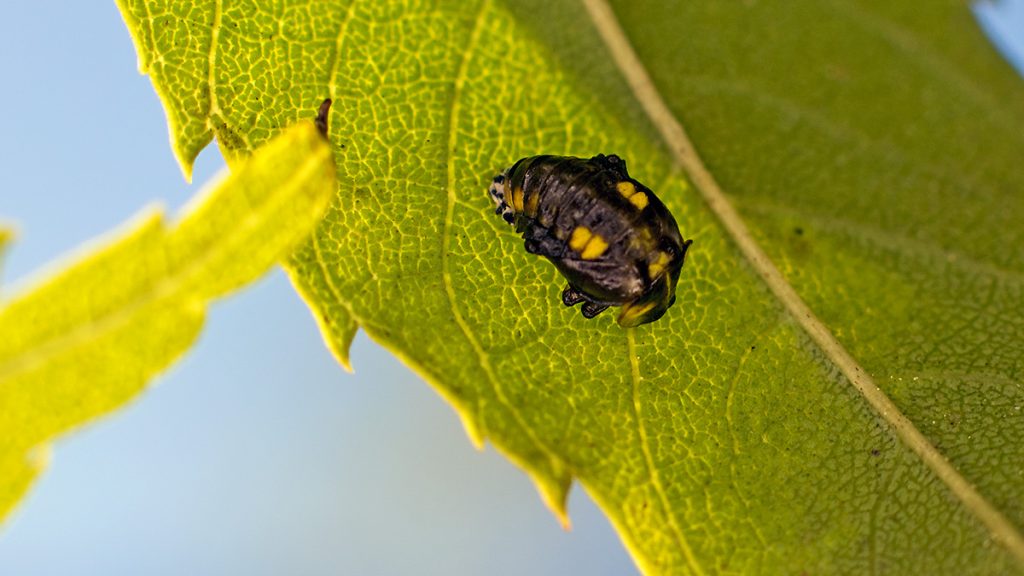
Sycamore leaves are always worth a search and today I found Common Sycamore Aphid (Drepanosiphum platanoidis), a Forest Bug (Pentatoma rufipes) nymph and the egg sacs of Cottony Hydrangea Scale (Pulvinaria kuwacola), although I photographed it on an adjacent Common Dogwood (Cornus sanguinea).
Two plant bugs were noted for the first time this year, a Yellow-lined Plant Bug (Deraeocoris flavilinea) and a female Meadow Plant Bug (Leptopterna dolabrata) that I had collected on my trouser leg. The latter may appear to be a nymph but the females of this species are usually brachypterous (short-winged).
A male ichneumonid wasp (possibly Ichneumon suspiciosus) was found on a grass stem and the Smooth Rose Pea Gall of a cynipid wasp (Diplolepis eglanteriae/nervosa) on the underside of a Dog Rose (Rosa canina) leaf. The galls of D. eglanteriae and D. nervosa are identical and cannot be separated on a photo alone. The larvae inside the galls must be bred to determine the species of adult wasp emerging from the pupa.
A female of the rather spectacularly coloured Broad Centurion (Chloromyia formosa) soldier fly was seen resting on a Hemp-agrimony (Eupatorium cannabinum) leaf, while the larva (a legless maggot) of the leaf-miner fly Agromyza myosotidis was seen in a still active leaf mine on a Common Comfrey (Symphytum officinale) leaf.
![Common Sycamore Aphid [Drepanosiphum platanoidis]](https://downsdiary.uk/wp-content/gallery/jun_2026/NG8_9260-BD2_5894_EOS-1D_TheDowns_05Jun2026.jpg "Common Sycamore Aphid [Drepanosiphum platanoidis]")
![Forest Bug [Pentatoma rufipes]](https://downsdiary.uk/wp-content/gallery/jun_2026/NG8_9312_EOS-1D_TheDowns_05Jun2026.jpg "Forest Bug [Pentatoma rufipes]")
![Cottony Hydrangea Scale [Pulvinaria kuwacola]](https://downsdiary.uk/wp-content/gallery/jun_2026/NG8_9359_EOS-1D_TheDowns_05Jun2026.jpg "Cottony Hydrangea Scale [Pulvinaria kuwacola]")
![Yellow-lined Plant Bug [Deraeocoris flavilinea]](https://downsdiary.uk/wp-content/gallery/jun_2026/BD2_5919_7D_TheDowns_05Jun2026.jpg "Yellow-lined Plant Bug [Deraeocoris flavilinea]")
![Meadow Plant Bug [Leptopterna dolabrata]](https://downsdiary.uk/wp-content/gallery/jun_2026/NG8_9399_EOS-1D_TheDowns_05Jun2026.jpg "Meadow Plant Bug [Leptopterna dolabrata]")
![ichneumonid wasp [Ichneumon suspiciosus?]](https://downsdiary.uk/wp-content/gallery/jun_2026/NG8_9386_EOS-1D_TheDowns_05Jun2026.jpg "ichneumonid wasp [Ichneumon suspiciosus?]")
![Smooth Rose Pea Gall Wasp [Diplolepis eglanteriae/nervosa]](https://downsdiary.uk/wp-content/gallery/jun_2026/BD2_5914_7D_TheDowns_05Jun2026.jpg "Smooth Rose Pea Gall Wasp [Diplolepis eglanteriae/nervosa]")
![Broad Centurion [Chloromyia formosa]](https://downsdiary.uk/wp-content/gallery/jun_2026/BD2_5954_7D_TheDowns_05Jun2026.jpg "Broad Centurion [Chloromyia formosa]")
![leaf-miner fly [Agromyza myosotidis]](https://downsdiary.uk/wp-content/gallery/jun_2026/NG8_9279_EOS-1D_TheDowns_05Jun2026.jpg "leaf-miner fly [Agromyza myosotidis]")
Only newly appearing wildflower today was the Pyramid Orchid (Anacamptis pyramidalis).
![Pyramid Orchid [Anacamptis pyramidalis]](https://downsdiary.uk/wp-content/gallery/jun_2026/NG8_9367_EOS-1D_TheDowns_05Jun2026.jpg "Pyramid Orchid [Anacamptis pyramidalis]")
The new sightings today take me past the total of 340 insects (plus arachnids and gastropods) which I mentioned in my diary posts for the whole of 2025. I look forward to boosting that total significantly in the second half of the year.
Nature Note for the Day
Both the Barn Swallow (Hirundo rustica) and Common Swift (Apus apus) are summer visitors to the UK together with another similar bird the House Martin (Delichon urbicum). They breed and spend the summer months here before migrating with the new generation to Africa, where they spend the Southern Hemisphere summer. They all hunt for airborne insects in a similar manner and occasionally mixed groups of the species form.
So how do we tell them apart?
Most obviously, as swifts spend the greater part of their lives airborne, only stationary in their nests, if we see one of them perching on a pole or wire it is not a swift.
Swifts are slightly bigger birds, and martins are smaller than swallows, but at the height we may be observing the birds and the speed at which they fly, this may not be too apparent. More noticeable differences between the three species are related to their general shape and the way they fly.
Martins and swallows have shorter, broader wings which at their base are much wider than those of a swift. The long, pointed wings of a swift are usually held in flight in a ‘boomerang’ shape giving it a distinctive silhouette against the sky.
Martins and swallows have longer forked tails than swifts and adult swallows have tail streamers that make the fork look even longer. Swifts have a short, forked tail but it is often held partially closed, looking only slightly notched, or fully closed to just a point. Hopefully my comparative image of a Barn Swallow taken at RSPB Frampton Marsh in Lincolnshire and a Common Swift taken at the London Wetland Centre illustrates these points.
A swift’s wingbeats are deep and quick, and it glides for longer periods between wingbeats. The flight of a swallow or martin is more fluttering, and they press their wings further to the rear during beats (see photo).
If we hear it before we see it, it will be a swift. The swift has an unmistakeable shrill screaming call.
Although difficult sometimes to see this detail against the backdrop of sky, the underside of a swift, except for the white spot under its chin, is entirely dark brown, while swallows and martins have large areas of beige/white on their underparts.
![Common Swift [Apus apus] and Barn Swallow [Hirundo rustica]](https://downsdiary.uk/wp-content/gallery/jun_2026/Swift-vs-Swallow.jpg "Common Swift [Apus apus] and Barn Swallow [Hirundo rustica]")
<<<< Previous page | Next Page >>>>