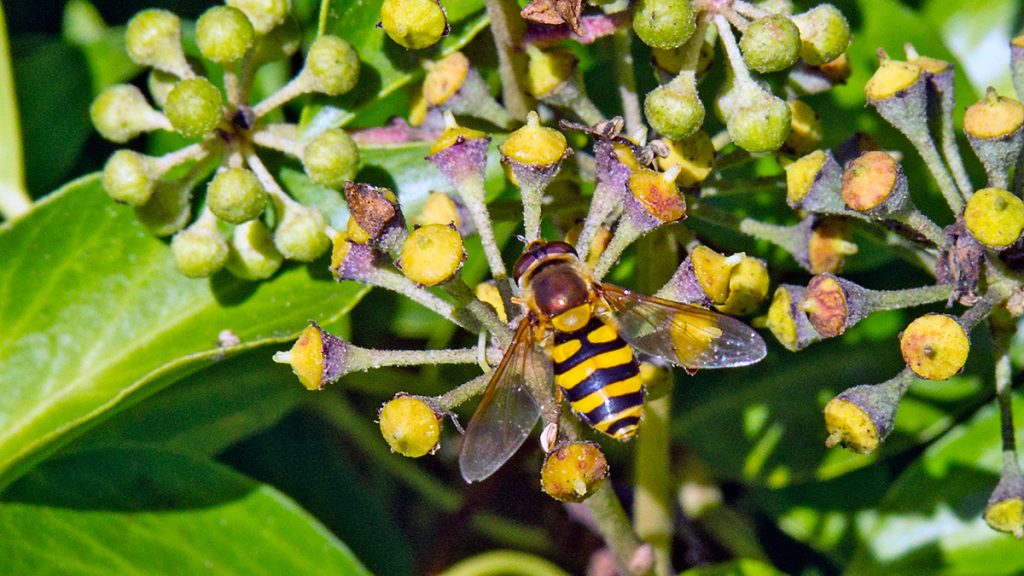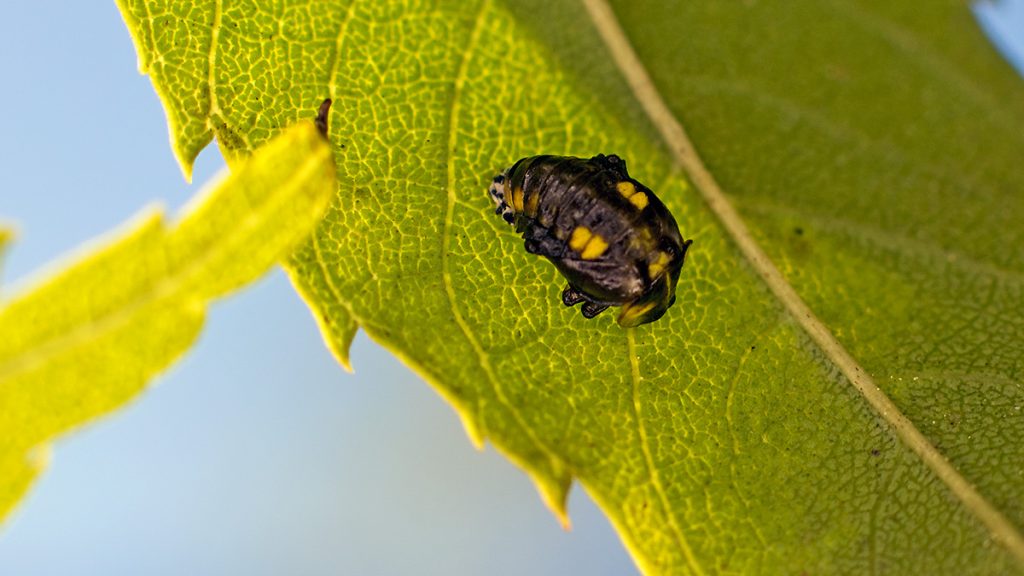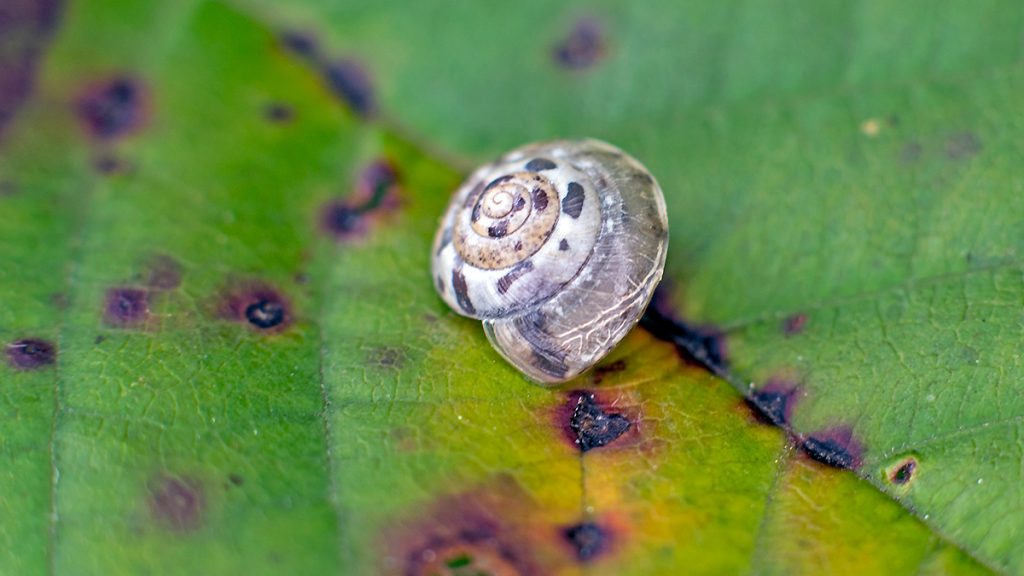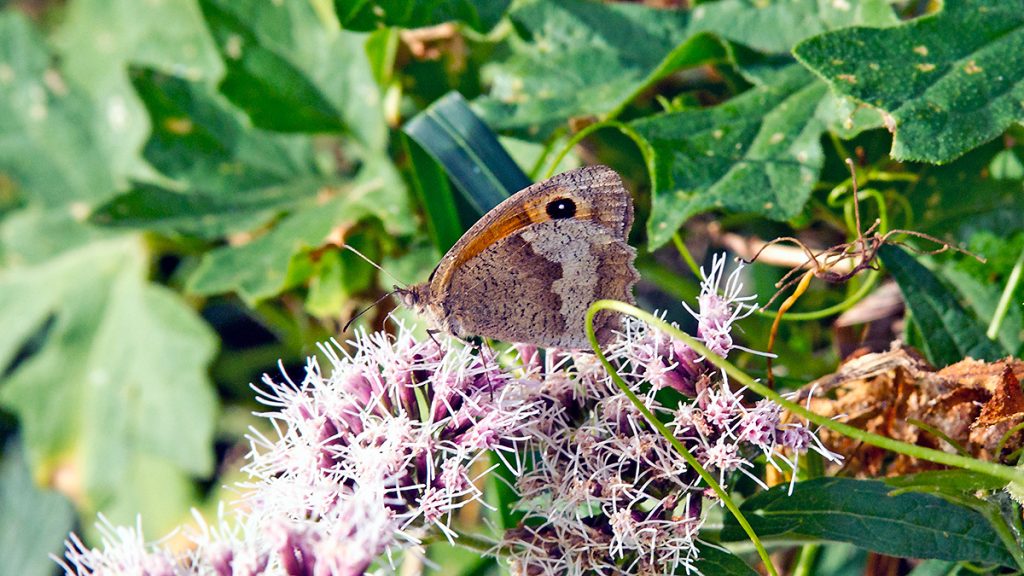
Butterfly numbers are dwindling. Just a few Gatekeeper, Meadow Brown (Maniola jurtina) and Speckled Wood (Pararge aegeria) to be seen.
New insects were Large Tiphia (Tiphia femorata) wasp and a Lauxaniid fly, possibly Meiosimyza rorida.
![Meadow Brown [Maniola jurtina insularis]](https://downsdiary.uk/wp-content/gallery/aug_2025/NG8_3547_EOS-1D_TheDowns_27Aug2025.jpg "Meadow Brown [Maniola jurtina insularis]")
![Speckled Wood [Pararge aegeria]](https://downsdiary.uk/wp-content/gallery/aug_2025/NG8_3539_EOS-1D_TheDowns_27Aug2025.jpg "Speckled Wood [Pararge aegeria]")
![Large Tiphia [Tiphia femorata]](https://downsdiary.uk/wp-content/gallery/aug_2025/NG8_3540_EOS-1D_TheDowns_27Aug2025.jpg "Large Tiphia [Tiphia femorata]")
![Lauxaniid fly [Meiosimyza rorida?]](https://downsdiary.uk/wp-content/gallery/aug_2025/NG8_3549_EOS-1D_TheDowns_27Aug2025.jpg "Lauxaniid fly [Meiosimyza rorida?]")
Nature note for the day
I think most of us associate holly with Christmas, with wreaths and other decorations. Lovely spiky green leaves and bright red berries.
There are no red berries yet on the Common Holly (Ilex aquifolium) on the Downs. They will only develop during October and November. As holly is dioecious, meaning that male and female flowers occur on different trees, only the female trees will bear berries (which are really drupes or ‘stone fruits’ similar to peaches, apricots and plums).
As for spiky green leaves, these are actually in the minority on holly trees. Young holly has spiky leaves as a mechanism for protecting the tree during its early years of growth. The leaves of a holly tree are evergreen and are replaced every five years or so, just long enough for the young tree to grow to a reasonable height and no longer need spiked leaves. Some mature trees retain some spiked leaves on their lower branches as protection against browsing by domestic and wild animals. You can be forgiven then for believing that holly has only spiked leaves, but next time you are walking past a mature Common Holly look upwards. Many of the leaves above head height will either be completely smooth-edged or have many fewer spikes than the fully spiked leaves lower down. National Geographic and the Woodland Trust both provide more information on this topic.
![Common Holly [Ilex aquifolium]](https://downsdiary.uk/wp-content/gallery/aug_2025/NG8_3543_EOS-1D_TheDowns_27Aug2025.jpg "Common Holly [Ilex aquifolium]")
![Common Holly [Ilex aquifolium]](https://downsdiary.uk/wp-content/gallery/aug_2025/NG8_3545_EOS-1D_TheDowns_27Aug2025.jpg "Common Holly [Ilex aquifolium]")
<<<< Previous page | Next Page >>>>