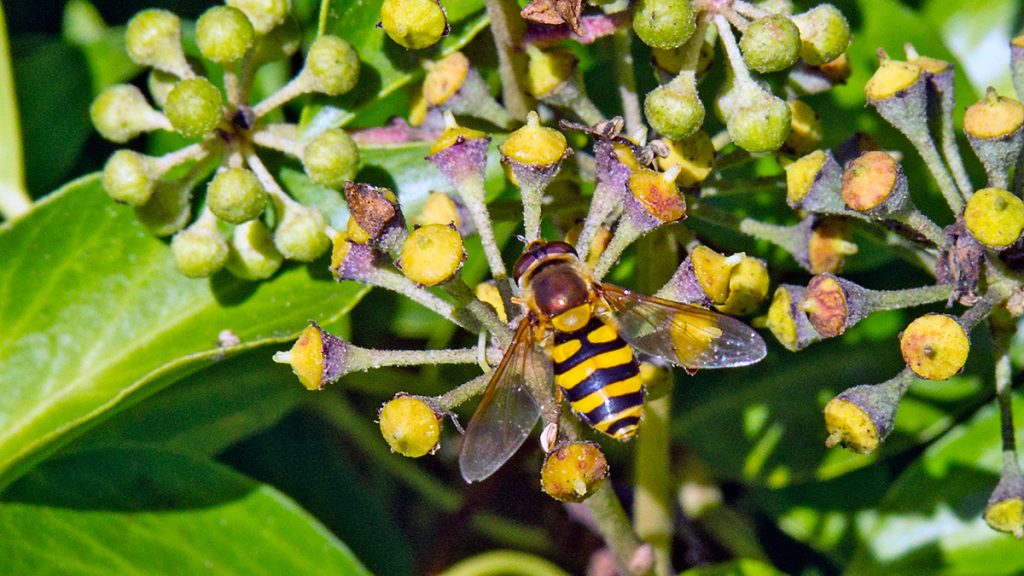
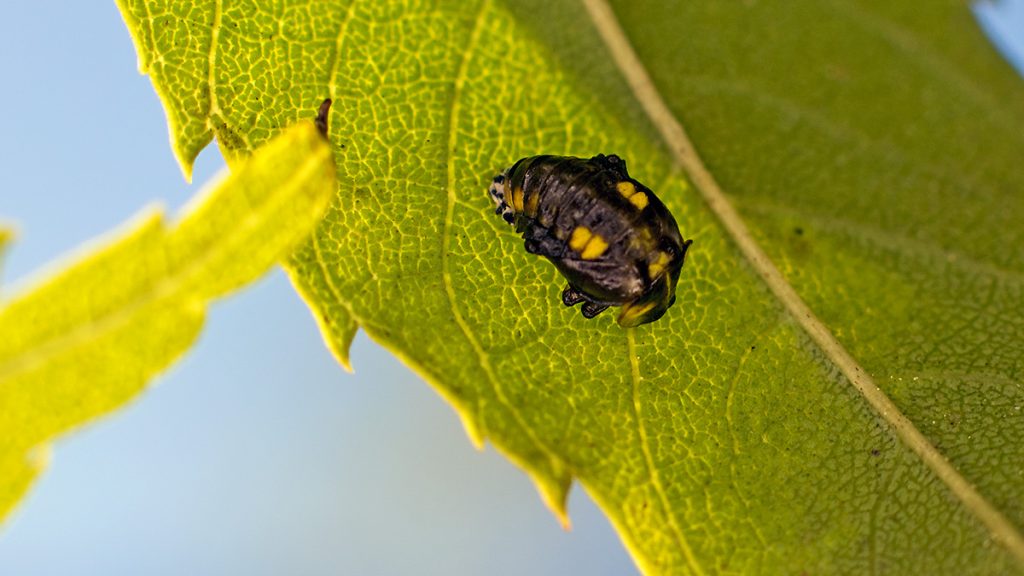
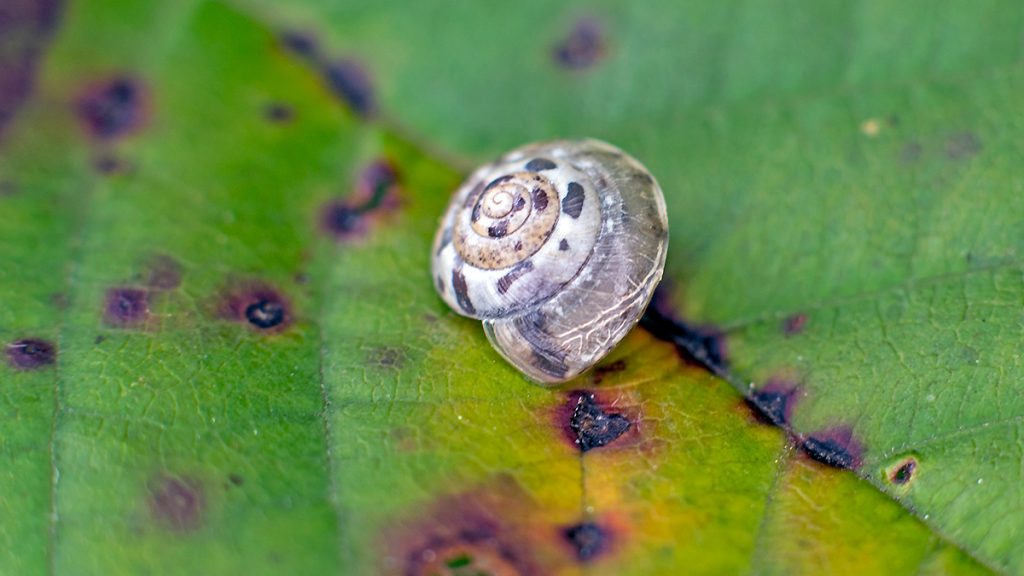
The record May temperatures continued, with a slightly stronger breeze to take the edge off the heat. Not that the butterflies noticed, with only Brimstone about in any great numbers. There were a few Speckled Wood and Small Heath, a couple of Common Blue, and one each of Painted Lady and Grizzled Skipper.
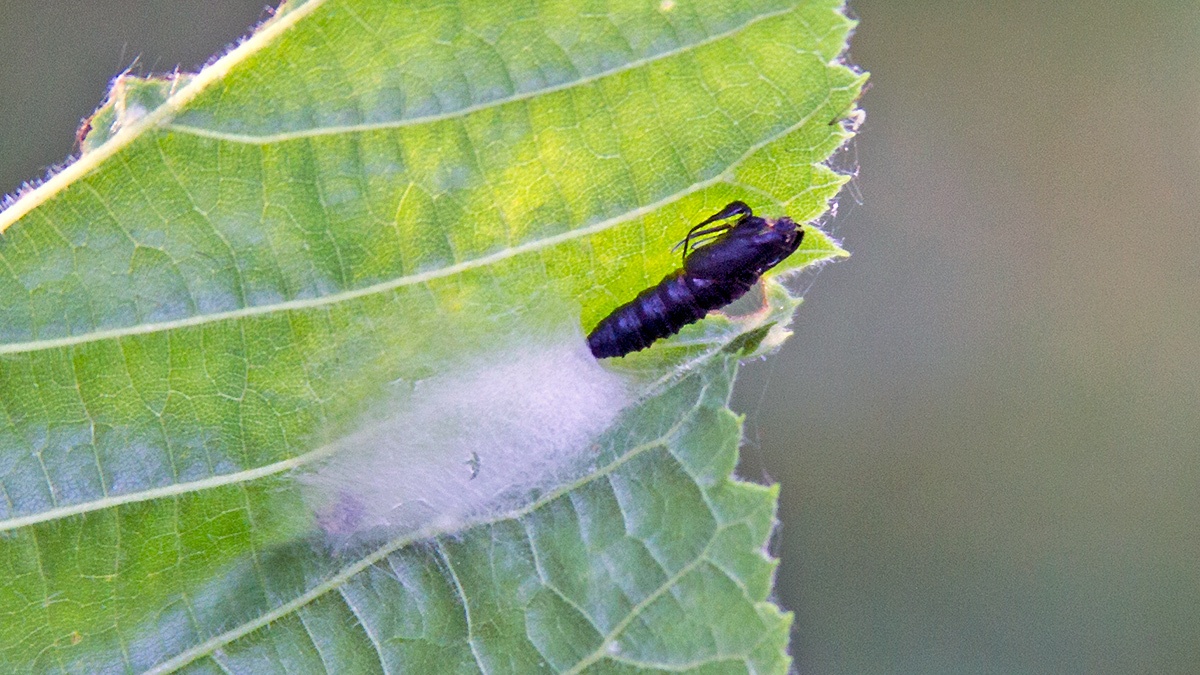
Staying with Lepidoptera, I found a moth pupa on the underside of a Common Lime (Tilia x europaea) leaf. It looks as though the moth may just be starting to emerge.
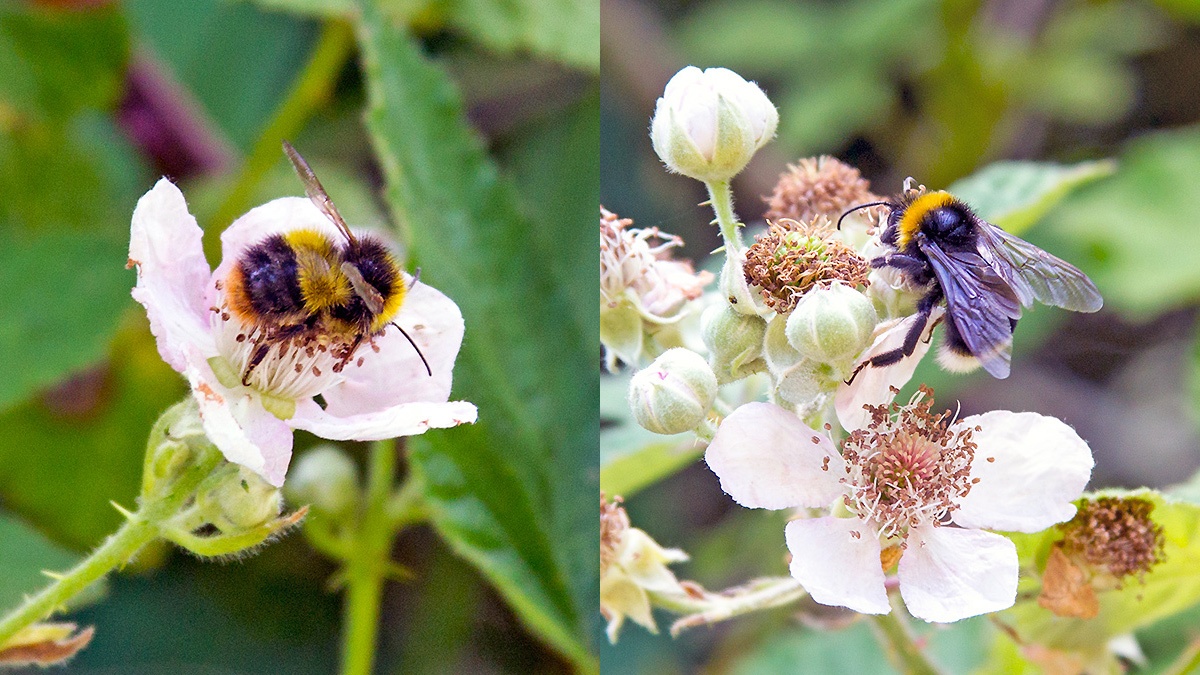
Yesterday it was a Tree Bumblebee that I found on brambles, today a male Early Bumblebee (Bombus pratorum) and a what I believe to be a female Forest Cuckoo Bumblebee (Bombus sylvestris) on the same patch of Himalayan Blackberry.
While a single Ferruginous Bee-grabber (Sicus ferrugineus) thick-headed fly (family Conopidae) wandered over a Rough Hawk’s-beard (Crepis biennis) flower, a mating pair were seen on a nearby Hawk’s-beard oblivious to the fact that they were sharing the small space available with three Cryptocephalus sp. pot beetles and a much smaller thick-headed fly, possibly the Small Bee-grabber (Thecophora atra).
In the past week the numbers of flowering Ox-eye Daisy (Leucanthemum vulgare) have increased dramatically, which in turn has seen the arrival of a multitude of the tumbling flower beetle Variimorda villosa seemingly at least one on every second Ox-eye Daisy.
Other beetles seen were Cow Parsley Leaf Beetle (Chrysolina oricalcia) on Common Hogweed (Heracleum sphondylium), these beetles feed predominantly on Hogweed and Cow Parsley, and Artichoke Beetle (Sphaeroderma testaceum) on its preferred food plant Common Knapweed (Centaurea nigra). There is a lot of grazing damage to these leaves, which may well have been caused by the beetles.
![Ferruginous Bee-grabber [Sicus ferrugineus]](https://downsdiary.uk/wp-content/gallery/may_2026/NG8_9017_EOS-1D_TheDowns_28May2026.jpg "Ferruginous Bee-grabber [Sicus ferrugineus]")
![Ferruginous Bee-grabber [Sicus ferrugineus]](https://downsdiary.uk/wp-content/gallery/may_2026/NG8_9032_EOS-1D_TheDowns_28May2026.jpg "Ferruginous Bee-grabber [Sicus ferrugineus]")
![tumbling flower beetle [Variimorda villosa]](https://downsdiary.uk/wp-content/gallery/may_2026/NG8_9024_EOS-1D_TheDowns_28May2026.jpg "tumbling flower beetle [Variimorda villosa]")
![Cow Parsley Leaf Beetle [Chrysolina oricalcia]](https://downsdiary.uk/wp-content/gallery/may_2026/NG8_9006_EOS-1D_TheDowns_28May2026.jpg "Cow Parsley Leaf Beetle [Chrysolina oricalcia]")
![Artichoke Beetle [Sphaeroderma testaceum]](https://downsdiary.uk/wp-content/gallery/may_2026/NG8_9027_EOS-1D_TheDowns_28May2026.jpg "Artichoke Beetle [Sphaeroderma testaceum]")
Grass is grass is grass or so many of us might think, except when flowering, which can be very short-lived, as shown by the striking yellow flowers of Meadow Brome (Bromus erectus). Naturally the pollen count will rise too!
Other plants photographed were Scaly Male Fern (Dryopteris affinis) and Swedish Whitebeam (Scandosorbus intermedia). The latter is closely related to Common Whitebeam (Aria edulis), both being hardy deciduous trees often used in landscaping, with the underside of their leaves being silvery-white. They differ in leaf shape and native origin. A. edulis has unlobed leaves and is native to the UK, while S. intermedia has lobed leaves reminiscent of oak leaves and originates from Scandinavia. Swedish Whitebeam is actually a naturally occurring triple hybrid of A. edulis and two other members of the Rosaceae family, the Wild Service Tree (Torminalis glaberrima) and the Rowan (Sorbus aucuparia).
![Meadow Brome [Bromus erectus]](https://downsdiary.uk/wp-content/gallery/may_2026/NG8_8975_EOS-1D_TheDowns_28May2026.jpg "Meadow Brome [Bromus erectus]")
![Scaly Male Fern [Dryopteris affinis]](https://downsdiary.uk/wp-content/gallery/may_2026/NG8_9040-1_EOS-1D_TheDowns_28May2026.jpg "Scaly Male Fern [Dryopteris affinis]")
![Swedish Whitebeam [Scandosorbus intermedia]](https://downsdiary.uk/wp-content/gallery/may_2026/NG8_9009-10_EOS-1D_TheDowns_28May2026.jpg "Swedish Whitebeam [Scandosorbus intermedia]")
<<<< Previous page | Next Page >>>>