A drop in temperature of 10°C overnight, and even though it was yet another bright day with very light winds the butterflies have disappeared again. My total for this morning was just 2, a single Speckled Wood and surprisingly my first Green-veined White (Pieris napi) of the season.
I have noted a few aphids starting to appear in the past week and this morning I found a single apterous Common Periphyllus Aphid (Periphyllus testudinaceus) on the underside of a Sycamore (Acer pseudoplatanus) leaf.
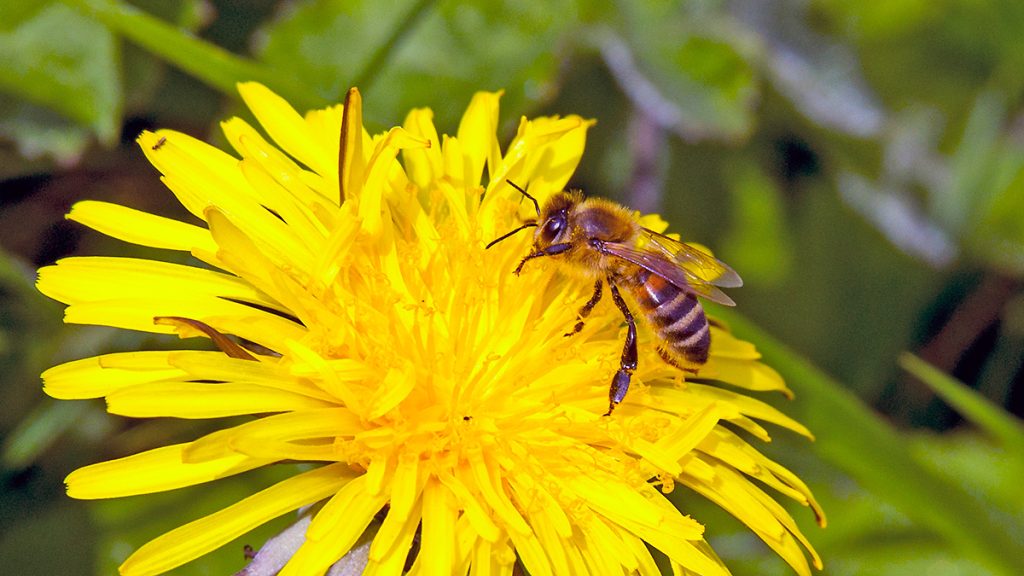
Bees were again represented by Chocolate Mining Bee (Andrena scotica), seen resting on a Sycamore leaf, and Gooden’s Nomad Bee (Nomada goodeniana) and Western Honey Bee (Apis mellifera) both foraging on Dandelion (Taraxacum officinale) flowers.
There are still large numbers of Dark-edged Bee-fly (Bombylius major) to be seen. They seem to favour blue/purple flowers and can best be seen hovering over patches of Ground Ivy (Glechoma hederacea) or feeding from Green Alkanet (Pentaglottis sempervirens) flowers, which is where I found one with a Dock Bug (Coreus marginatus) in close attendance. On the same patch of Green Alkanet I saw more caterpillars of the Scarlet Tiger Moth (Callimorpha dominula), which was first noted on 2nd April.
![Green-veined White [Pieris napi]](https://downsdiary.uk/wp-content/gallery/apr_2026/NG8_6878_EOS-1D_TheDowns_10Apr2026.jpg "Green-veined White [Pieris napi]")
![Common Periphyllus Aphid [Periphyllus testudinaceus]](https://downsdiary.uk/wp-content/gallery/apr_2026/BD2_2496_7D_TheDowns_10Apr2026.jpg "Common Periphyllus Aphid [Periphyllus testudinaceus]")
![Chocolate Mining Bee [Andrena scotica]](https://downsdiary.uk/wp-content/gallery/apr_2026/NG8_6890-92_EOS-1D_TheDowns_10Apr2026.jpg "Chocolate Mining Bee [Andrena scotica]")
![Gooden's Nomad Bee [Nomada goodeniana]](https://downsdiary.uk/wp-content/gallery/apr_2026/NG8_6900_EOS-1D_TheDowns_10Apr2026.jpg "Gooden's Nomad Bee [Nomada goodeniana]")
![Western Honey Bee [Apis mellifera]](https://downsdiary.uk/wp-content/gallery/apr_2026/NG8_6912_EOS-1D_TheDowns_10Apr2026.jpg "Western Honey Bee [Apis mellifera]")
![Dark-edged Bee-fly [Bombylius major]](https://downsdiary.uk/wp-content/gallery/apr_2026/NG8_6899_EOS-1D_TheDowns_10Apr2026.jpg "Dark-edged Bee-fly [Bombylius major]")
![Ground Ivy [Glechoma hederacea]](https://downsdiary.uk/wp-content/gallery/apr_2026/NG8_6844_EOS-1D_TheDowns_09Apr2026.jpg "Ground Ivy [Glechoma hederacea]")
![Scarlet Tiger Moth [Callimorpha dominula]](https://downsdiary.uk/wp-content/gallery/apr_2026/BD2_2512_7D_TheDowns_10Apr2026.jpg "Scarlet Tiger Moth [Callimorpha dominula]")
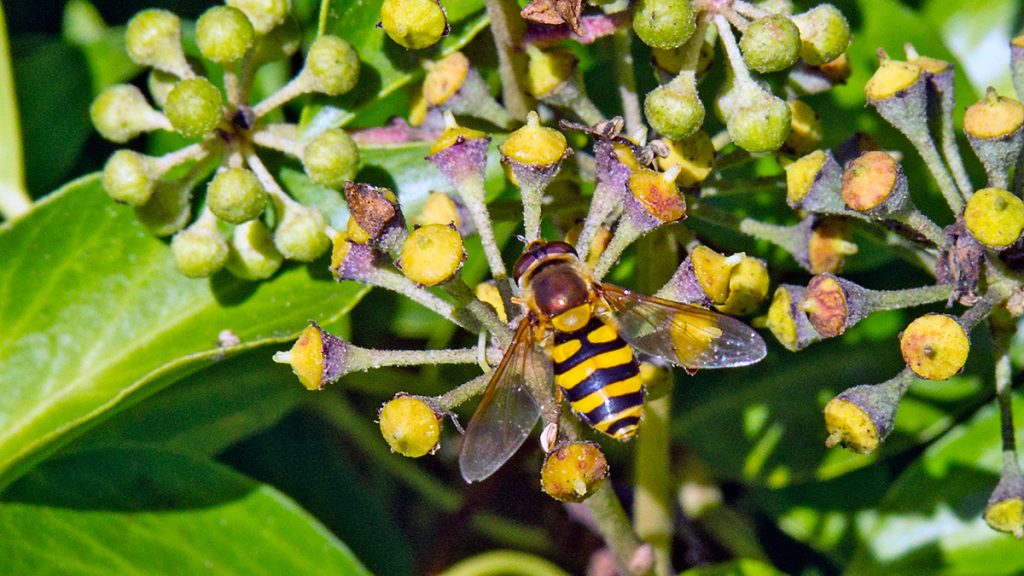
There are still large numbers of several species of hoverfly to be seen, with most prominent being Spring Epistrophe (Epistrophe eligans), Common Banded Hoverfly (Syrphus ribesii) and Common Drone Fly (Eristalis tenax).
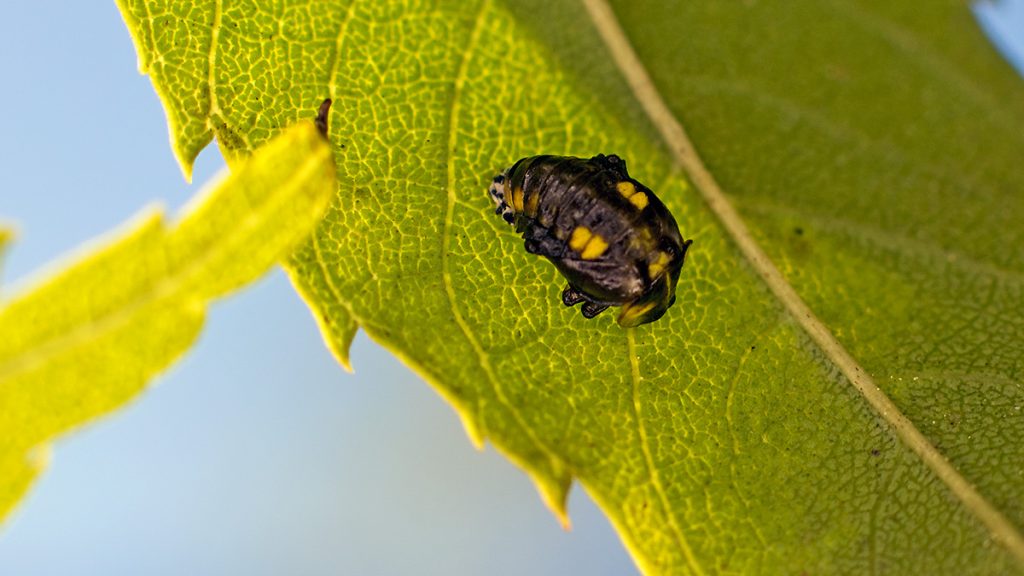
Two of the three main forms of the Harlequin Ladybird (Harmonia axyridis) were spotted. An individual of the form conspicua was seen on an opening Sycamore leaf bud, while one of the form succinea was found on a bramble leaf together with a Yellow Spear-winged Fly (Lonchoptera lutea).
First recorded on 28th March, I discovered more birch-feeding nymphs of a leafhopper Oncopsis flavicollis/subangulata on new Silver Birch (Betula pendula) leaf growth.
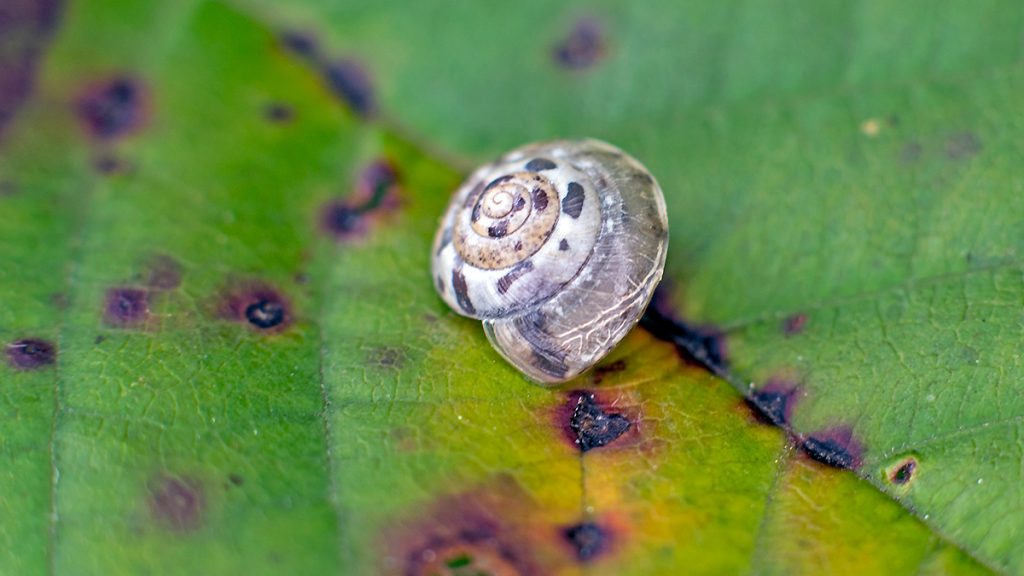
On a Dog Rose (Rosa canina) that still sported some of last autumn’s red rose hips I found one decaying rose hip on which were two tiny snails, the shell of the smaller one some 4.5mm diameter and the larger 6.5mm. They may be different species of snail or just two variations of the same species. I would suggest that the larger may be a Smooth Glass Snail (Aegopinella nitidula).
On returning home, I noticed that I had a passenger on my sleeve, so I coaxed it onto a light-coloured smooth surface to take a close-up image. This revealed it to be a Common Leaf Weevil (Phyllobius pyri).
The latest tree to show signs of leaf buds opening is Whitebeam (Aria edulis). Current high pollen levels are largely due to the pollen from the male catkins of Silver Birch (Betula pendula), which produce peak pollen as the new leaves start appearing.
![Common Drone Fly [Eristalis tenax]](https://downsdiary.uk/wp-content/gallery/apr_2026/NG8_6865_EOS-1D_TheDowns_10Apr2026.jpg "Common Drone Fly [Eristalis tenax]")
![Harlequin Ladybird [Harmonia axyridis]](https://downsdiary.uk/wp-content/gallery/apr_2026/BD2_2494_7D_TheDowns_10Apr2026.jpg "Harlequin Ladybird [Harmonia axyridis]")
![Harlequin Ladybird [Harmonia axyridis]](https://downsdiary.uk/wp-content/gallery/apr_2026/NG8_6922_EOS-1D_TheDowns_10Apr2026.jpg "Harlequin Ladybird [Harmonia axyridis]")
![leafhopper [Oncopsis flavicollis/subangulata]](https://downsdiary.uk/wp-content/gallery/apr_2026/BD2_2568_7D_TheDowns_10Apr2026.jpg "leafhopper [Oncopsis flavicollis/subangulata]")
![Smooth Glass Snail [Aegopinella nitidula ?]](https://downsdiary.uk/wp-content/gallery/apr_2026/BD2_2536_7D_TheDowns_10Apr2026.jpg "Smooth Glass Snail [Aegopinella nitidula ?]")
![Common Leaf Weevil [Phyllobius pyri]](https://downsdiary.uk/wp-content/gallery/apr_2026/BD2_2582_7D_TheDowns_10Apr2026.jpg "Common Leaf Weevil [Phyllobius pyri]")
![Whitebeam [Aria edulis]](https://downsdiary.uk/wp-content/gallery/apr_2026/NG8_6925_EOS-1D_TheDowns_10Apr2026.jpg "Whitebeam [Aria edulis]")
![Silver Birch [Betula pendula]](https://downsdiary.uk/wp-content/gallery/apr_2026/NG8_6929_EOS-1D_TheDowns_10Apr2026.jpg "Silver Birch [Betula pendula]")
<<<< Previous page | Next Page >>>>