A very warm, humid start to the day (20°C feels like 23°C already at 09:00) with largely overcast skies and the sun only occasionally peeping through. Not much wind though, so I was expecting that the butterflies would be out today.
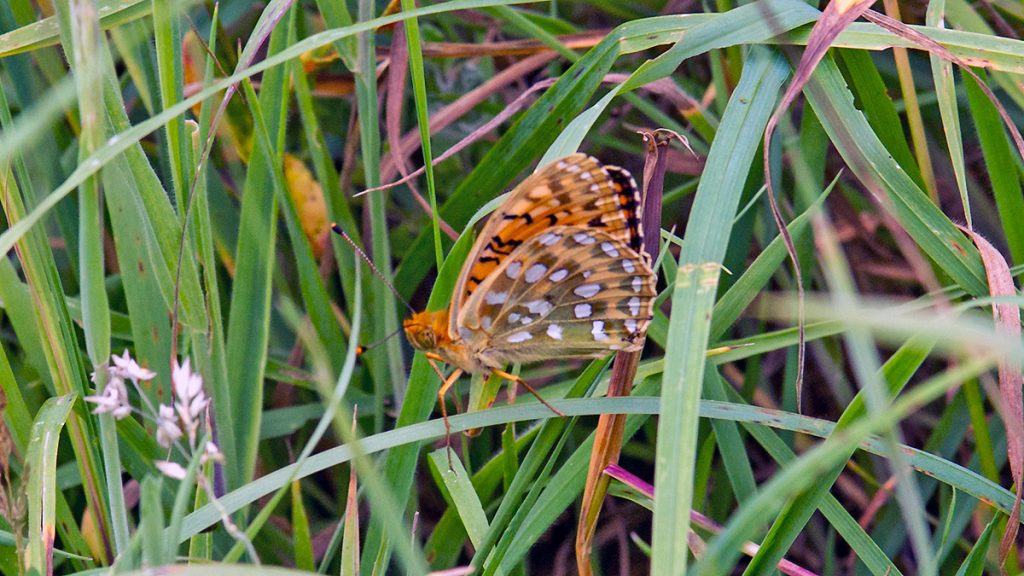
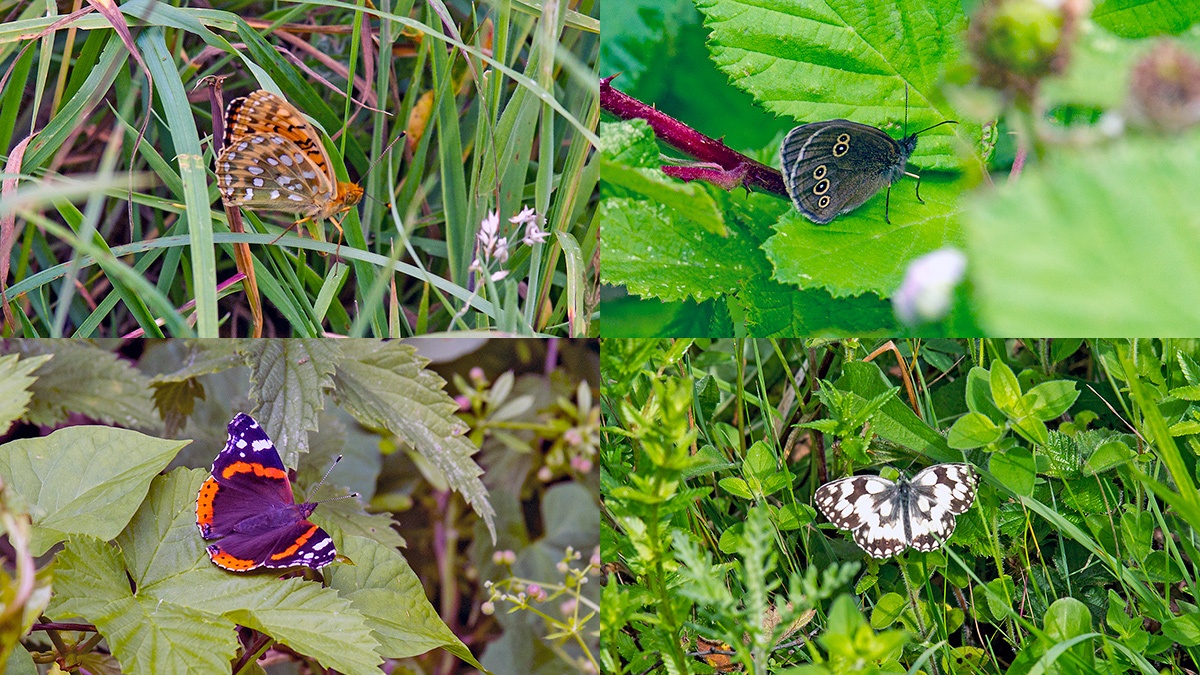
Oh boy, were they! Literally hundreds of Marbled White, dozens of Meadow Brown and Ringlet, at least 10 Dark Green Fritillary and a supporting cast of Red Admiral, Small Heath, Small Skipper and Brown Argus. No blues.
One patch of long grass that I ventured into hid several Silver Y (Autographa gamma) moths, which would fly up and then settle again well towards the base of the grass stems, making photography through a suitable window in the intervening grass blades a bit tricky.
On a bramble leaf in the same patch of grass where I found the moths I came across a female Spotted Wolf Spider (Pardosa amentata) carrying an egg sac.
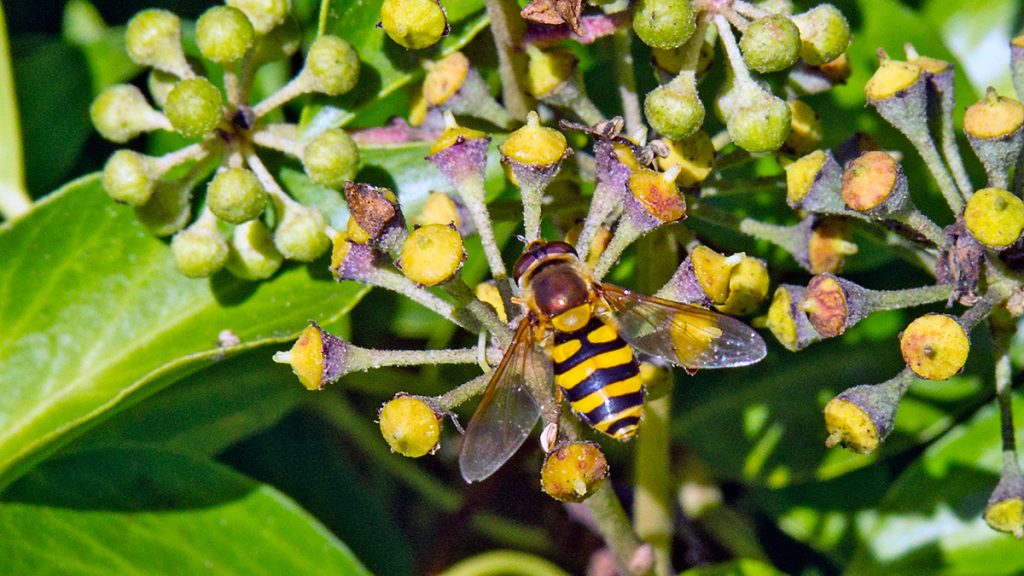
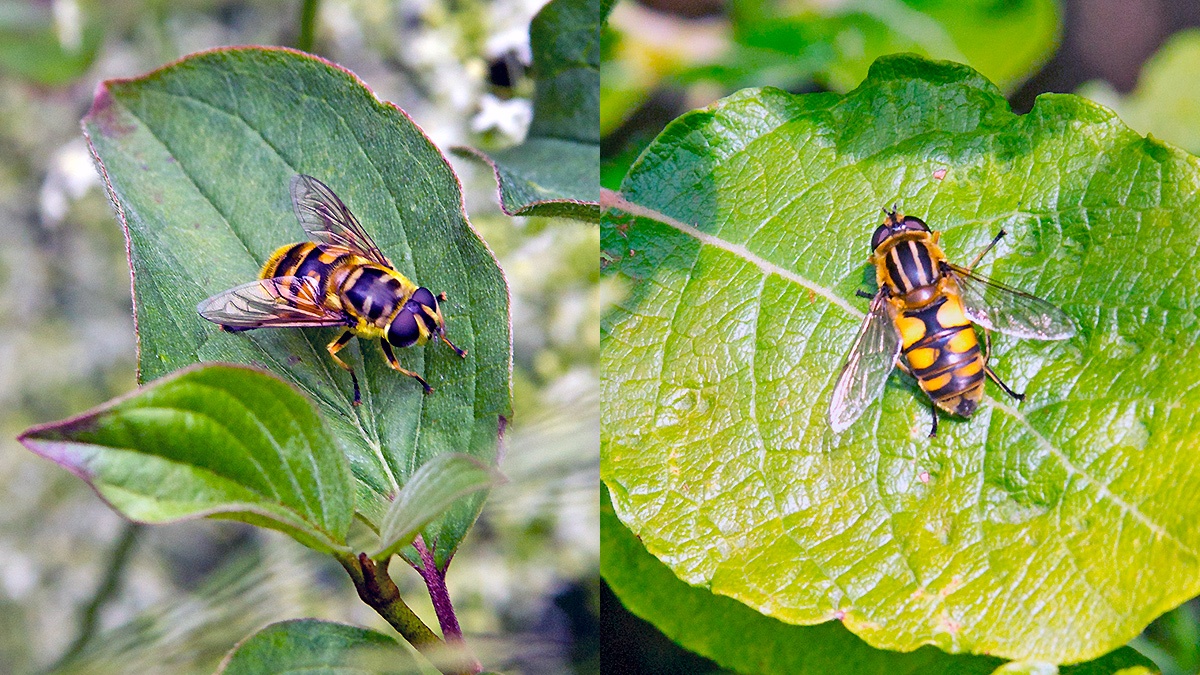
Two hoverflies also seemed to be out in large numbers, The Footballer (Helophilus pendulus) and Batman Hoverfly (Myathropa florea).
I found a new Miridae species, an oak plant bug (Psallus varians) where one might expect from the name, on an Oak leaf, although it can be found on a range of common deciduous trees, including beech, birch and hazel. Of interest is that it is one of the few Mirid bugs documented as biting humans. This ID is tentative as there are several similar species to be found on oak.
![oak plant bug [Psallus varians?]](https://downsdiary.uk/wp-content/gallery/jun_2026/BD2_6115_7D_TheDowns_20Jun2026.jpg "oak plant bug [Psallus varians?]")
![Silver Y [Autographa gamma]](https://downsdiary.uk/wp-content/gallery/jun_2026/NG8_9876-82_EOS-1D_TheDowns_20Jun2026.jpg "Silver Y [Autographa gamma]")
![Spotted Wolf Spider [Pardosa amentata?]](https://downsdiary.uk/wp-content/gallery/jun_2026/NG8_9889_EOS-1D_TheDowns_20Jun2026.jpg "Spotted Wolf Spider [Pardosa amentata?]")
Since my last visit to the Downs five days ago, when there were but a few flowering Hedge Bedstraw (Galium album), there is now a profusion of this dainty white flower. Another flower to appear since my last visit is Common Agrimony (Agrimonia eupatoria), while the shorter grass of the main common is now interspersed with Common Eyebright (Euphrasia nemorosa). Regarded by many as a weed due to it being a rapid coloniser of disturbed soil such as in railway cuttings and along road verges, Rosebay Willowherb (Chamaenerion angustifolium) is now appearing along the edge of the Sutton Lane path. A few Ragwort (Jacobaea vulgaris) plants are flowering just 3 days of my first record last summer.
Beech (Fagus sylvatica) trees are now showing their ripening fruit. One to three beechnuts are housed within a hard, woody, spiny husk, botanically termed a cupule. Perhaps the best-known example of a cupule is the ‘cup’ holding an acorn on an oak tree.
![Hedge Bedstraw [Galium album]](https://downsdiary.uk/wp-content/gallery/jun_2026/NG8_9864-5_EOS-1D_TheDowns_20Jun2026.jpg "Hedge Bedstraw [Galium album]")
![Common Agrimony [Agrimonia eupatoria]](https://downsdiary.uk/wp-content/gallery/jun_2026/NG8_9857_EOS-1D_TheDowns_20Jun2026.jpg "Common Agrimony [Agrimonia eupatoria]")
![Common Eyebright [Euphrasia nemorosa]](https://downsdiary.uk/wp-content/gallery/july_2025/4A_1562_EOS-1D_BansteadCommon_14Aug2015.jpg "Common Eyebright [Euphrasia nemorosa]")
![Rosebay Willowherb [Chamaenerion angustifolium]](https://downsdiary.uk/wp-content/gallery/jun_2026/NG8_9830-1_EOS-1D_TheDowns_20Jun2026.jpg "Rosebay Willowherb [Chamaenerion angustifolium]")
![Common Ragwort [Jacobaea vulgaris]](https://downsdiary.uk/wp-content/gallery/june_2025/NG8_1511_EOS-1D_TheDowns_23Jun2025.jpg "Common Ragwort [Jacobaea vulgaris]")
![Beech [Fagus sylvatica]](https://downsdiary.uk/wp-content/gallery/trees-shrubs/NG8_9853_EOS-1D_TheDowns_20Jun2026.jpg "Beech [Fagus sylvatica]")
<<<< Previous page | Next Page >>>>