A lovely sunny day, but a chilly wind keeping the temperature down a few degrees on the past week. Total butterfly count was a dismal 1, a single Speckled Wood.
An adult Common Buzzard (Buteo buteo) of the rufous form was circling low over the northern part of the main grassland, surprisingly unbothered by the crow population.
![Common Buzzard [Buteo buteo]](https://downsdiary.uk/wp-content/gallery/apr_2026/NG8_7306_EOS-1D_TheDowns_20Apr2026.jpg "Common Buzzard [Buteo buteo]")
Two Sycamore (Acer pseudoplatanus) trees provided most of the morning’s photo opportunities, with their large flat leaves in full sun seemingly the preferred resting place for many species.
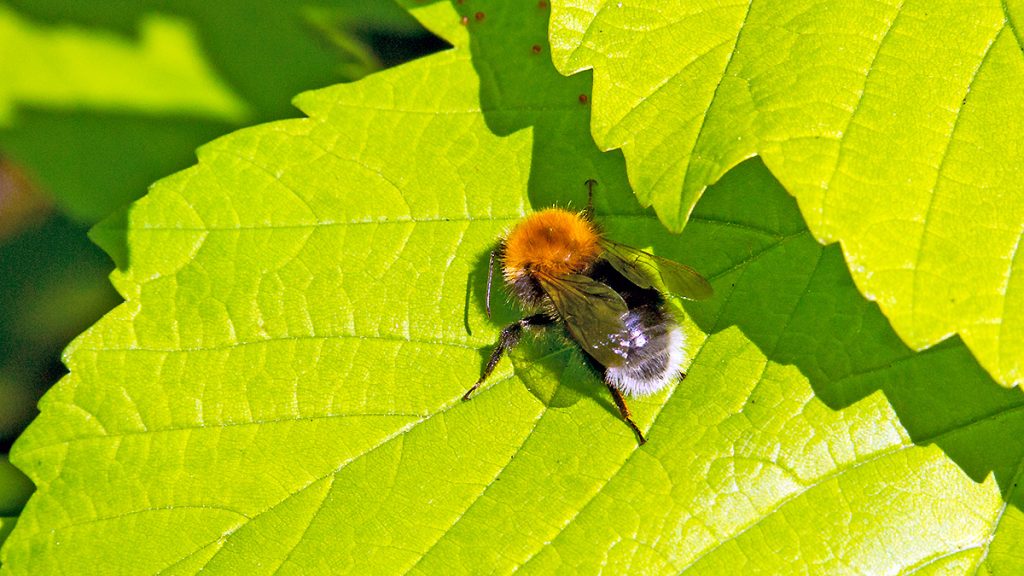
Those on the first tree included Dark-edged Bee-fly (Bombylius major), Tree Bumblebee (Bombus hypnorum), a male Red Mason Bee (Osmia bicornis), a Bedstraw Sawfly (Halidamia affinis) and a female Variable Bibio (Bibio varipes).
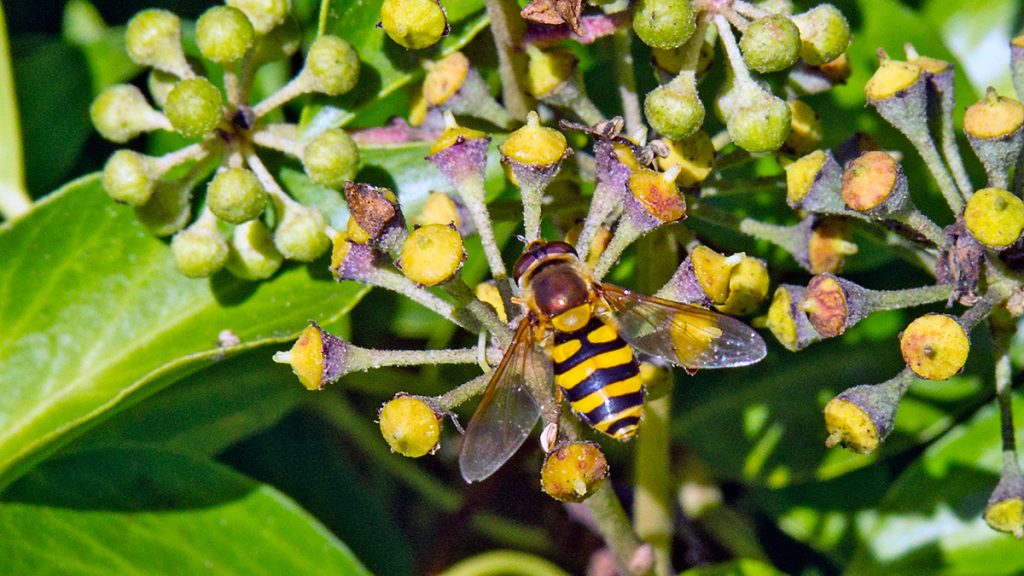
The second tree was swarming with a mix of bee, fly and hoverfly species, including a male Yellow Dung Fly (Scathophaga stercoraria), a female Batman Hoverfly (Myathropa florea), an Epistrophe sp. or Syrphus sp. hoverfly and Flavous Nomad Bee (Nomada flava).
![Dark-edged Bee-fly [Bombylius major]](https://downsdiary.uk/wp-content/gallery/apr_2026/NG8_7276_EOS-1D_TheDowns_20Apr2026.jpg "Dark-edged Bee-fly [Bombylius major]")
![Tree Bumblebee [Bombus hypnorum]](https://downsdiary.uk/wp-content/gallery/apr_2026/NG8_7282_EOS-1D_TheDowns_20Apr2026.jpg "Tree Bumblebee [Bombus hypnorum]")
![Red Mason Bee [Osmia bicornis]](https://downsdiary.uk/wp-content/gallery/apr_2026/NG8_7300_EOS-1D_TheDowns_20Apr2026.jpg "Red Mason Bee [Osmia bicornis]")
![Bedstraw Sawfly [Halidamia affinis]](https://downsdiary.uk/wp-content/gallery/apr_2026/BD2_3180_7D_TheDowns_20Apr2026.jpg "Bedstraw Sawfly [Halidamia affinis]")
![Variable Bibio [Bibio varipes]](https://downsdiary.uk/wp-content/gallery/apr_2026/NG8_7304_EOS-1D_TheDowns_20Apr2026.jpg "Variable Bibio [Bibio varipes]")
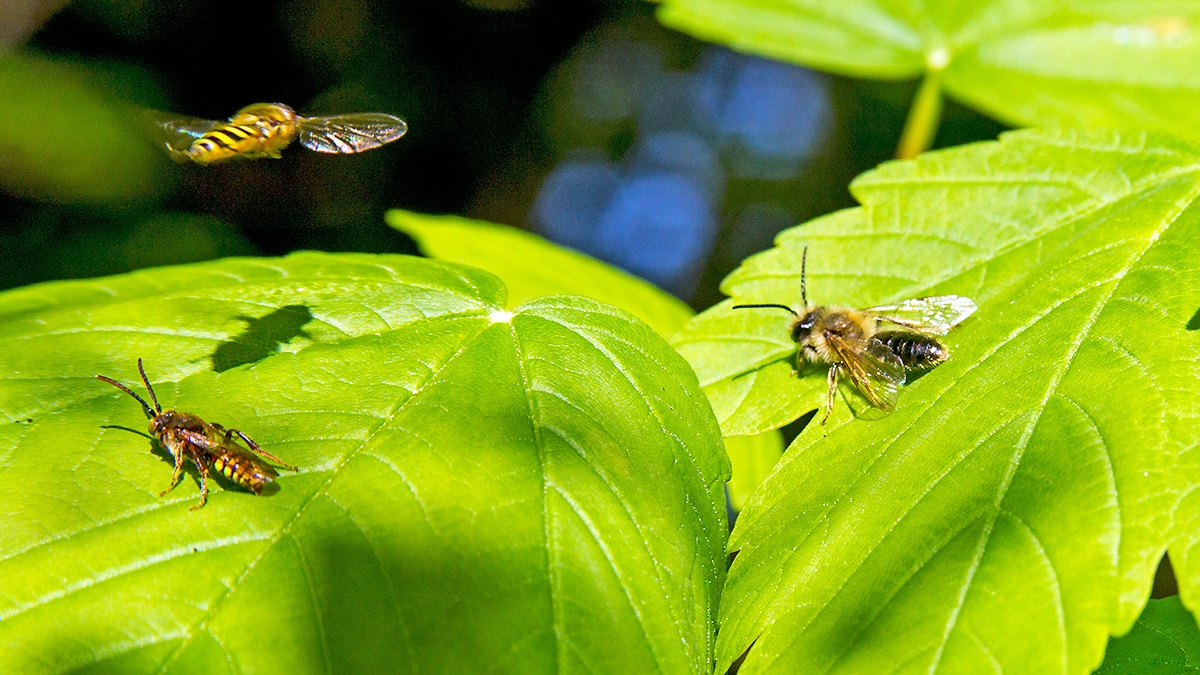
![Yellow Dung Fly [Scathophaga stercoraria]](https://downsdiary.uk/wp-content/gallery/apr_2026/NG8_7349_EOS-1D_TheDowns_20Apr2026.jpg "Yellow Dung Fly [Scathophaga stercoraria]")
![Batman Hoverfly [Myathropa florea]](https://downsdiary.uk/wp-content/gallery/apr_2026/NG8_7356_EOS-1D_TheDowns_20Apr2026.jpg "Batman Hoverfly [Myathropa florea]")
![hoverfly [Epistrophe/Syrphus sp.]](https://downsdiary.uk/wp-content/gallery/apr_2026/NG8_7332_EOS-1D_TheDowns_20Apr2026.jpg "hoverfly [Epistrophe/Syrphus sp.]")
![Flavous Nomad Bee [Nomada flava]](https://downsdiary.uk/wp-content/gallery/apr_2026/NG8_7358-68_EOS-1D_TheDowns_20Apr2026.jpg "Flavous Nomad Bee [Nomada flava]")
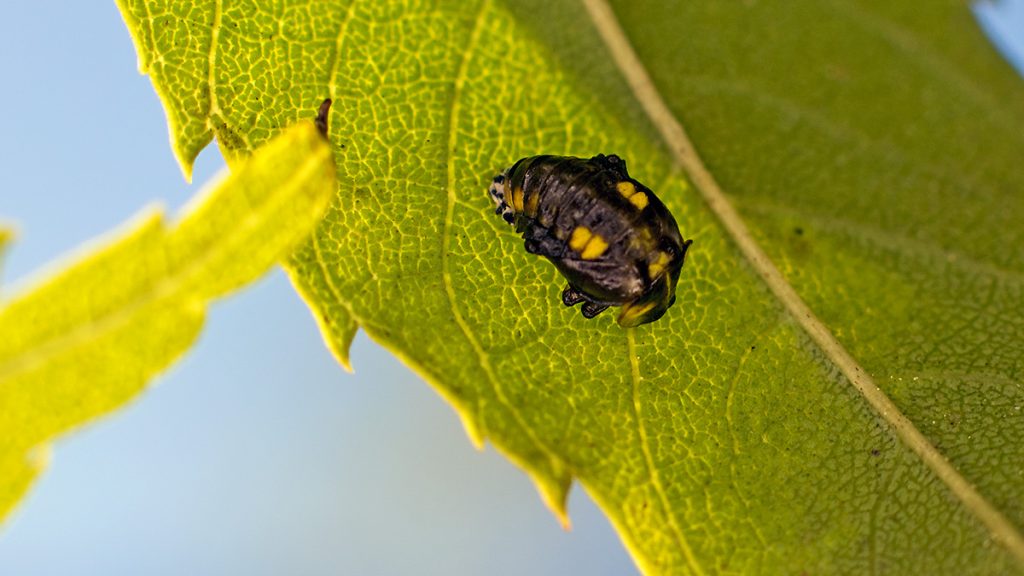
The examination of the underside of leaves in the search for new species, that has now become part of my routine, provided a Four-spotted Oak Bug (Dryophilocoris flavoquadrimaculatus) nymph, a female Oak Catkin Bug (Harpocera thoracica) and several Common Leaf Weevil (Phyllobius pyri), a very prominent species now, as well as a Lasius sp. ant. Could this be the Brown Tree Ant (Lasius brunneus)?
![Four-spotted Oak Bug [Dryophilocoris flavoquadrimaculatus]](https://downsdiary.uk/wp-content/gallery/apr_2026/BD2_3212_7D_TheDowns_20Apr2026.jpg "Four-spotted Oak Bug [Dryophilocoris flavoquadrimaculatus]")
![Oak Catkin Bug [Harpocera thoracica]](https://downsdiary.uk/wp-content/gallery/apr_2026/BD2_3231_7D_TheDowns_20Apr2026.jpg "Oak Catkin Bug [Harpocera thoracica]")
![Common Leaf Weevil [Phyllobius pyri]](https://downsdiary.uk/wp-content/gallery/apr_2026/BD2_3150-3240_7D_TheDowns_20Apr2026.jpg "Common Leaf Weevil [Phyllobius pyri]")
![ant [Lasius sp.]](https://downsdiary.uk/wp-content/gallery/apr_2026/BD2_3195_7D_TheDowns_20Apr2026.jpg "ant [Lasius sp.]")
The only newly flowering wildflower that I spotted is Common Vetch (Vicia sativa).
![Common Vetch [Vicia sativa]](https://downsdiary.uk/wp-content/gallery/wildflowers-2/4A_5357_EOS-1D_BansteadCommon_05Jun2015.jpg "Common Vetch [Vicia sativa]")
<<<< Previous page | Next Page >>>>