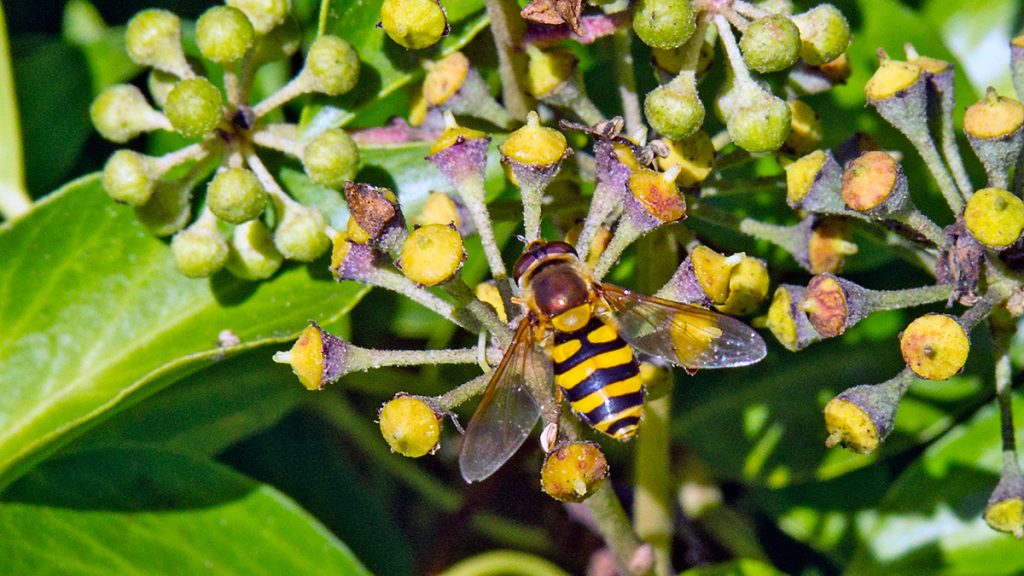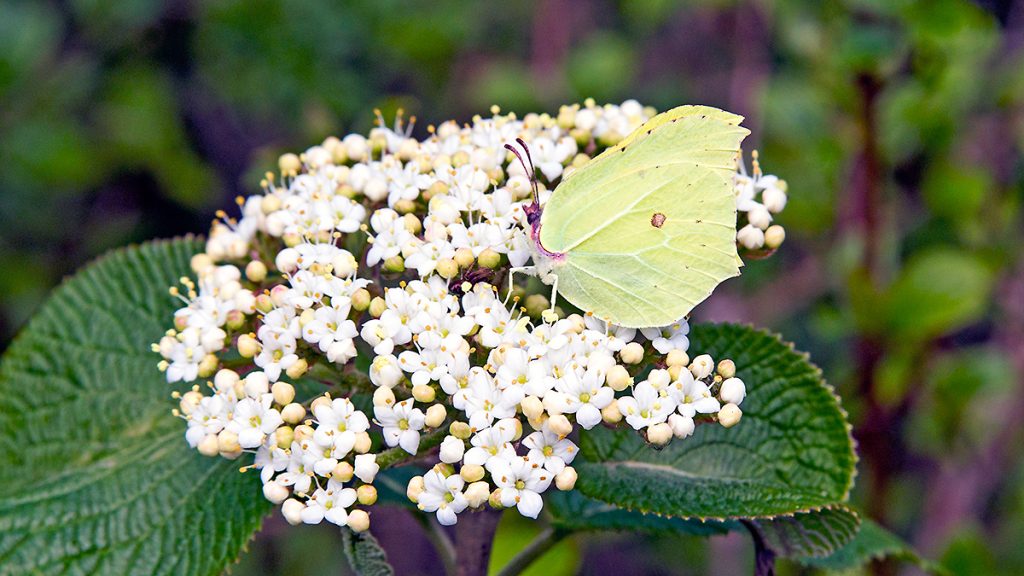
A warm, sunny day with little wind. Yet still no great numbers of butterflies, and still the usual suspects, Brimstone (Gonepteryx rhamni), Peacock (Aglais io), Speckled Wood (Pararge aegeria) and Holly Blue (Celastrina argiolus).
The Green Longhorn moth (Adela reaumurella) seemed to be out in even bigger numbers today and swarming again too.
The Common Spindle (Euonymus europaeus) tree with the Spindle Ermine moth (Yponomeuta cagnagella) cocoons is now showing some cocoons with multiple tiny caterpillars inside. A similar situation was found on one English Oak (Quercus robur) where cocoons have been spun around the new leaves at the ends of several twigs. The occupants of these cocoons are the caterpillars of the Green Oak Tortrix (Tortrix viridana) moth.
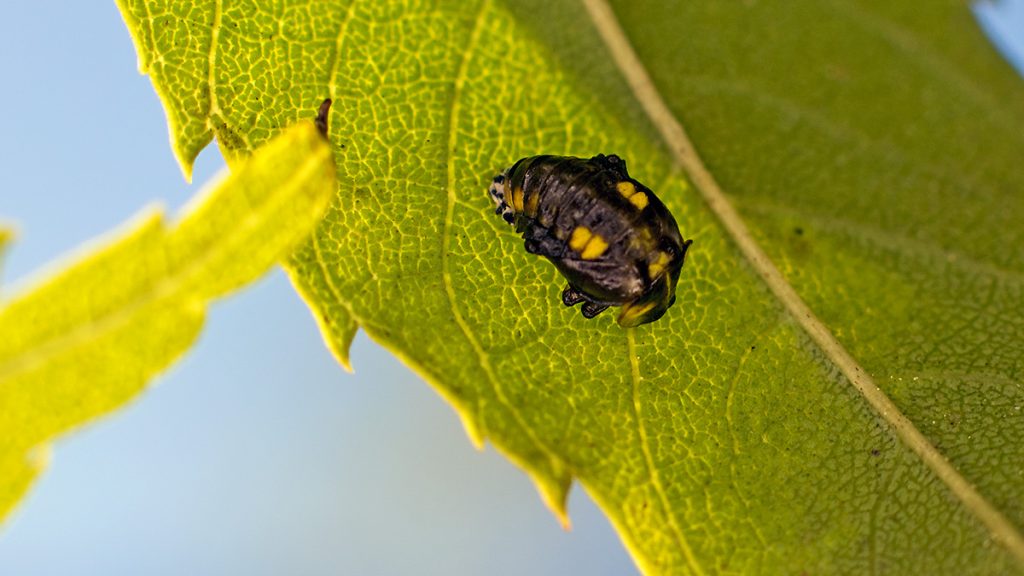
Another caterpillar found is probably an early instar of the Twin-spotted Quaker (Anorthoa munda).
![Brimstone [Gonepteryx rhamni]](https://downsdiary.uk/wp-content/gallery/apr_2026/NG8_7228_EOS-1D_TheDowns_18Apr2026.jpg "Brimstone [Gonepteryx rhamni]")
![Holly Blue [Celastrina argiolus]](https://downsdiary.uk/wp-content/gallery/apr_2026/NG8_7161_EOS-1D_TheDowns_18Apr2026.jpg "Holly Blue [Celastrina argiolus]")
![Green Longhorn [Adela reaumurella]](https://downsdiary.uk/wp-content/gallery/apr_2026/NG8_7155-7_EOS-1D_TheDowns_18Apr2026.jpg "Green Longhorn [Adela reaumurella]")
![Spindle Ermine [Yponomeuta cagnagella]](https://downsdiary.uk/wp-content/gallery/apr_2026/BD2_3039_7D_TheDowns_18Apr2026.jpg "Spindle Ermine [Yponomeuta cagnagella]")
![Green Oak Tortrix [Tortrix viridana]](https://downsdiary.uk/wp-content/gallery/apr_2026/BD2_3069_7D_TheDowns_18Apr2026.jpg "Green Oak Tortrix [Tortrix viridana]")
![Twin-spotted Quaker [Anorthoa munda]](https://downsdiary.uk/wp-content/gallery/apr_2026/BD2_3023_7D_TheDowns_18Apr2026.jpg "Twin-spotted Quaker [Anorthoa munda]")
It was a good day for Hymenoptera (bees, wasps, sawflies and ants). 7 different bee species were photographed. These were 2 mason bees, Red Mason Bee (Osmia bicornis) and Red-tailed Mason Bee (Osmia bicolor), a first sighting of this species, plus 4 mining bees, Chocolate Mining Bee (Andrena scotica), Ashy Mining Bee (Andrena cineraria), Tawny Mining Bee (Andrena fulva) and Early (or Orange-tailed) Mining Bee (Andrena haemorrhoa) and a single nomad bee, Flavous Nomad Bee (Nomada flava).
Also seen was the first of the Vespidae wasps for the year, a German Wasp (Vespula germanica), distinguished from the very similar Common Wasp (Vespula vulgaris) by the triangular yellow marks on the sides of the thorax and the facial markings. In the Common Wasp there appears to a black anchor-shaped mark on the lower face, whereas in the German Wasp this is broken into three separate black dots appearing as ‘nose and nostrils’.
A Wayward Sawfly (Tenthredo temula) was spotted on Rowan blossom, while the leaf of an English Oak (Quercus robur) was found to have two green (immature) cherry galls. These are the result of the agamic (asexual) generation of the Cherry Gall Wasp (Cynips quercusfolii) laying its eggs in the underside of the leaf during late autumn or early winter. The emerging larvae live inside the galls, eventually pupating, and the females of the sexual generation will emerge in summer from the red fully mature galls.
![two mason bees [Osmia sp.]](https://downsdiary.uk/wp-content/gallery/apr_2026/NG8_7147-89_EOS-1D_TheDowns_18Apr2026.jpg "two mason bees [Osmia sp.]")
![four mining bees [Andrena]](https://downsdiary.uk/wp-content/gallery/apr_2026/BD2_2943-79-NG8_7171-81_7D_TheDowns_18Apr2026.jpg "four mining bees [Andrena]")
![Flavous Nomad Bee [Nomada flava]](https://downsdiary.uk/wp-content/gallery/apr_2026/BD2_3146_7D_TheDowns_18Apr2026.jpg "Flavous Nomad Bee [Nomada flava]")
![German Wasp [Vespula germanica]](https://downsdiary.uk/wp-content/gallery/apr_2026/NG8_7164-BD2_2921_EOS-1D_TheDowns_18Apr2026.jpg "German Wasp [Vespula germanica]")
![Wayward Sawfly [Tenthredo temula]](https://downsdiary.uk/wp-content/gallery/apr_2026/NG8_7254_EOS-1D_TheDowns_18Apr2026.jpg "Wayward Sawfly [Tenthredo temula]")
![Cherry Gall Wasp [Cynips quercusfolii]](https://downsdiary.uk/wp-content/gallery/apr_2026/BD2_3093_7D_TheDowns_18Apr2026.jpg "Cherry Gall Wasp [Cynips quercusfolii]")
Four species of Coleoptera (beetles) were located, 3 beetles, a soldier beetle (Cantharis decipiens) on a Stinging Nettle (Urtica dioica), a Cabbage-stem Flea Beetle (Psylliodes chrysocephala) on Garlic Mustard (Alliaria petiolata) and a click beetle (Limonius poneli?) on Common Dogwood (Cornus sanguinea), plus an Apple Fruit Weevil (Tatianaerhynchites aequatus) on a Rowan (Sorbus aucuparia) leaf. The ID of the click beetle remains tentative, but it is based on its uniform black/dark colour, size (about 7mm) and known distribution.
I photographed four species of Hemiptera (true bugs), 2 bugs and 2 aphids. All but one were found exactly where you’d expect from their name. The very variable Brassica Shieldbug (Eurydema oleracea) that occurs in two forms, red and pale, was found on Horseradish (Armoracia rusticana), a plant of the cabbage (Brassica family). A Birch Catkin Bug (Kleidocerys resedae) was found on a Silver Birch (Betula pendula) leaf, after finding these in small overwintering groups on a variety of plants through the winter months. Common Sycamore Aphid (Drepanosiphum platanoidis) was seen on Sycamore (Acer pseudoplatanus) leaves, together with another aphid, Black Bean Aphid (Aphis fabae), the asexual generation of which frequents a wide variety of woody plants.
A fly of the Anthomyiidae family was found on an English Oak leaf. That is the best I can do with an ID as there are dozens of similar looking flies in the family, which preferably require microscopic examination to separate them.
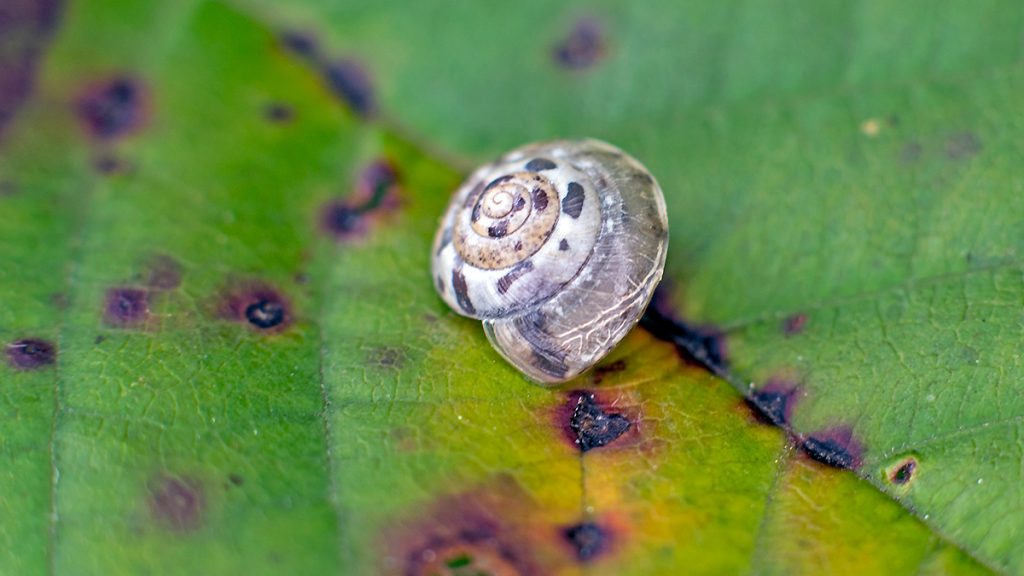
While photographing the Brassica Shieldbugs on a clump of Horseradish springing up between Common Hogweed (Heracleum sphondylium) plants I came across a White-lipped Snail (Cepaea hortensis) on a Hogweed leaf.
![soldier beetle [Cantharis decipiens] and Cabbage-stem Flea Beetle [Psylliodes chrysocephala]](https://downsdiary.uk/wp-content/gallery/apr_2026/BD2_2963-3131_7D_TheDowns_18Apr2026.jpg "soldier beetle [Cantharis decipiens] and Cabbage-stem Flea Beetle [Psylliodes chrysocephala]")
![click beetle [Limonius poneli?]](https://downsdiary.uk/wp-content/gallery/apr_2026/BD2_3054_7D_TheDowns_18Apr2026.jpg "click beetle [Limonius poneli?]")
![Apple Fruit Weevil [Tatianaerhynchites aequatus]](https://downsdiary.uk/wp-content/gallery/apr_2026/BD2_3111_7D_TheDowns_18Apr2026.jpg "Apple Fruit Weevil [Tatianaerhynchites aequatus]")
![Brassica Shieldbug [Eurydema oleracea]](https://downsdiary.uk/wp-content/gallery/apr_2026/BD2_2956-NG8_7205_7D_TheDowns_18Apr2026.jpg "Brassica Shieldbug [Eurydema oleracea]")
![Birch Catkin Bug [Kleidocerys resedae]](https://downsdiary.uk/wp-content/gallery/apr_2026/BD2_3049_7D_TheDowns_18Apr2026.jpg "Birch Catkin Bug [Kleidocerys resedae]")
![Common Sycamore Aphid [Drepanosiphum platanoidis]](https://downsdiary.uk/wp-content/gallery/apr_2026/BD2_3013-32_7D_TheDowns_18Apr2026.jpg "Common Sycamore Aphid [Drepanosiphum platanoidis]")
![Black Bean Aphid [Aphis fabae]](https://downsdiary.uk/wp-content/gallery/apr_2026/BD2_3003_7D_TheDowns_18Apr2026.jpg "Black Bean Aphid [Aphis fabae]")
![fly [Anthomyiidae sp.]](https://downsdiary.uk/wp-content/gallery/apr_2026/BD2_2937-39_7D_TheDowns_18Apr2026.jpg "fly [Anthomyiidae sp.]")
![White-lipped Snail [Cepaea hortensis]](https://downsdiary.uk/wp-content/gallery/apr_2026/NG8_7200_EOS-1D_TheDowns_18Apr2026.jpg "White-lipped Snail [Cepaea hortensis]")
Plants beginning to flower are two members of the cabbage family (Brassicaceae), Horseradish (Armoracia rusticana) and Garlic Mustard (Alliaria petiolata), and Tormentil (Potentilla erecta). Tormentil belongs to the rose family (Rosaceae) and is one of the rather uncommon members of the family whose flowers only have 4 petals.
Even newly-opened leaves and unopened flower buds are not immune to attack by mildew, as I found Dogwood Mildew (Erysiphe tortilis) already present on a Common Dogwood (Cornus sanguinea).
![two members of the cabbage family [Brassicaceae]](https://downsdiary.uk/wp-content/gallery/apr_2026/NG8_7192-7256_EOS-1D_TheDowns_18Apr2026.jpg "two members of the cabbage family [Brassicaceae]")
![Tormentil [Potentilla erecta]](https://downsdiary.uk/wp-content/gallery/apr_2026/BD2_3096_7D_TheDowns_18Apr2026.jpg "Tormentil [Potentilla erecta]")
![Dogwood Mildew [Erysiphe tortilis]](https://downsdiary.uk/wp-content/gallery/apr_2026/NG8_7221-BD2_3056_EOS-1D_TheDowns_18Apr2026.jpg "Dogwood Mildew [Erysiphe tortilis]")
That was quite a day, with some 30 different species photographed.
<<<< Previous page | Next Page >>>>