A cloudy morning with intermittent showers, so I waited until after lunch to get onto the Downs. At least the sun was shining, but it was quite windy. Butterfly numbers well down on two days ago with just a few Brimstone and Speckled Wood about, and a single Peacock.
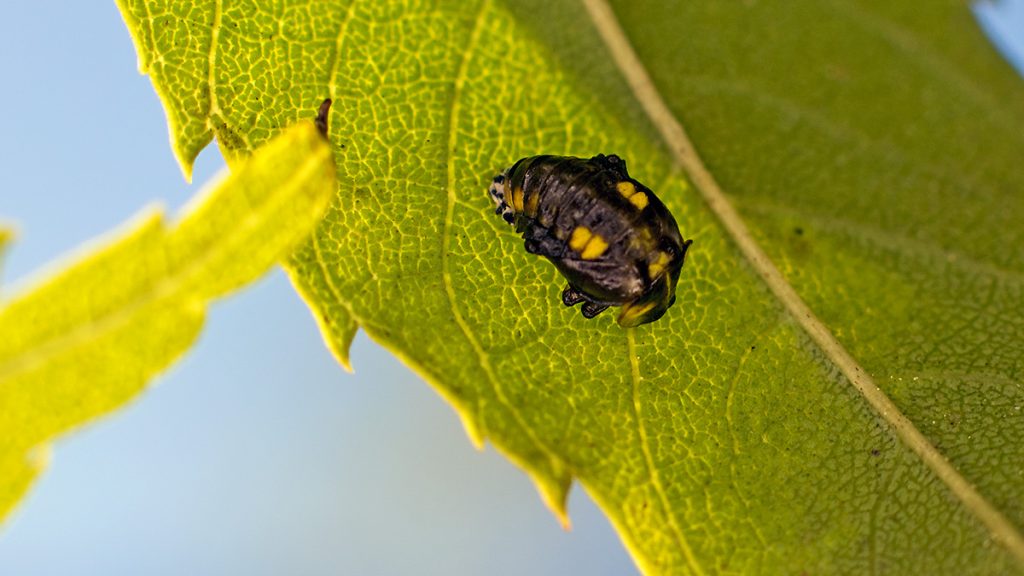
Last year was a bumper year for Spindle Ermine moth (Yponomeuta cagnagella) caterpillars with their silk cocoons festooning the Common Spindle (Euonymus europaeus) trees. I first noted these on 2nd May last year and found my first for this year today. Where last year the cocoons were large structures housing dozens of caterpillars feeding gregariously, the cocoons seen today were small and discreet housing single caterpillars. Maybe these are the early few and we are still in for an invasion of last year’s proportions. The next 2-3 weeks will answer that question.
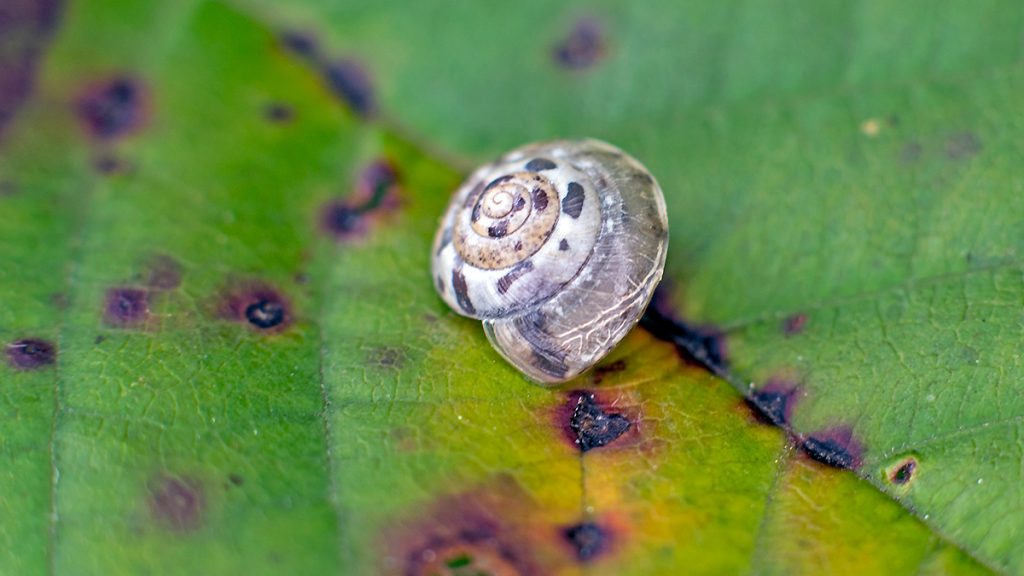
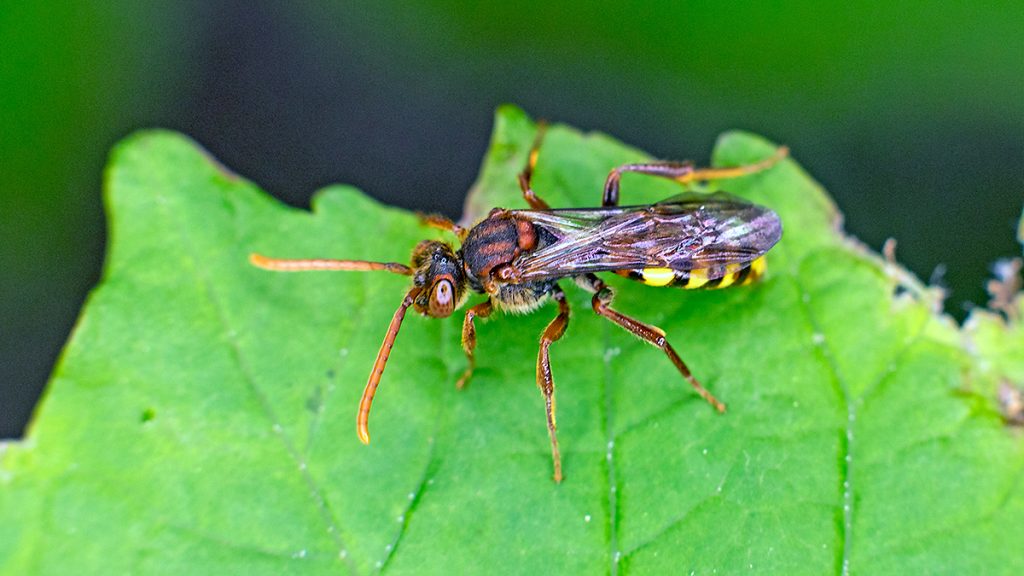
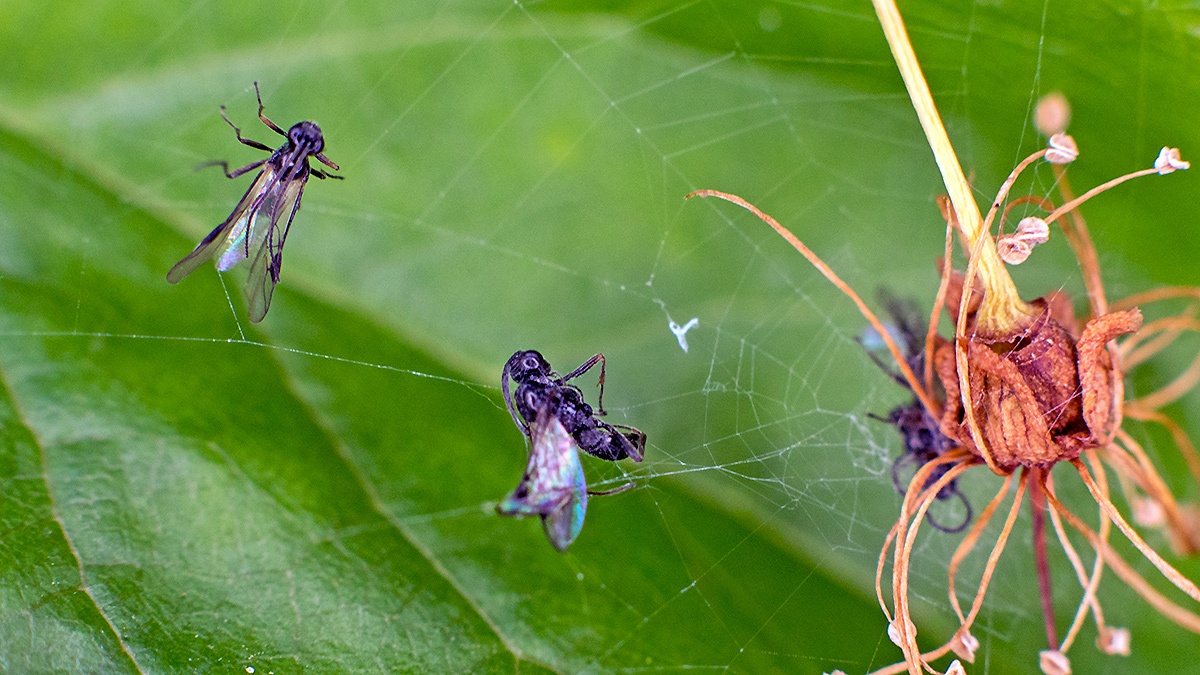
First sighting of the afternoon was a female Flavous Nomad Bee (Nomada flava) on a sycamore leaf. Another bee seen was a small Halictidae sweat bee, one of the Halictus sp. or Lasioglossum sp. furrow bees (not the best of images of this one). Other Hymenoptera were some parasitic wasps trapped in a spider’s web on a Cherry Plum (Prunus cerasifera) leaf.
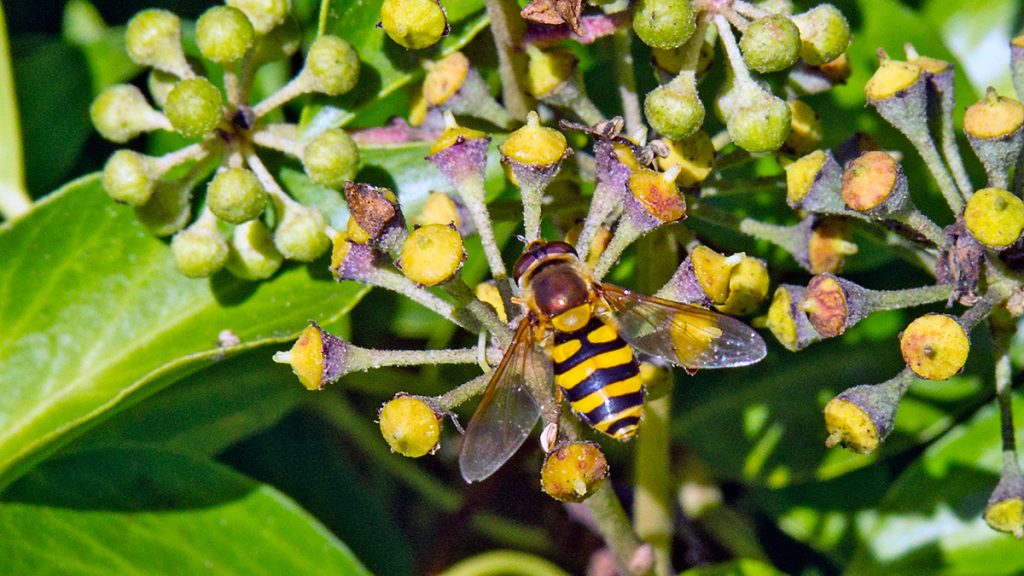
Two new flies for the season were a female Batman Hoverfly (Myathropa florea) on a bramble leaf and a mating pair of White-winged Bibio (Bibio leucopterus), also a completely new species for me, on a sycamore leaf.
Two weevils seen were Deer Broad-nosed Weevil (Polydrusus cervinus), first noted two days ago, and the Yellow Weevil (Lixus iridis). This large (about 15mm) weevil is a relatively recent arrival from continental Europe, its presence confirmed only in 2020-21 from a handful of sites in North Surrey, of which Banstead Downs is one.
I might have missed this Lixus weevil, had someone not pointed it out to me. Thanks, Steve! My images are not as good as I had hoped so I will be back to that site to try again.
![Spindle Ermine [Yponomeuta cagnagella]](https://downsdiary.uk/wp-content/gallery/apr_2026/BD2_2755_7D_TheDowns_16Apr2026.jpg "Spindle Ermine [Yponomeuta cagnagella]")
![Flavous Nomad Bee [Nomada flava]](https://downsdiary.uk/wp-content/gallery/apr_2026/BD2_2700_7D_TheDowns_16Apr2026.jpg "Flavous Nomad Bee [Nomada flava]")
![furrow bee [unidentified]](https://downsdiary.uk/wp-content/gallery/apr_2026/NG8_7018_EOS-1D_TheDowns_16Apr2026.jpg "furrow bee [unidentified]")
![Batman Hoverfly [Myathropa florea]](https://downsdiary.uk/wp-content/gallery/apr_2026/NG8_7021_EOS-1D_TheDowns_16Apr2026.jpg "Batman Hoverfly [Myathropa florea]")
![White-winged Bibio [Bibio leucopterus]](https://downsdiary.uk/wp-content/gallery/apr_2026/BD2_2762_7D_TheDowns_16Apr2026.jpg "White-winged Bibio [Bibio leucopterus]")
![Deer Broad-nosed Weevil [Polydrusus cervinus]](https://downsdiary.uk/wp-content/gallery/apr_2026/BD2_2712_7D_TheDowns_16Apr2026.jpg "Deer Broad-nosed Weevil [Polydrusus cervinus]")
![Yellow Weevil [Lixus iridis]](https://downsdiary.uk/wp-content/gallery/apr_2026/NG8_7034_EOS-1D_TheDowns_16Apr2026.jpg "Yellow Weevil [Lixus iridis]")
![Yellow Weevil [Lixus iridis]](https://downsdiary.uk/wp-content/gallery/apr_2026/NG8_7027_EOS-1D_TheDowns_16Apr2026.jpg "Yellow Weevil [Lixus iridis]")
What a difference two days makes. On my last visit the few Beech (Fagus sylvatica) trees that I have been monitoring still had tightly closed leaf buds, but today there are already well-formed leaves. A wildflower starting to show is Hedgerow Crane’s-bill (Geranium pyrenaicum). I also found a Carex sp. sedge, likely to be either Pendulous Sedge (C. pendula) or Wood Sedge (C. sylvatica). I will monitor this one as only when it begins flowering will I know for sure what it is.
[P.S. 17th April – had I been a bit more observant I would have noticed a second Carex close to the first, still showing the dried-up flowers from last summer that show that this is definitely Pendulous Sedge (C. pendula)]
![European Beech [Fagus sylvatica]](https://downsdiary.uk/wp-content/gallery/apr_2026/NG8_7009_EOS-1D_TheDowns_16Apr2026.jpg "European Beech [Fagus sylvatica]")
![Hedgerow Crane’s-bill [Geranium pyrenaicum]](https://downsdiary.uk/wp-content/gallery/apr_2026/NG8_7017-BD2_2732_EOS-1D_TheDowns_16Apr2026.jpg "Hedgerow Crane’s-bill [Geranium pyrenaicum]")
![Pendulous Sedge [Carex pendula]](https://downsdiary.uk/wp-content/gallery/apr_2026/NG8_7011_EOS-1D_TheDowns_16Apr2026.jpg "Pendulous Sedge [Carex pendula]")
![Pendulous Sedge [Carex pendula]](https://downsdiary.uk/wp-content/gallery/apr_2026/NG8_7053_EOS-1D_TheDowns_17Apr2026.jpg "Pendulous Sedge [Carex pendula]")
<<<< Previous page | Next Page >>>>