A review of my 2025 posts on Banstead Downs
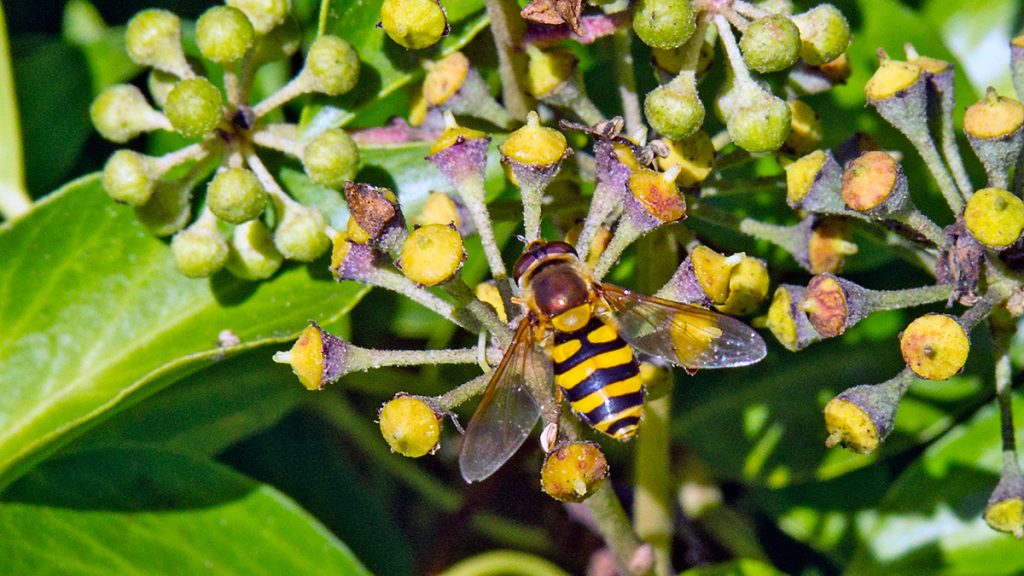
First the numbers. This year I have photographed and recorded in my posts a total of 340 different species of insects, arachnids and springtails, with a further 16 species of birds and mammals for a total of 356 animal species. Plant species totalled 156. Add to this all the fungi, slime moulds and lichens, many of which I have not even attempted to identify, and I have posted approximately 540 different species in my posts throughout the year.
It has been an exceptional year for the both the variety and numbers of insects to be seen, possibly due to the fact that 2025 is now officially the hottest ever year recorded in England. I am even seeing signs of leaf buds opening on trees and very late (or conversely very early) flowering of some wildflowers. The plants don’t seem to know what season it is either, such has been the weather.
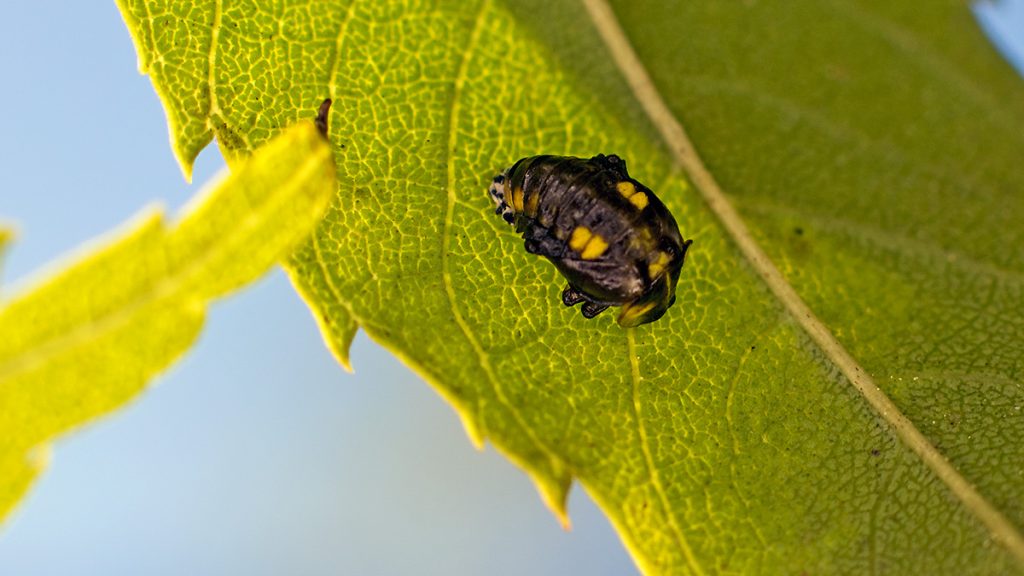
I started my 2025 diary quite late, towards the end of March, really expecting only to be documenting the appearance of different wildflowers and the more obvious insects with which we are all familiar, such as butterflies, moths, bees, ladybirds and plant bugs. However, what I have learned this year is that if you take the time to stop and search for new things you will find them. Those familiar butterflies and bees are obvious because they are at the large end of the size scale and they rest prominently on top of flowers and leaves. Smaller ones, particularly if they are stationary, are a bit more difficult to spot, but also many species will be found only if you look at the underside of leaves. Many aphids and the larvae of numerous moths, sawflies and flies will only be found this way.
Each plant has its own little eco-system, hosting insects, even mildews, that are specific to that plant only. 2026 will see me paying more attention to the smaller plants and not just the prominent species like hogweed, thistles and yellow composites that attract the pollinating insects. Galls and leaf mines are something that I have learned a lot about this year and I will be seeking them out on a much wider range of plants at a much smaller scale than the familiar ones like oak apples.
There have been several ‘firsts’ for me in 2025. I had been blithely unaware of the existence of things like scorpionflies, springtails and slime moulds. Now I even have photographs of them!
I have really only scratched the surface with the 500+ species that I recorded this year. During processing of my many images I have found very small species that are <2 mm in size, which were not the primary targets of these images. Indeed, this is how I found my first globular springtails. 1.5 mm, though, is about the limit of reasonably clear resolution with the camera equipment that I have. Any ‘speck’ on a leaf will now be examined with a portable microscope that I have added to my arsenal, to see if it warrants a macro shot with the camera set up for that purpose. There is much to be found at the <2 mm size. I’d be guessing that I would not be far out if I said that what I have found this year is less than 5% of what I could potentially find.
With plants too I have learned much this year. Having returned to the UK after spending most of my working life in Africa I felt comfortable in identifying common trees such as oak, ash, yew, rowan, sycamore, birch, hawthorn and beech. Simply because I have been looking for insects on their leaves I can now say with some confidence that I can add hazel, goat willow (sallow), lime, Norway Maple, spindle, privet, dogwood, buckthorn, wild cherry, cherry laurel, whitebeam and wayfaring tree, among others, to the list. I can now separate Small Scabious and Field Scabious, Hairy St John’s Wort and Perforate St John’s Wort, and Common Knapweed and Greater Knapweed in the field, without resorting to photos to check later.
I have certainly proved to myself this year that ‘you are never too old to learn’.
My hope for my Downs diary in 2026 is that it will be, in the words of a good friend, “Onwards and upwards.”
<<<< Previous page | Next Page >>>>