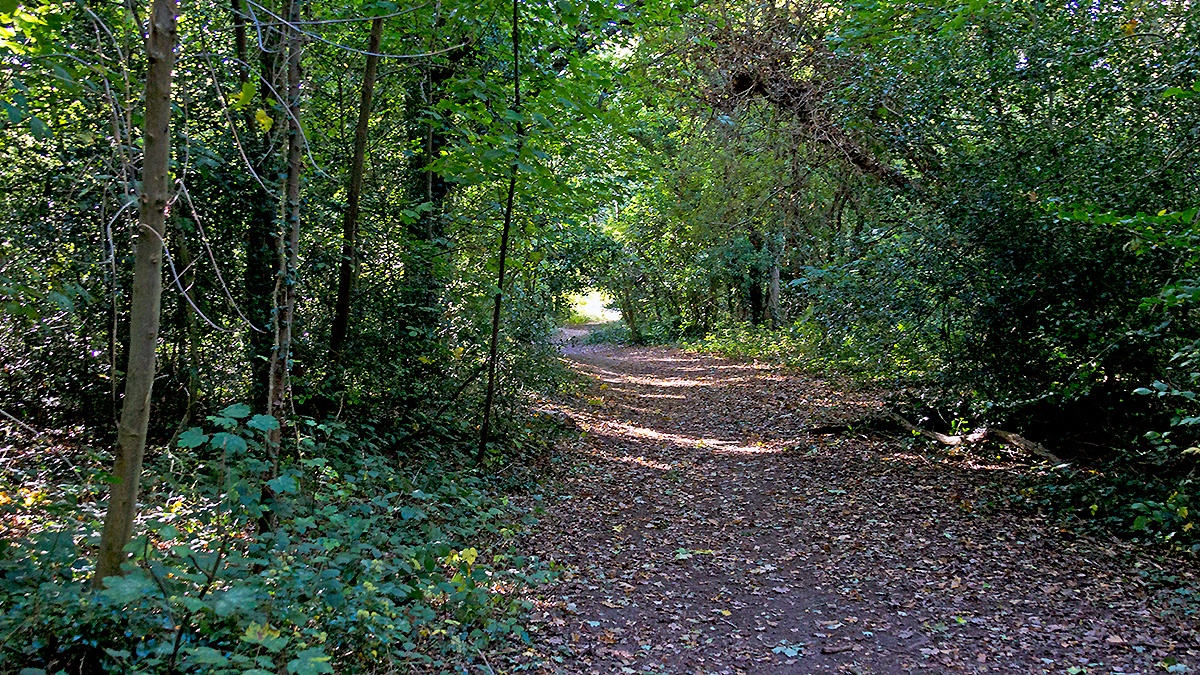
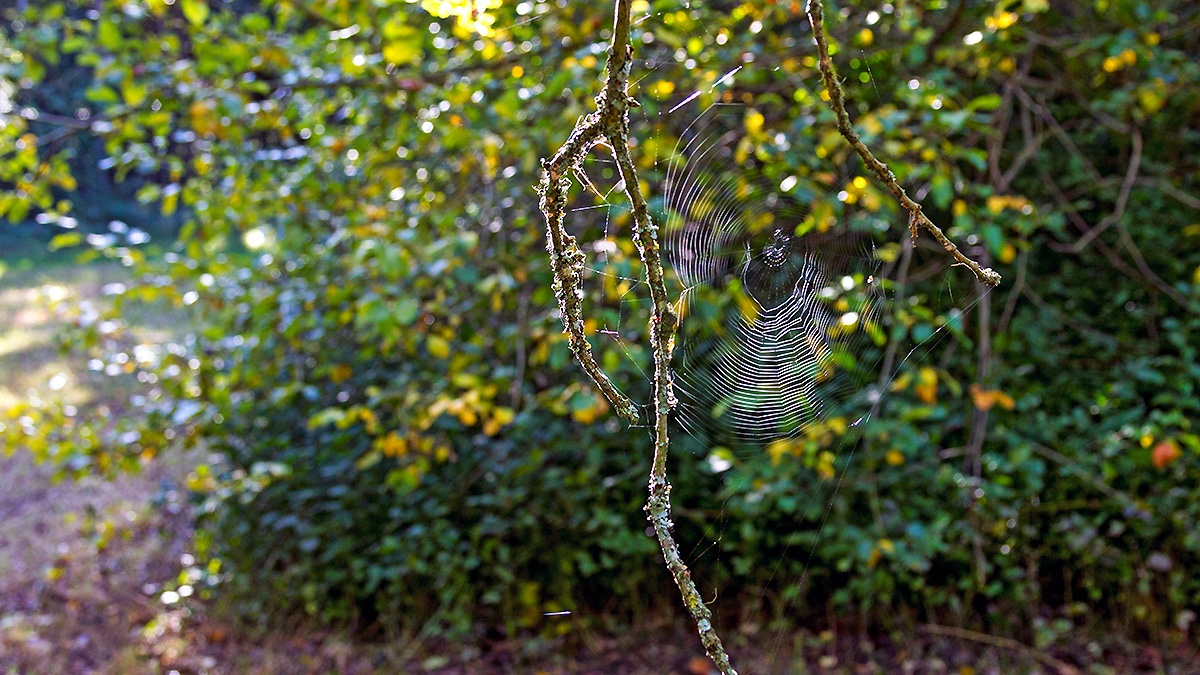
It looks like ‘Fall’ has started. After some rain and very strong winds in the last few days the ground is becoming covered in leaves. It is a great time of year for spider webs too, as the low angle sun picks them out very well.
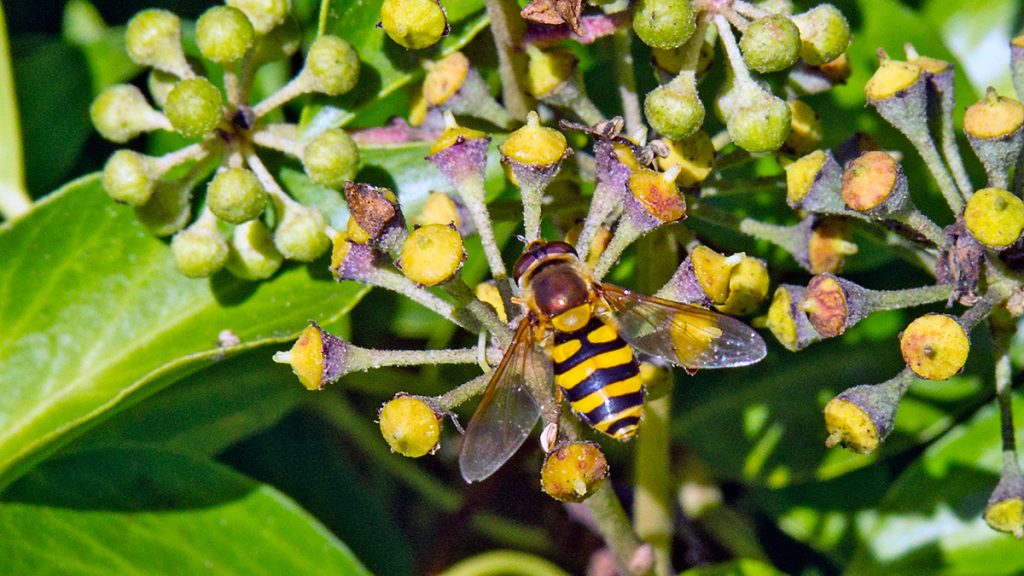
By far the most common insect to be seen is the Common Wasp (Vespula vulgaris), with dozens searching the tangles of brambles in particular. I even managed to see a new insect today, an ichneumon wasp (Dusona circumspectans) found on a sycamore leaf.
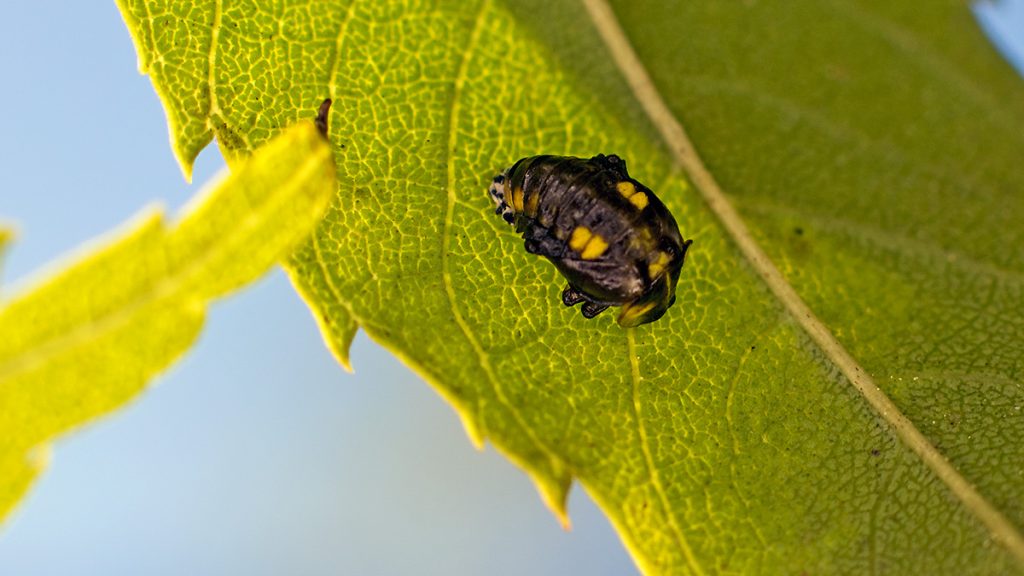
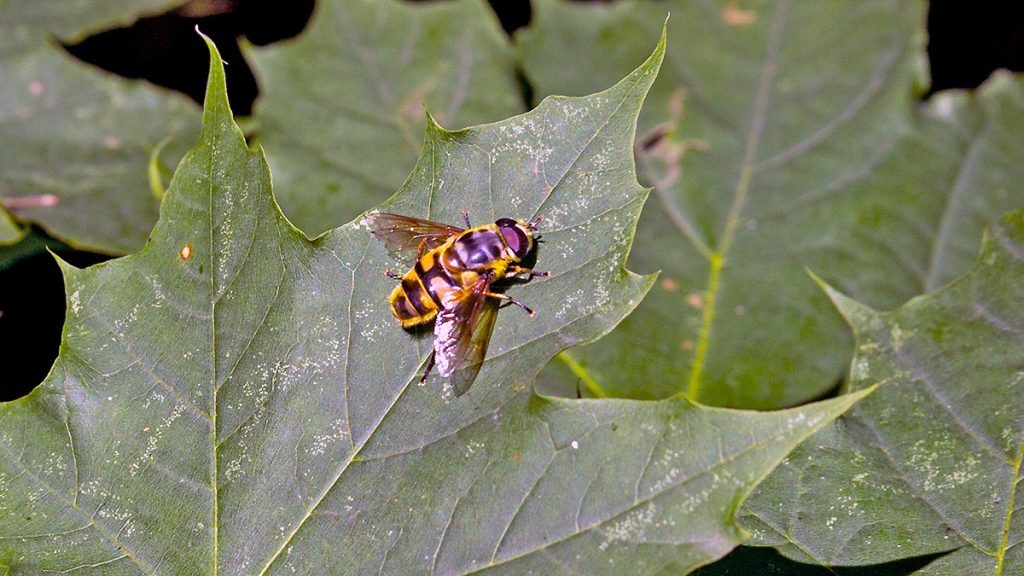
Other images added were a a Curled Rose Sawfly (Allantus cinctus) larva on a rowan leaf, a Batman Hoverfly (Myathropa florea) on a Norway Maple, a Lucilia sp. green bottle and a Harlequin Ladybird (Harmonia axyridis) and a Sapling Sycamore Aphid (Drepanosiphum acerinum?) on the same sycamore sapling. On the same leaf as the aphid I found what I believe to be the egg of a Syrphus sp. hoverfly. The hoverfly larva emerging from the egg is one of the main predators of aphids.
While walking along one of the woodland paths I walked into a silk thread hanging from an oak branch on which a tiny caterpillar had been dangling. The caterpillar landed on my arm and I coaxed it onto a finger to get a photo. It would seem to be the larva of the Oak Bent-wing moth (Bucculatrix ulmella). A few yards further along the path I found Elm Pimple Gall Mite (Aceria campestricola) on Wych Elm (Ulmus glabra) leaves.
![Common Wasp [Vespula vulgaris]](https://downsdiary.uk/wp-content/gallery/oct_2025/NG8_4418_EOS-1D_TheDowns_06Oct2025.jpg "Common Wasp [Vespula vulgaris]")
![ichneumon wasp [Dusona circumspectans]](https://downsdiary.uk/wp-content/gallery/oct_2025/NG8_4443_EOS-1D_TheDowns_06Oct2025.jpg "ichneumon wasp [Dusona circumspectans]")
![Curled Rose Sawfly [Allantus cinctus]](https://downsdiary.uk/wp-content/gallery/oct_2025/NG8_4448_EOS-1D_TheDowns_06Oct2025.jpg "Curled Rose Sawfly [Allantus cinctus]")
![Batman Hoverfly [Myathropa florea]](https://downsdiary.uk/wp-content/gallery/oct_2025/NG8_4404_EOS-1D_TheDowns_06Oct2025.jpg "Batman Hoverfly [Myathropa florea]")
![green bottle fly [Lucilia sp.]](https://downsdiary.uk/wp-content/gallery/oct_2025/JO8V3858_EOS-1D_TheDowns_06Oct2025.jpg "green bottle fly [Lucilia sp.]")
![Harlequin Ladybird [Harmonia axyridis]](https://downsdiary.uk/wp-content/gallery/oct_2025/JO8V3872_EOS-1D_TheDowns_06Oct2025.jpg "Harlequin Ladybird [Harmonia axyridis]")
![Sapling Sycamore Aphid [Drepanosiphum acerinum?]](https://downsdiary.uk/wp-content/gallery/oct_2025/JO8V3863_EOS-1D_TheDowns_06Oct2025.jpg "Sapling Sycamore Aphid [Drepanosiphum acerinum?]")
![hoverfly egg [Syrphidae sp.?]](https://downsdiary.uk/wp-content/gallery/oct_2025/JO8V3861_EOS-1D_TheDowns_06Oct2025.jpg "hoverfly egg [Syrphidae sp.?]")
![Oak Bent-wing [Bucculatrix ulmella]](https://downsdiary.uk/wp-content/gallery/oct_2025/JO8V3883_EOS-1D_TheDowns_06Oct2025.jpg "Oak Bent-wing [Bucculatrix ulmella]")
![Elm Pimple Gall Mite [Aceria campestricola]](https://downsdiary.uk/wp-content/gallery/oct_2025/NG8_4611-12_EOS-1D_TheDowns_11Oct2025.jpg "Elm Pimple Gall Mite [Aceria campestricola]")
In the old sheep enclosure I came across several tight clumps of what I believe may be Sulphur Tuft (Hypholoma fasciculare) mushrooms. I may battle with fungus identification, but I am not even going to attempt to ID lichens and mosses. So I merely took a couple of what I think are interesting images of some on a sycamore tree.
[Update: 18 Dec 2025 – the lichen in one of the images may possibly be Common Sunburst Lichen (Xanthoria parietina)].
![Sulphur Tuft [Hypholoma fasciculare?]](https://downsdiary.uk/wp-content/gallery/oct_2025/NG8_4394-JO8V3845_EOS-1D_TheDowns_06Oct2025.jpg "Sulphur Tuft [Hypholoma fasciculare?]")
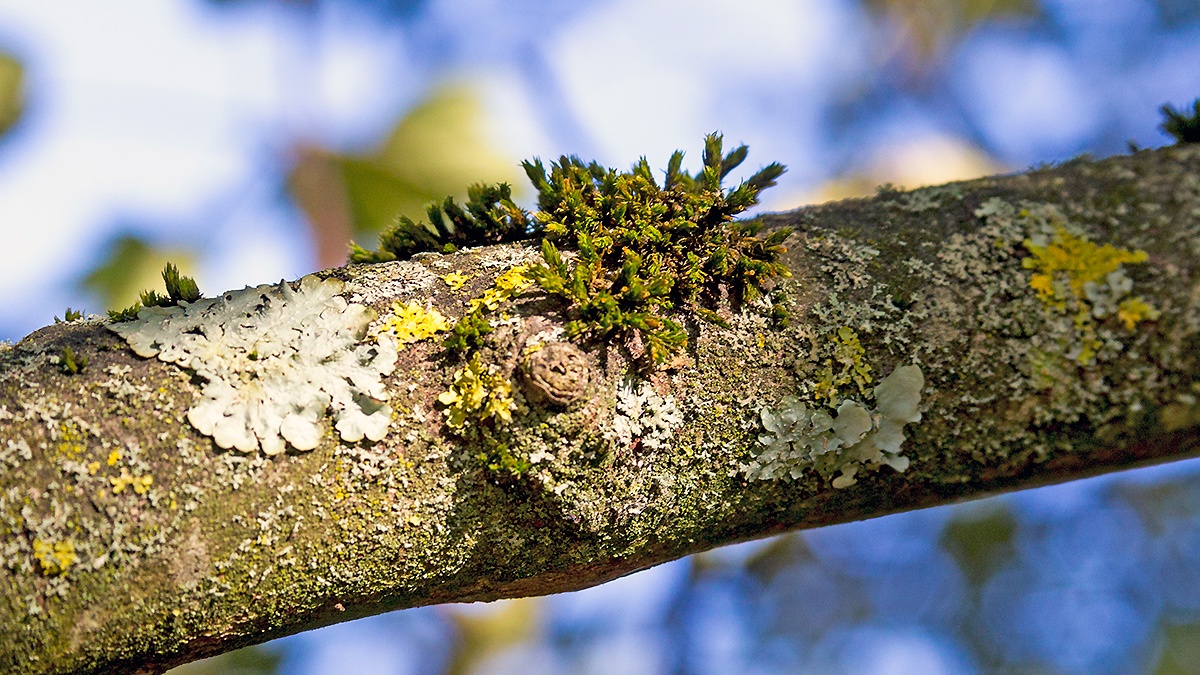
![Common Sunburst Lichen [Xanthoria parietina?]](https://downsdiary.uk/wp-content/gallery/oct_2025/JO8V3870_EOS-1D_TheDowns_06Oct2025.jpg "Common Sunburst Lichen [Xanthoria parietina?]")
Nature Note for the Day
We have all admired the beauty of a spider’s web, but do we know how the spider spins them? Or, what is a spider’s silk thread made from? Rather than have me explain, what better than to see what the Natural History Museum has to say on this subject.
<<<< Previous page | Next Page >>>>