Maybe the butterfly season is now officially closed. ZERO count this morning.
With the area of the old sheep enclosure now accessible I decided to check out some of the trees in this area and added a few things to my lists.
On a Common Hazel (Corylus avellana) leaf I found a leaf mine possibly caused by the larva of the Nut Leaf Blister Moth (Phyllonorycter coryli). It is one of the few Phyllonorycter moths whose larvae produce leaf mines on the upper surfaces of leaves rather than the underside. The mine appears as a large blotch on the leaf with a parchment-like upper surface. The underside of the leaf may show some leaf contortion at the site.
A tree with ‘not quite sycamore’ leaves turned out to be a first for me, a Norway Maple (Acer platanoides). On it I found the leaf mine of a Stigmella sp., possibly the Maple Dot (Stigmella aceris) moth, a leaf cone formed by the larva of a moth, possibly the Maple Stilt (Caloptilia semifascia) moth and a white powdery infection of a Sawadaea sp. mildew, possibly S. tulasnei or S. bicornis.
![Nut Leaf Blister Moth [Phyllonorycter coryli]](https://downsdiary.uk/wp-content/gallery/sep-2025/NG8_4192_EOS-1D_TheDowns_30Sep2025.jpg "Nut Leaf Blister Moth [Phyllonorycter coryli]")
![Nut Leaf Blister Moth [Phyllonorycter coryli?]](https://downsdiary.uk/wp-content/gallery/sep-2025/NG8_4203-05_EOS-1D_TheDowns_30Sep2025.jpg "Nut Leaf Blister Moth [Phyllonorycter coryli?]")
![Norway Maple [Acer platanoides]](https://downsdiary.uk/wp-content/gallery/sep-2025/NG8_4217_EOS-1D_TheDowns_30Sep2025.jpg "Norway Maple [Acer platanoides]")
![Maple Dot [Stigmella aceris?]](https://downsdiary.uk/wp-content/gallery/sep-2025/NG8_4215_EOS-1D_TheDowns_30Sep2025.jpg "Maple Dot [Stigmella aceris?]")
![Maple Stilt [Caloptilia semifascia?]](https://downsdiary.uk/wp-content/gallery/sep-2025/NG8_4218_EOS-1D_TheDowns_30Sep2025.jpg "Maple Stilt [Caloptilia semifascia?]")
![powdery mildew [Sawadaea sp.?]](https://downsdiary.uk/wp-content/gallery/sep-2025/NG8_4216_EOS-1D_TheDowns_30Sep2025.jpg "powdery mildew [Sawadaea sp.?]")
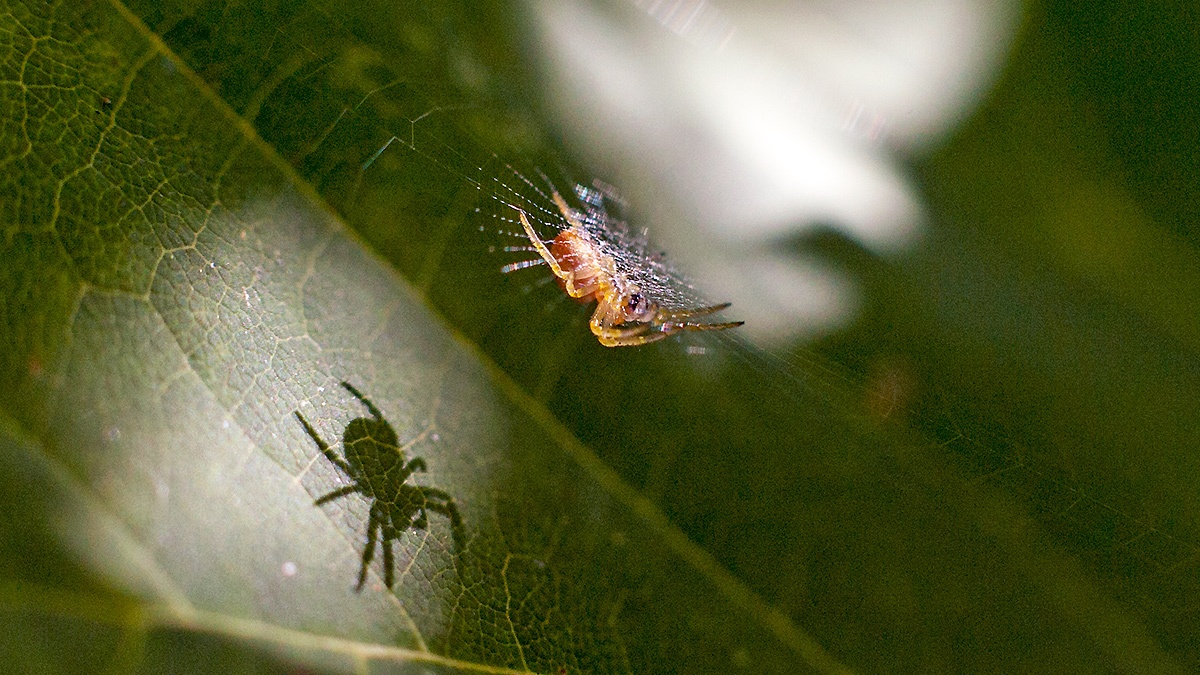
Also found on the Norway Maple was a small spider sitting on its web. It is some 3-3.5 mm in size and I’ve no idea whether this is an adult or not. Equally no idea on an ID either. It was simply one of those photo opportunities that I could not resist.
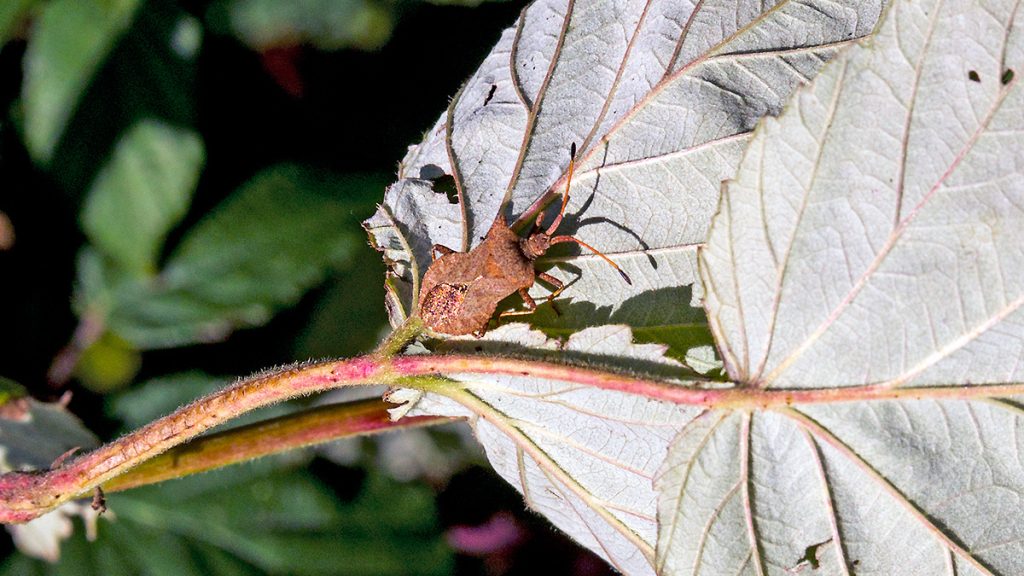
Some other images added included a ventral view of a Garden Spider (Araneus diadematus) on its web, to add to the dorsal view posted a while ago, as well as an adult Dock Bug (Coreus marginatus) on a Raspberry (Rubus idaeus) leaf. This is also the first time this year I have seen Raspberry, probably believing up till now that it was just another bramble.
![European Garden Spider [Araneus diadematus]](https://downsdiary.uk/wp-content/gallery/sep-2025/NG8_4211_EOS-1D_TheDowns_30Sep2025.jpg "European Garden Spider [Araneus diadematus]")
![Dock Bug [Coreus marginatus]](https://downsdiary.uk/wp-content/gallery/sep-2025/NG8_4198_EOS-1D_TheDowns_30Sep2025.jpg "Dock Bug [Coreus marginatus]")
Broadleaf Plantain (Plantago major) has now produced its seeds along with many other plants, so it seems very late to be recording a new flower, but I found Prickly Sow-thistle (Sonchus asper) in the area recently vacated by the sheep flock. The plants no doubt had put on a quick spurt of growth after being subjected to sheep grazing for most of the summer. One was displaying a new flower while its close neighbours already had a head of seeds.
I only realised at the image processing stage that there was a tiny chalcid wasp on one of the Sow-thistle leaves. Of course, had I realised this while shooting the image I would have tried for a close-up with the other camera, so this wasp will just have to go down as unidentified.
![Broadleaf Plantain [Plantago major]](https://downsdiary.uk/wp-content/gallery/sep-2025/NG8_4240_EOS-1D_TheDowns_30Sep2025.jpg "Broadleaf Plantain [Plantago major]")
![Prickly Sow-thistle [Sonchus asper]](https://downsdiary.uk/wp-content/gallery/sep-2025/NG8_4238_EOS-1D_TheDowns_30Sep2025.jpg "Prickly Sow-thistle [Sonchus asper]")
![Prickly Sow-thistle [Sonchus asper]](https://downsdiary.uk/wp-content/gallery/sep-2025/NG8_4237inset_EOS-1D_TheDowns_30Sep2025.jpg "Prickly Sow-thistle [Sonchus asper]")
<<<< Previous page | Next Page >>>>