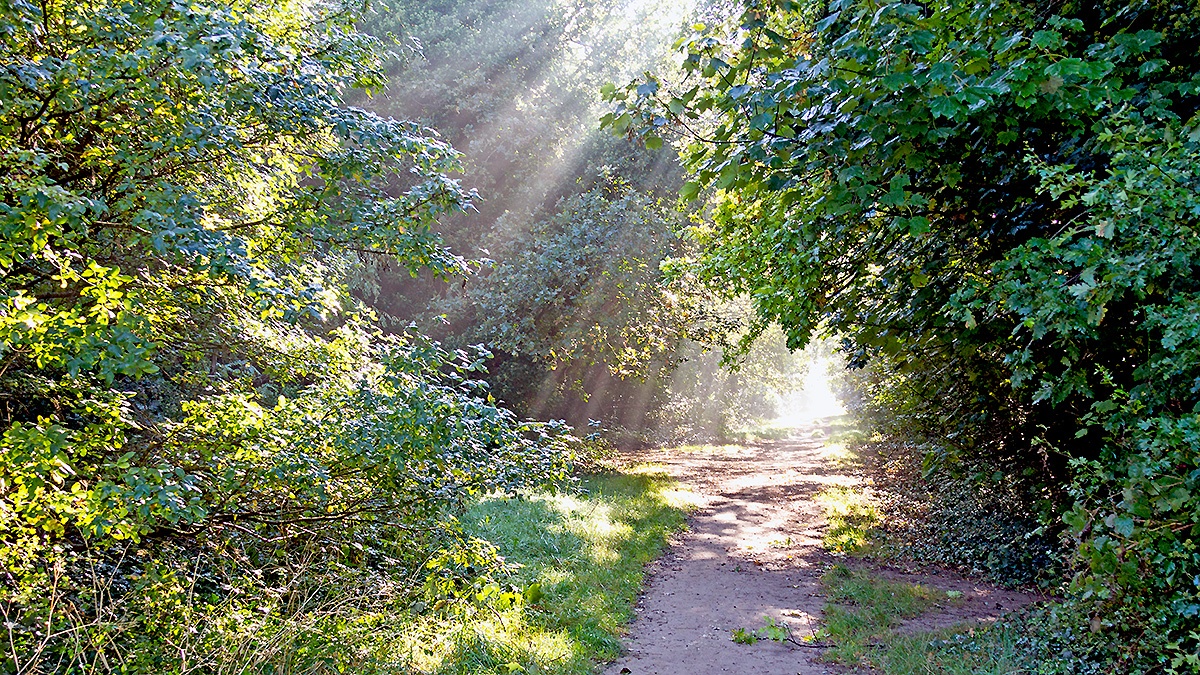
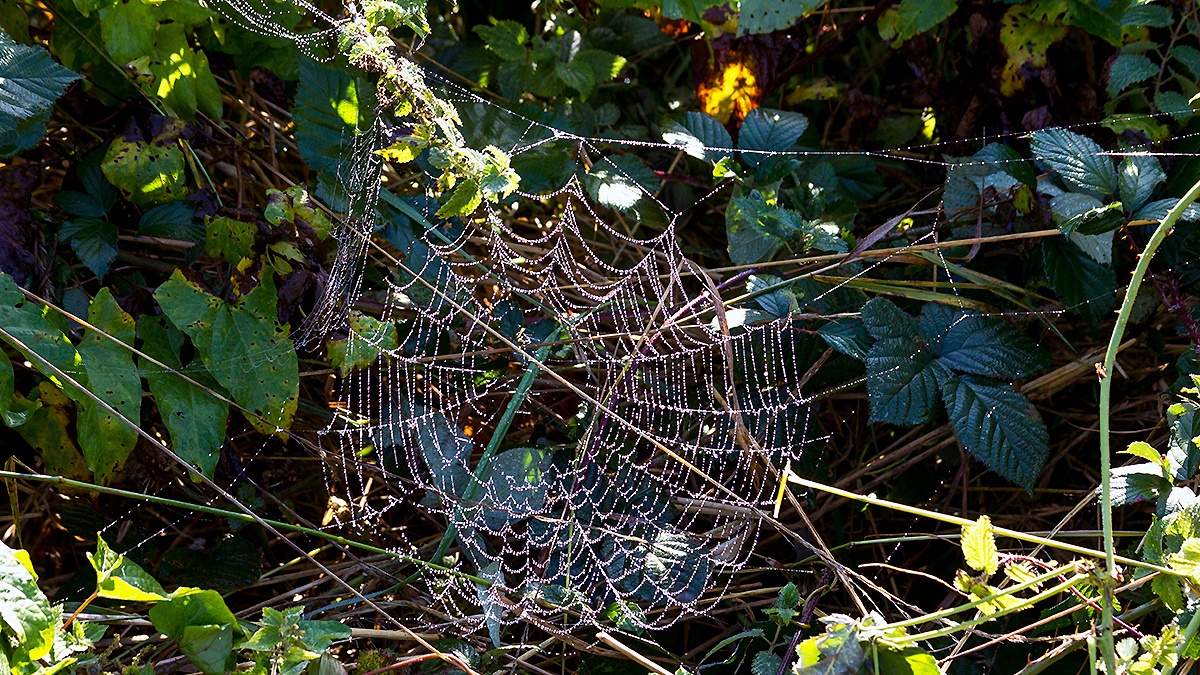
A very heavy dew this morning after an early mist. A distinct autumnal feel and look about the Downs today.
The first patch of brambles I came to I watched for a few minutes as one of my favourite birds, a Wren (Troglodytes troglodytes), searched for insects, larvae or spiders.
![Eurasian Wren [Troglodytes troglodytes indigenus]](https://downsdiary.uk/wp-content/gallery/sep-2025/N8E2515_EOS-1D_Minsmere_15Apr2013.jpg "Eurasian Wren [Troglodytes troglodytes indigenus]")
Butterfly tally was 1 Speckled Wood, 1 Small Skipper and 1 very worn Small Copper.
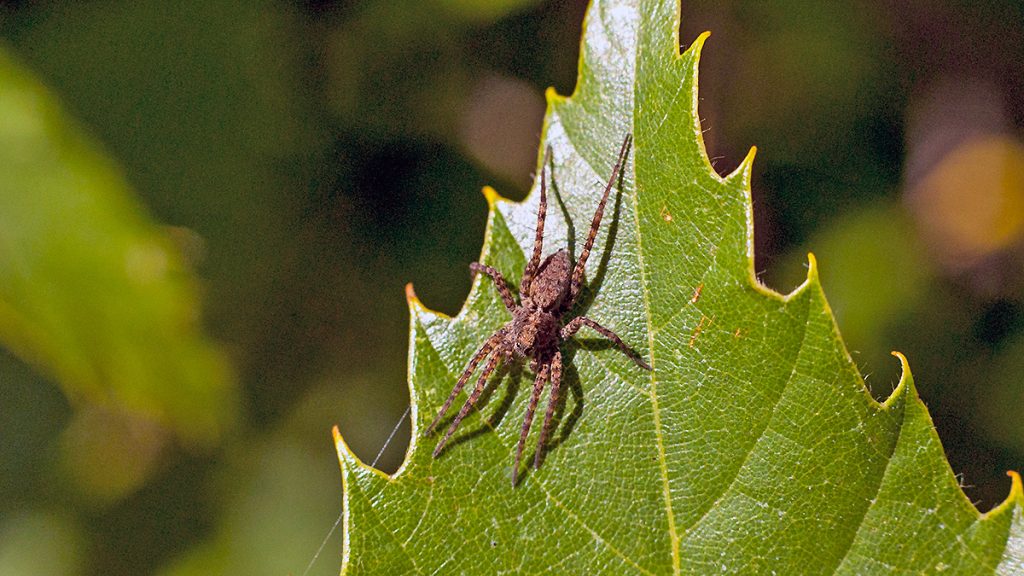
A Spotted Wolf Spider (Pardosa amentata) was found resting on a Sweet Chestnut (Castanea sativa) leaf. The same tree afforded an opportunity to see the 4-valve opening of a Sweet Chestnut seed case.
Another new gall was added with the discovery of a Willow Gall Sawfly (Euura pedunculi) larval gall on underside of a Goat Willow (Salix caprea) leaf. I got new photos of Apple Leaf Miner (Lyonetia clerkella) leaf mines on Wild Cherry (Prunus avium) leaves. A closer look at the Wild Cherry showed that it had extrafloral nectaries on the leaf petioles.
![Spotted Wolf Spider [Pardosa amentata]](https://downsdiary.uk/wp-content/gallery/sep-2025/JO8V3761_EOS-1D_TheDowns_29Sep2025.jpg "Spotted Wolf Spider [Pardosa amentata]")
![Sweet Chestnut [Castanea sativa]](https://downsdiary.uk/wp-content/gallery/sep-2025/NG8_4170_EOS-1D_TheDowns_29Sep2025.jpg "Sweet Chestnut [Castanea sativa]")
![Willow Gall Sawfly [Euura pedunculi]](https://downsdiary.uk/wp-content/gallery/sep-2025/NG8_4163-JO8V3753_EOS-1D_TheDowns_29Sep2025.jpg "Willow Gall Sawfly [Euura pedunculi]")
![Apple Leaf Miner [Lyonetia clerkella?]](https://downsdiary.uk/wp-content/gallery/sep-2025/NG8_4167_EOS-1D_TheDowns_29Sep2025.jpg "Apple Leaf Miner [Lyonetia clerkella?]")
![Wild Cherry [Prunus avium]](https://downsdiary.uk/wp-content/gallery/sep-2025/NG8_4167b_EOS-1D_TheDowns_29Sep2025.jpg "Wild Cherry [Prunus avium]")
Nature note for the day
So what are ‘extra-floral nectaries’? Quite simply they are glands somewhere on a plant that is not part of the flower, which produce a sugary liquid to attract ants. During the flowering season the flowers themselves produce nectar to attract pollinating insects, but the purpose of extra-floral nectaries is to attract ants to feed on the sugary liquids that they produce. The ants will then act as a deterrent to other insects that may want to lay eggs on or browse the foliage. Once flowering has passed and the plant’s seeds are forming, the ants then also protect the seeds from being eaten by other insects.
The Worcestershire Biological Records Centre has very good article on this subject.
<<<< Previous page | Next Page >>>>