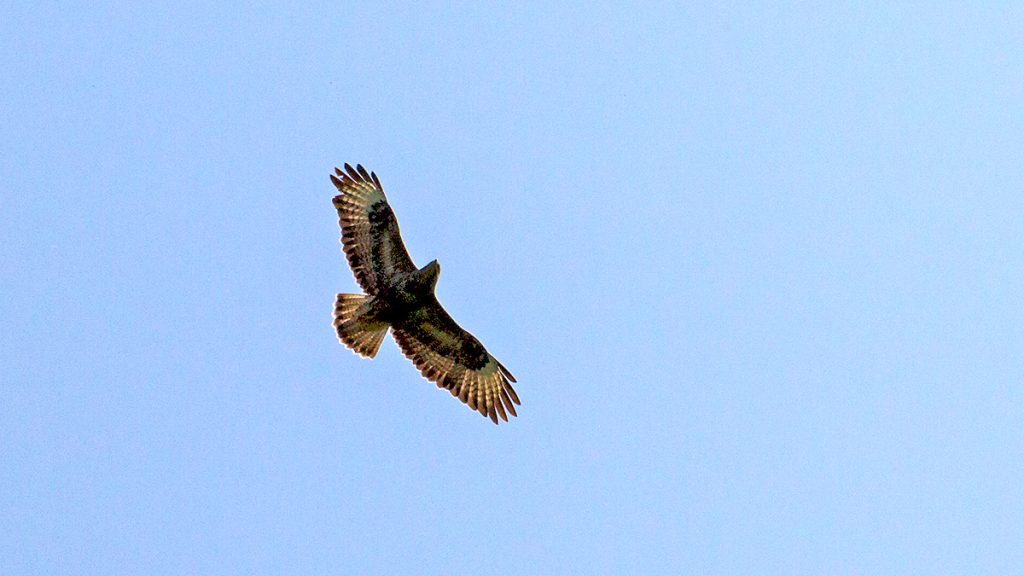
Not seen since 5th April one of the resident Common Buzzard (Buteo buteo) swooped low enough near me that I was able to get a decent photo with just a 135 mm lens.
A second wave of Brimstone (Gonepteryx rhamni) butterflies seems to be starting, and there were also large numbers of Speckled Wood (Pararge aegeria) on all the woodland paths, but both were greatly outnumbered by an eruption of Dark Green Fritillary (Speyeria aglaja). The fritillary is a very strong and very fast flyer and doesn’t seem to land for very long before whizzing off again, so the photo posted is the best I could manage as a first for this year for this species. Hopefully I can do better in the next few days.
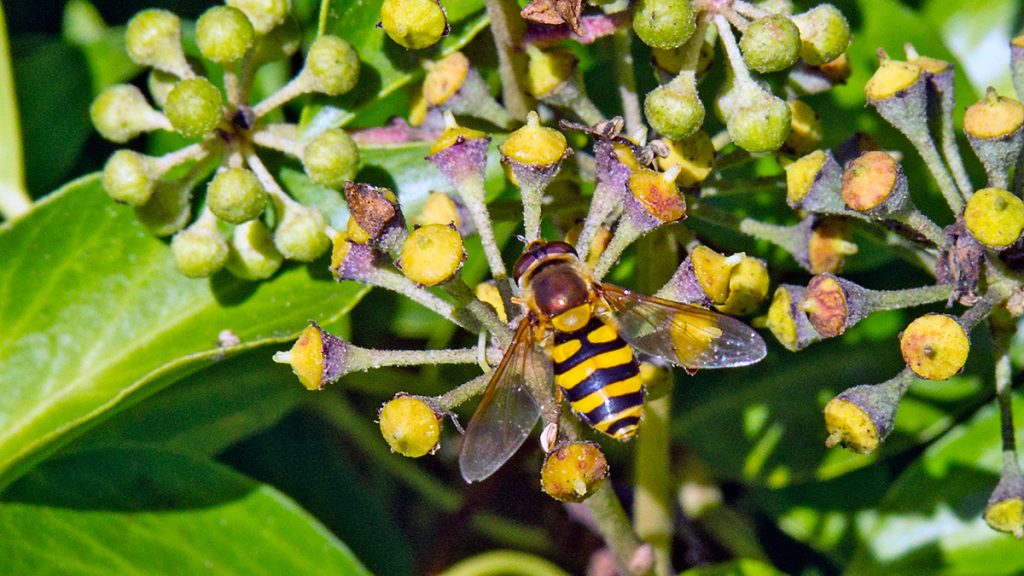
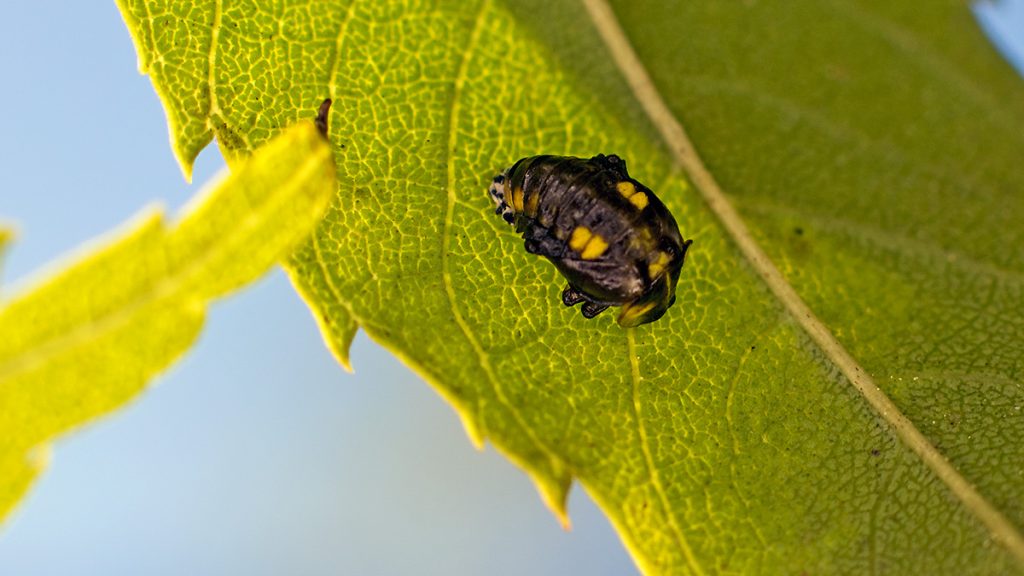
Other insects added were Barred Fruit-tree Tortrix (Pandemis cerasana), Black-and-yellow Longhorn Beetle (Rutpela maculata), Golden-haired Robberfly (Choerades marginatus) and Common Harvestman (Phalangium opilio), while I managed photos of another Meadow Plant Bug (Leptopterna dolabrata) first seen just 5 days ago.
Orchard Ermine (Yponomeuta padella) larvae were noted on a Blackthorn (Prunus spinosa) feeding gregariously inside webs, much as their cousin the Spindle Ermine (Yponomeuta cagnagella) was doing on Spindle some weeks ago.
![Common Buzzard [Buteo buteo buteo]](https://downsdiary.uk/wp-content/gallery/june_2025/NG8_0911_EOS-1D_TheDowns_12Jun2025.jpg "Common Buzzard [Buteo buteo buteo]")
![Dark Green Fritillary [Speyeria aglaja borealis]](https://downsdiary.uk/wp-content/gallery/june_2025/NG8_0976_EOS-1D_TheDowns_12Jun2025.jpg "Dark Green Fritillary [Speyeria aglaja borealis]")
![Barred Fruit-tree Tortrix [Pandemis cerasana]](https://downsdiary.uk/wp-content/gallery/june_2025/NG8_0961_EOS-1D_TheDowns_12Jun2025.jpg "Barred Fruit-tree Tortrix [Pandemis cerasana]")
![Black-and-yellow Longhorn Beetle [Rutpela maculata]](https://downsdiary.uk/wp-content/gallery/june_2025/NG8_0934_EOS-1D_TheDowns_12Jun2025.jpg "Black-and-yellow Longhorn Beetle [Rutpela maculata]")
![Golden-haired Robberfly [Choerades marginatus]](https://downsdiary.uk/wp-content/gallery/june_2025/NG8_0946_EOS-1D_TheDowns_12Jun2025.jpg "Golden-haired Robberfly [Choerades marginatus]")
![Common Harvestman [Phalangium opilio]](https://downsdiary.uk/wp-content/gallery/june_2025/NG8_0956_EOS-1D_TheDowns_12Jun2025.jpg "Common Harvestman [Phalangium opilio]")
![Meadow Plant Bug [Leptopterna dolabrata]](https://downsdiary.uk/wp-content/gallery/june_2025/NG8_0955_EOS-1D_TheDowns_12Jun2025.jpg "Meadow Plant Bug [Leptopterna dolabrata]")
![Orchard Ermine [Yponomeuta padella]](https://downsdiary.uk/wp-content/gallery/june_2025/NG8_0903_EOS-1D_TheDowns_12Jun2025.jpg "Orchard Ermine [Yponomeuta padella]")
New flowers were Horseshoe Vetch (Hippocrepis comosa), Wild Thyme (Thymus serpyllum) and Hairy St John’s-wort (Hypericum hirsutum).
![Horseshoe Vetch [Hippocrepis comosa]](https://downsdiary.uk/wp-content/gallery/june_2025/NG8_0918_EOS-1D_TheDowns_12Jun2025.jpg "Horseshoe Vetch [Hippocrepis comosa]")
![Wild Thyme [Thymus serpyllum]](https://downsdiary.uk/wp-content/gallery/june_2025/NG8_0919_EOS-1D_TheDowns_12Jun2025.jpg "Wild Thyme [Thymus serpyllum]")
![Hairy St John's-wort [Hypericum hirsutum]](https://downsdiary.uk/wp-content/gallery/june_2025/NG8_0920_EOS-1D_TheDowns_12Jun2025.jpg "Hairy St John's-wort [Hypericum hirsutum]")
Nature note for the day
At least two species of St John’s-wort are present on Banstead Downs and have more of less the same period when they can be seen flowering. These are Hairy St John’s-wort (Hypericum hirsutum) and Perforate St John’s-wort (Hypericum perforatum). Slender St John’s-wort (Hypericum pulchrum) may also be present. The first two look very similar at a quick glance, but they can easily be separated by looking at the stem of the plant as well as the finer detail of the petals and sepals.
H.hirsutum, as the name suggests (‘hirsutum’ is Latin for ‘hairy’) has a hairy (downy) stem and leaves, while those of H. perforatum are smooth. H. hirsutum has no marginal black glands on the leaves and the petals but the sepals are covered in black spots, whereas H. perforatum does have tiny black spots around the petal margins, but sepals may or may not have black spots. H. pulchrum has more obvious differences to separate it from the other two, which I won’t elaborate on here.
Try this for a good source of further information about St John’s-wort identification.
![Perforate St John's-wort [Hypericum perforatum] and Hairy St John's-wort [Hypericum hirsutum]](https://downsdiary.uk/wp-content/gallery/june_2025/IMG_1368-NG8_1036.jpg "Perforate St John's-wort [Hypericum perforatum] and Hairy St John's-wort [Hypericum hirsutum]")
![Perforate St John's-wort [Hypericum perforatum] and Hairy St John's-wort [Hypericum hirsutum]](https://downsdiary.uk/wp-content/gallery/june_2025/IMG_1372-JO8V0507.jpg "Perforate St John's-wort [Hypericum perforatum] and Hairy St John's-wort [Hypericum hirsutum]")
<<<< Previous page | Next Page >>>>