Another cloudless, very warm day, but just a light breeze, so butterfly sightings should have been better. Sadly, they were much like yesterday. Brimstone still dominates, with a few a few Speckled Wood, Holly Blue and Green Hairstreak, and just a single Orange Tip.
The second moth on the wing of the season, after hundreds of Green Longhorn sightings since 7th April, was a Common Carpet (Epirrhoe alternata) settled on a Common Hogweed (Heracleum sphondylium) leaf.
The last of the Cowslip (Primula veris) flowers stand out very yellow against the rest, which are brown and withering. This is where I found a new bee species for me on the Downs, the Hairy-footed Flower Bee (Anthophora plumipes). Resembling a small all-black bumblebee with just a hint of some pale, thin striping on the abdomen, this female darted around from flower to flower collecting the last of the pollen, definitely not the ponderous flight of the true bumblebees.
A female Common Dance Fly (Empis tessellata) was found at rest on Silver Birch (Betula pendula) leaf.
A tiny (<3mm) flea beetle (Phyllotreta ochripes), was seen crawling over a Garlic Mustard (Alliaria petiolata) leaf, the second flea beetle species on this plant in a week. This species feeds on the leaves of many members of the Brassica family, but favours Garlic Mustard.
![Common Carpet [Epirrhoe alternata]](https://downsdiary.uk/wp-content/gallery/apr_2026/NG8_7576_EOS-1D_TheDowns_25Apr2026.jpg "Common Carpet [Epirrhoe alternata]")
![Hairy-footed Flower Bee [Anthophora plumipes]](https://downsdiary.uk/wp-content/gallery/apr_2026/NG8_7586_EOS-1D_TheDowns_25Apr2026.jpg "Hairy-footed Flower Bee [Anthophora plumipes]")
![Common Dance Fly [Empis tessellata]](https://downsdiary.uk/wp-content/gallery/apr_2026/NG8_7607_EOS-1D_TheDowns_25Apr2026.jpg "Common Dance Fly [Empis tessellata]")
![flea beetle [Phyllotreta ochripes]](https://downsdiary.uk/wp-content/gallery/apr_2026/BD2_3794_7D_TheDowns_25Apr2026.jpg "flea beetle [Phyllotreta ochripes]")
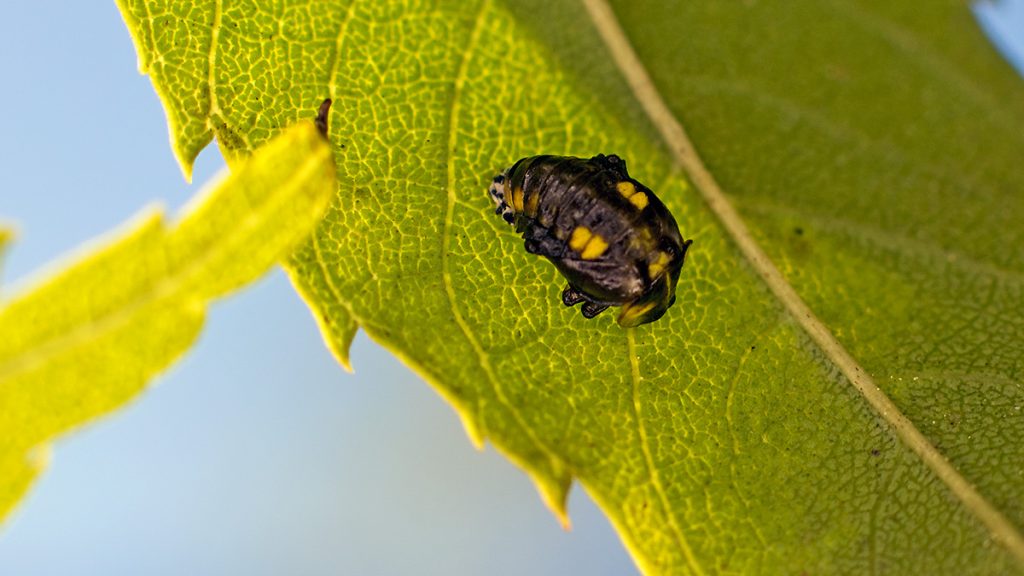
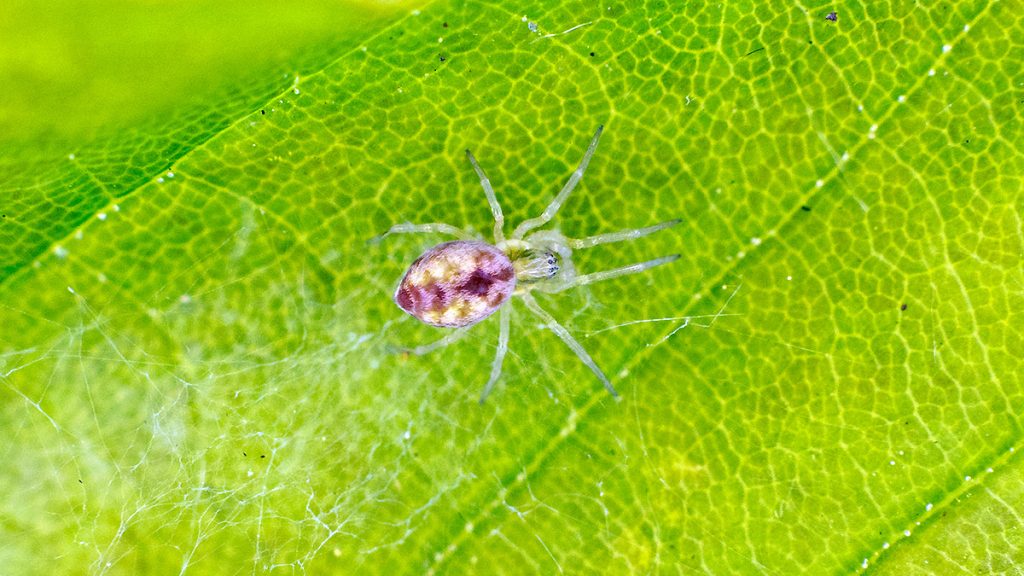
Sycamore trees proved fruitful yet again, with photos of an immature caterpillar of the Winter Moth (Operophtera brumata), two sawflies, a Red-belted Cleaver (Aglaostigma aucupariae) and a female Bronze Fusehorn (Arge ustulata), a nymph of the Fine Streaked Bugkin (Miris striatus) and two spiders, the comb-footed spider Theridion varians and a female Bleeding Heart Spider (Nigma puella).
![Winter Moth [Operophtera brumata]](https://downsdiary.uk/wp-content/gallery/apr_2026/BD2_3663_7D_TheDowns_25Apr2026.jpg "Winter Moth [Operophtera brumata]")
![Red-belted Cleaver [Aglaostigma aucupariae]](https://downsdiary.uk/wp-content/gallery/apr_2026/NG8_7570_EOS-1D_TheDowns_25Apr2026.jpg "Red-belted Cleaver [Aglaostigma aucupariae]")
![Bronze Fusehorn [Arge ustulata]](https://downsdiary.uk/wp-content/gallery/apr_2026/NG8_7581_EOS-1D_TheDowns_25Apr2026.jpg "Bronze Fusehorn [Arge ustulata]")
![Fine Streaked Bugkin [Miris striatus]](https://downsdiary.uk/wp-content/gallery/apr_2026/BD2_3670_7D_TheDowns_25Apr2026.jpg "Fine Streaked Bugkin [Miris striatus]")
![comb-footed spider [Theridion varians]](https://downsdiary.uk/wp-content/gallery/apr_2026/BD2_3700_7D_TheDowns_25Apr2026.jpg "comb-footed spider [Theridion varians]")
![Bleeding Heart Spider [Nigma puella]](https://downsdiary.uk/wp-content/gallery/apr_2026/BD2_3677_7D_TheDowns_25Apr2026.jpg "Bleeding Heart Spider [Nigma puella]")
Oak trees are widely regarded as the UK’s biggest host of other plant, animal and fungal species. They are their own little micro-ecosystem. I will devote a lot of time to oaks in the next few weeks and today was a great start to a more in-depth look at Quercus robur. I found several species that I was unable to photograph but those that I did were Green Immigrant Leaf Weevil (Polydrusus formosus), Common Leaf Weevil (Phyllobius pyri), a late instar nymph of the Striped Oak Bug (Rhabdomiris striatellus), a female Oak Catkin Bug (Harpocera thoracica) and the larval case of either a Yellow Oak Case-bearer (Coleophora flavipennella) or Oak Case-bearer (Coleophora lutipennella) moth.
The last two are very difficult to separate from photos. The small caterpillars of these moths live inside the larval cases that they have constructed, feeding on the oak leaf until they pupate.
Coup of the day, though, was a female chalcid wasp laying eggs in an Oak Apple gall.
While taking these photos, on three occasions I managed to transfer little crawlers from the tree onto my arm or back of my hand. These were a tiny Pollen Beetle (Brassicogethes aeneus), a Mottled Umber (Erannis defoliaria) caterpillar and a possible early instar nymph of a bug in the Miridae family.
![Green Immigrant Leaf Weevil [Polydrusus formosus]](https://downsdiary.uk/wp-content/gallery/apr_2026/BD2_3740_7D_TheDowns_25Apr2026.jpg "Green Immigrant Leaf Weevil [Polydrusus formosus]")
![Common Leaf Weevil [Phyllobius pyri]](https://downsdiary.uk/wp-content/gallery/apr_2026/BD2_3787_7D_TheDowns_25Apr2026.jpg "Common Leaf Weevil [Phyllobius pyri]")
![Striped Oak Bug [Rhabdomiris striatellus]](https://downsdiary.uk/wp-content/gallery/apr_2026/BD2_3760_7D_TheDowns_25Apr2026.jpg "Striped Oak Bug [Rhabdomiris striatellus]")
![Oak Catkin Bug [Harpocera thoracica]](https://downsdiary.uk/wp-content/gallery/apr_2026/BD2_3769_7D_TheDowns_25Apr2026.jpg "Oak Catkin Bug [Harpocera thoracica]")
![larval case [Coleophora sp.]](https://downsdiary.uk/wp-content/gallery/apr_2026/BD2_3683-BD2_3785_7D_TheDowns_25Apr2026.jpg "larval case [Coleophora sp.]")
![chalcid wasp [Torymus affinis]](https://downsdiary.uk/wp-content/gallery/apr_2026/BD2_3742_7D_TheDowns_25Apr2026.jpg "chalcid wasp [Torymus affinis]")
![Pollen Beetle [Brassicogethes aeneus]](https://downsdiary.uk/wp-content/gallery/apr_2026/BD2_3753_7D_TheDowns_25Apr2026.jpg "Pollen Beetle [Brassicogethes aeneus]")
![Mottled Umber [Erannis defoliaria]](https://downsdiary.uk/wp-content/gallery/apr_2026/BD2_3747_7D_TheDowns_25Apr2026.jpg "Mottled Umber [Erannis defoliaria]")
![early instar nymph [Miridae sp.?]](https://downsdiary.uk/wp-content/gallery/apr_2026/BD2_3762_7D_TheDowns_25Apr2026.jpg "early instar nymph [Miridae sp.?]")
While photographing the Common Carpet Moth I noticed one plant, standing out among those surrounding it, that did not look familiar. It turns out that this is a new one for me on the Downs, Woodland Figwort (Scrophularia nodosa).
![Woodland Figwort [Scrophularia nodosa]](https://downsdiary.uk/wp-content/gallery/apr_2026/NG8_7583_EOS-1D_TheDowns_25Apr2026.jpg "Woodland Figwort [Scrophularia nodosa]")
<<<< Previous page | Next Page >>>>