We need rain. There is a distinct straw-coloured tinge to all the greenery now.
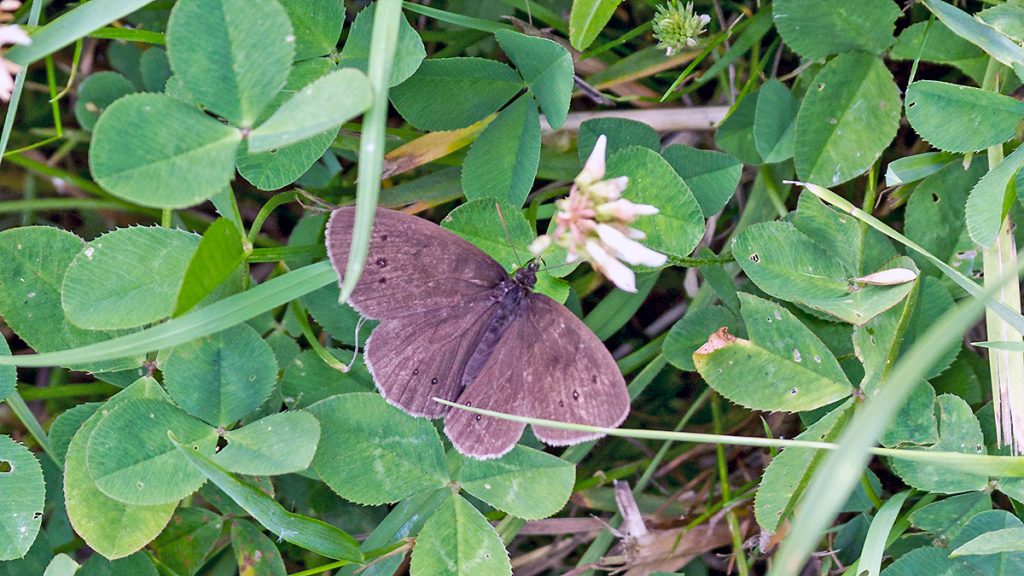
Marbled White is still the most numerous butterfly, Meadow Brown and Small Heath numbers are increasing and the latest to emerge in good numbers is Ringlet (Aphantopus hyperantus).
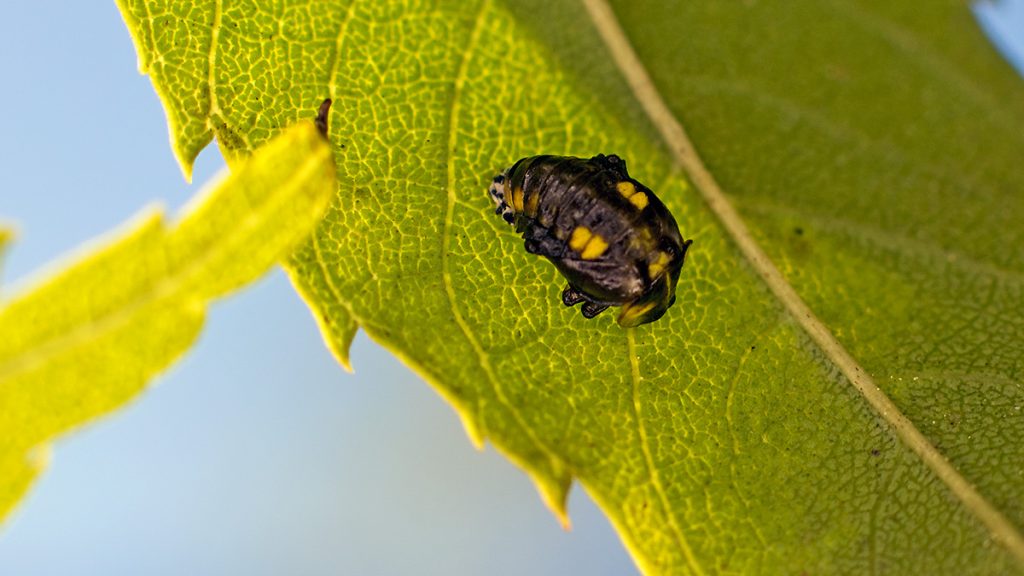
Two weeks ago today I posted an image of the spectabilis form of the Harlequin Ladybird (Harmonia axyridis). Today I found an adult of the conspicua form on some brambles (Rubus sp.).
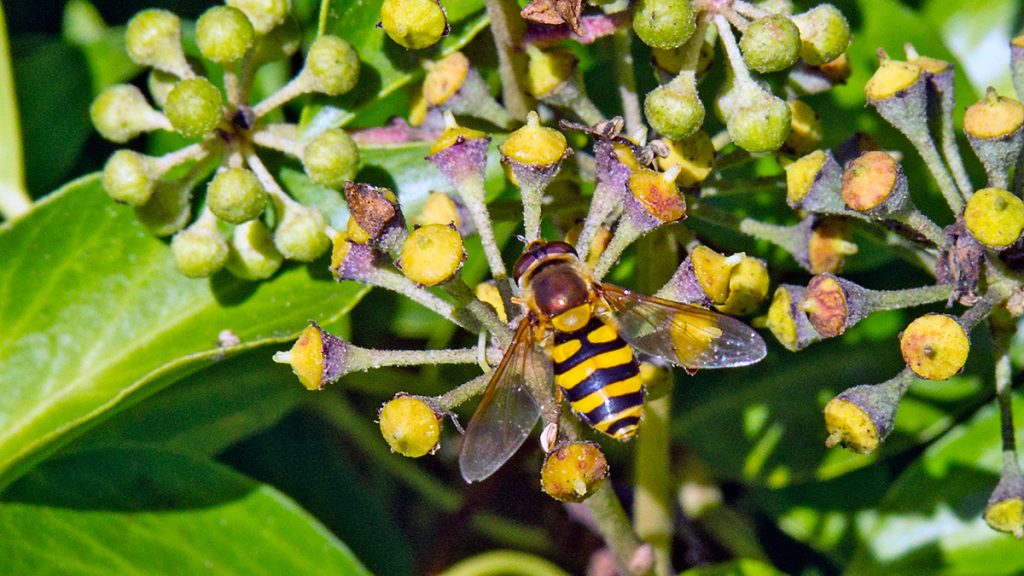
New today were a hoverfly, Spotted Thintail (Meliscaeva auricollis) and the egg sacs of a scale insect, Cottony Hydrangea Scale (Pulvinaria kuwacola) on a sycamore leaf. The very similar Horse Chestnut Scale (Pulvinaria regalis) egg sacs are deposited on the bark of the main trunk or branches of the hosts, which includes sycamore. Scale insects are members of the ‘true bug’ order Hemiptera.
![Ringlet [Aphantopus hyperantus]](https://downsdiary.uk/wp-content/gallery/june_2025/NG8_1499_EOS-1D_TheDowns_23Jun2025.jpg "Ringlet [Aphantopus hyperantus]")
![Ringlet [Aphantopus hyperantus]](https://downsdiary.uk/wp-content/gallery/june_2025/NG8_1520_EOS-1D_TheDowns_23Jun2025.jpg "Ringlet [Aphantopus hyperantus]")
![Harlequin Ladybird [Harmonia axyridis]](https://downsdiary.uk/wp-content/gallery/june_2025/NG8_1473_EOS-1D_TheDowns_23Jun2025.jpg "Harlequin Ladybird [Harmonia axyridis]")
![Spotted Thintail [Meliscaeva auricollis]](https://downsdiary.uk/wp-content/gallery/june_2025/NG8_1479_EOS-1D_TheDowns_23Jun2025.jpg "Spotted Thintail [Meliscaeva auricollis]")
![Cottony Hydrangea Scale [Pulvinaria kuwacola]](https://downsdiary.uk/wp-content/gallery/june_2025/NG8_1548_EOS-1D_TheDowns_23Jun2025.jpg "Cottony Hydrangea Scale [Pulvinaria kuwacola]")
![Cottony Hydrangea Scale [Pulvinaria kuwacola]](https://downsdiary.uk/wp-content/gallery/june_2025/NG8_1542_EOS-1D_TheDowns_23Jun2025.jpg "Cottony Hydrangea Scale [Pulvinaria kuwacola]")
Newly flowering plants are Hedge Bindweed (Calystegia sepium), Hemp-agrimony (Eupatorium cannabinum) and Common Ragwort (Jacobaea vulgaris).
![Hedge Bindweed [Calystegia sepium]](https://downsdiary.uk/wp-content/gallery/june_2025/NG8_1475_EOS-1D_TheDowns_23Jun2025.jpg "Hedge Bindweed [Calystegia sepium]")
![Hemp-agrimony [Eupatorium cannabinum]](https://downsdiary.uk/wp-content/gallery/june_2025/NG8_1522_EOS-1D_TheDowns_23Jun2025.jpg "Hemp-agrimony [Eupatorium cannabinum]")
![Common Ragwort [Jacobaea vulgaris]](https://downsdiary.uk/wp-content/gallery/june_2025/NG8_1511_EOS-1D_TheDowns_23Jun2025.jpg "Common Ragwort [Jacobaea vulgaris]")
Nature note for the day
Why do I refer to brambles as Rubus sp. (which means a species of the genus Rubus)? Well, quite simply because there are over 350 distinct species of brambles in the British Isles and there could be several dozen of those on Banstead Downs alone. They all look remarkably similar, but differ in growth style, shape and size of leaves, colour and size of flowers, where on the stems are the thorns and in what sizes, shapes and amount are these thorns. The list goes on.
For those that may want to delve a bit deeper (well a lot deeper, actually), there is an excellent and very comprehensive website devoted to the brambles of the British Isles.
For those that just want to look at a few of my images that hopefully demonstrate the simple fact that not all brambles are the same, see below. The first shows a species that has distinctly coloured flowers and the second, one with very distinctive leaves. The third and fourth two more leaf shapes and the fifth a very thorny species.
![Sprengel's Bramble [Rubus sprengelii?]](https://downsdiary.uk/wp-content/gallery/june_2025/4A_0013_EOS-1D_BansteadHeath_16Jul2015.jpg "Sprengel's Bramble [Rubus sprengelii?]")
![Cutleaf Evergreen Blackberry [Rubus laciniatus?]](https://downsdiary.uk/wp-content/gallery/june_2025/4A_0142_EOS-1D_HeadleyHeath_22Jul2015.jpg "Cutleaf Evergreen Blackberry [Rubus laciniatus?]")
![Bramble [Rubus fruticosus agg.]](https://downsdiary.uk/wp-content/gallery/june_2025/IMG_0917_60D_TheDowns_17May2025.jpg "Bramble [Rubus fruticosus agg.]")
![Bramble [Rubus fruticosus agg.]](https://downsdiary.uk/wp-content/gallery/june_2025/4A_6007_EOS-1D_RyeHarbourNR_19Jun2015.jpg "Bramble [Rubus fruticosus agg.]")
![Bramble [Rubus fruticosus agg.]](https://downsdiary.uk/wp-content/gallery/june_2025/IMG_0981_60D_TheDowns_17May2025.jpg "Bramble [Rubus fruticosus agg.]")
<<<< Previous page | Next Page >>>>