The month of May began with the hottest day of the year so far and the grass on the Downs starting to take a bit of strain from the lack of recent rain. The ‘May blossom’ on the Common Hawthorn is starting to add a splash of colour to the trees, albeit white.
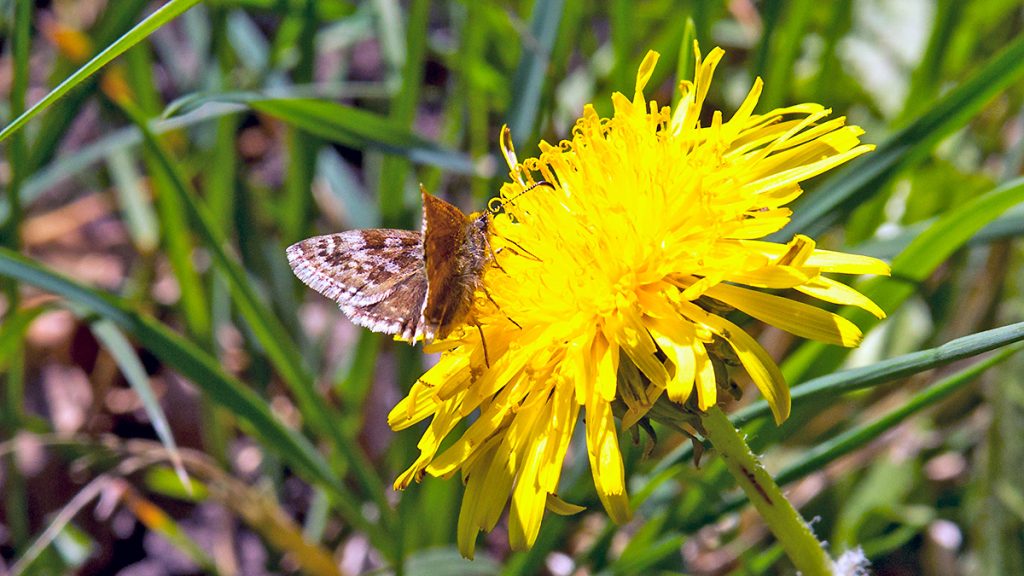
Still the butterflies are not too prominent. Brimstone still the dominant species, with a handful of Holly Blue, Speckled Wood, Green Hairstreak, Dingy Skipper (Erynnis tages) and the first two Small Blue (Cupido minimus) of the season.
I spotted my first Willow Emerald damselfly (Chalcolestes viridis) of the year and spent a few minutes chasing it around, trying vainly to get a photo. Each time I arrived at the latest resting place it would whizz off again before I had the camera aimed.
I also did a lot of rushing around following an Orange Footman moth (Wittia sororcula), which at least let me get one poor image before it disappeared into the trees.
One of the more familiar beetles to many of us has now appeared. I found a Common Click Beetle (Athous haemorrhoidalis) on a Common Lime leaf.
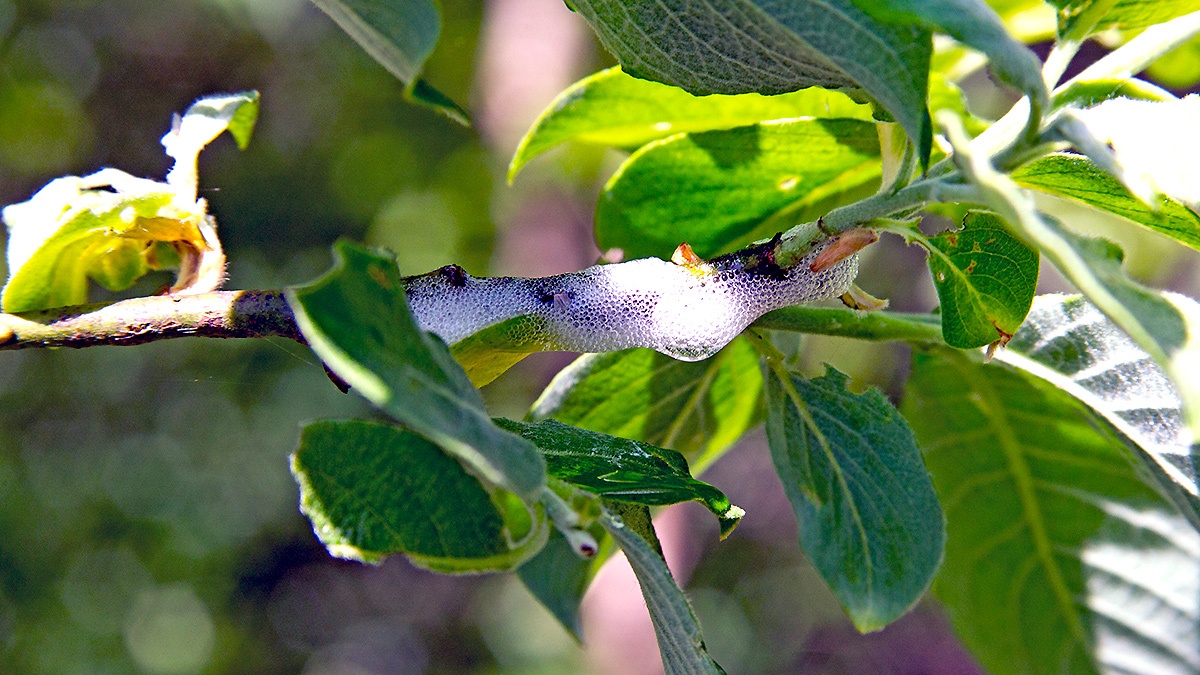
One Common Hazel (Corylus avellana) tree was covered with “cuckoo spit“, the bubbly foam produced by froghopper nymphs. Given the sheer scale of foam coverage on this tree, I would guess that the froghopper in question is probably the Common (or Meadow) Froghopper (Philaenus spumarius).
![Dingy Skipper [Erynnis tages]](https://downsdiary.uk/wp-content/gallery/may_2026/NG8_7791_EOS-1D_TheDowns_01May2026.jpg "Dingy Skipper [Erynnis tages]")
![Willow Emerald Damselfly [Chalcolestes viridis]](https://downsdiary.uk/wp-content/gallery/aug_2025/NG8_3369_EOS-1D_TheDowns_17Aug2025.jpg "Willow Emerald Damselfly [Chalcolestes viridis]")
![Orange Footman [Wittia sororcula]](https://downsdiary.uk/wp-content/gallery/may_2026/NG8_7842_EOS-1D_TheDowns_01May2026.jpg "Orange Footman [Wittia sororcula]")
![Common Click Beetle [Athous haemorrhoidalis]](https://downsdiary.uk/wp-content/gallery/may_2026/BD2_4249_7D_TheDowns_01May2026.jpg "Common Click Beetle [Athous haemorrhoidalis]")
My search of sycamore and oak trees continues to provide some new species as well as better images of some others.
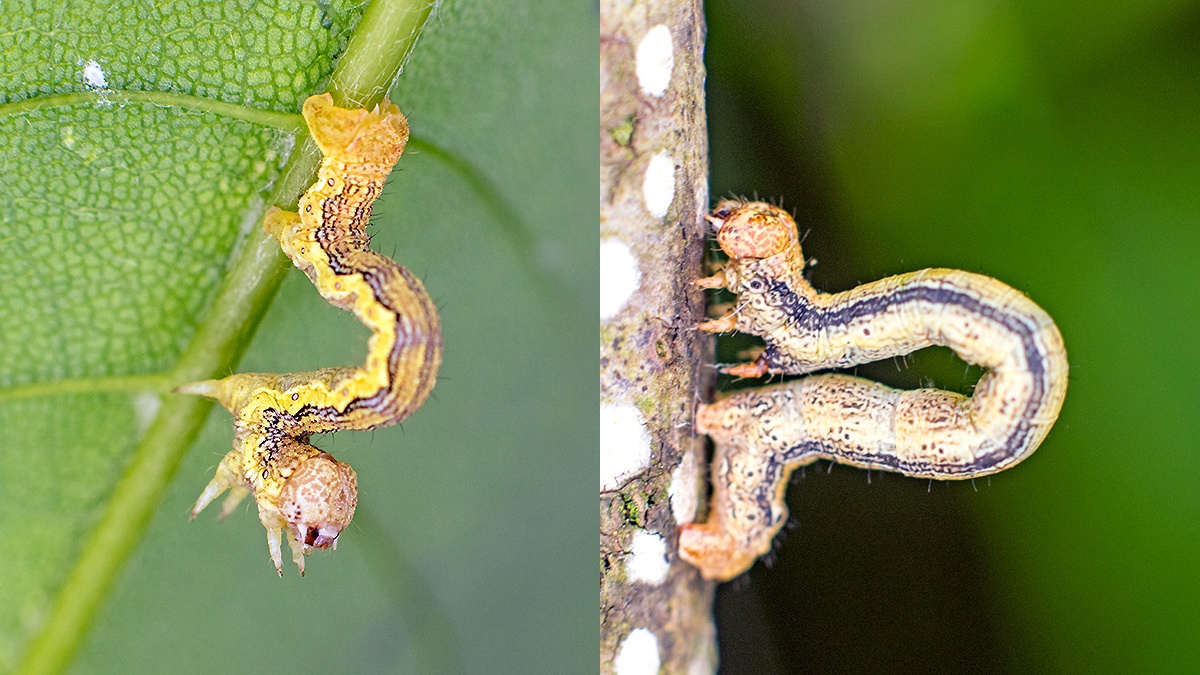
Today, Sycamore produced a tumbling flower beetle (Mordella aculeata), Scarce Umber (Agriopis aurantiaria) and Mottled Umber (Erannis defoliaria) caterpillars, and a Sycamore Periphyllus Aphid (Periphyllus acericola) adult with a cluster of tiny (0.75mm) first instar nymphs.
Two of the lowest branches of one tree had an infestation of scale insects. These rather strange insects are Hemiptera, the family that also includes bugs, aphids and froghoppers. In this case they are Horse Chestnut Scale (Pulvinaria regalis). They are polyphagous (feeding on a wide range of plants), so despite their name can be found on Horse Chestnut, Sycamore, Lime, Elm, Dogwood, Hawthorn and Holly, among others. The adult female insects produce their eggs in white waxy sacs and die shortly afterwards, usually falling off the egg sac, but can remain attached. My image shows a number of these white egg sacs, but in some cases they look brown and have a distinct elliptical shape. These are probably some of the adults still attached.
![tumbling flower beetle [Mordella aculeata?]](https://downsdiary.uk/wp-content/gallery/may_2026/BD2_4322_7D_TheDowns_01May2026.jpg "tumbling flower beetle [Mordella aculeata?]")
![Sycamore Periphyllus Aphid [Periphyllus acericola]](https://downsdiary.uk/wp-content/gallery/may_2026/BD2_4259_7D_TheDowns_01May2026.jpg "Sycamore Periphyllus Aphid [Periphyllus acericola]")
![Sycamore Periphyllus Aphid [Periphyllus acericola]](https://downsdiary.uk/wp-content/gallery/may_2026/BD2_4257_7D_TheDowns_01May2026.jpg "Sycamore Periphyllus Aphid [Periphyllus acericola]")
![Horse Chestnut Scale [Pulvinaria regalis]](https://downsdiary.uk/wp-content/gallery/may_2026/BD2_4267_7D_TheDowns_01May2026.jpg "Horse Chestnut Scale [Pulvinaria regalis]")
Species recorded on English Oak trees included three moth caterpillars, Dotted Border (Agriopis marginaria), The Sprawler (Asteroscopus sphinx) and Green Oak Tortrix (Tortrix viridana), as well as the leaf roll created by the caterpillar of the Amber Hook-wing (Ancylis mitterbacheriana). This leaf-roll is unusual as the caterpillar rolls an entire leaf longitudinally rather than simply curling over a leaf edge. The leaf is kept in the rolled state by a multitude of sticky silk threads. The caterpillar lives in this leaf roll, coming out to feed, and eventually pupating inside.
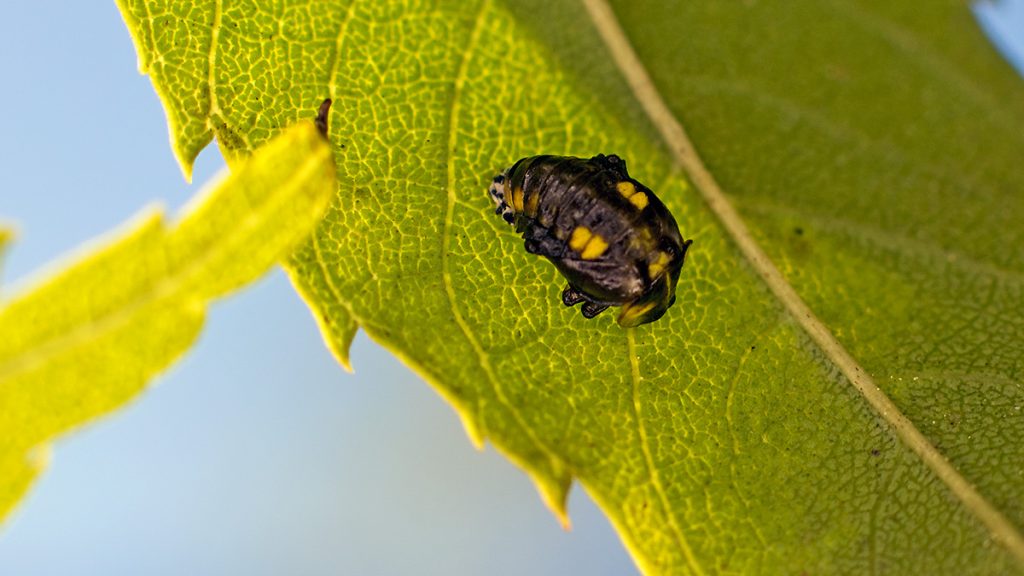
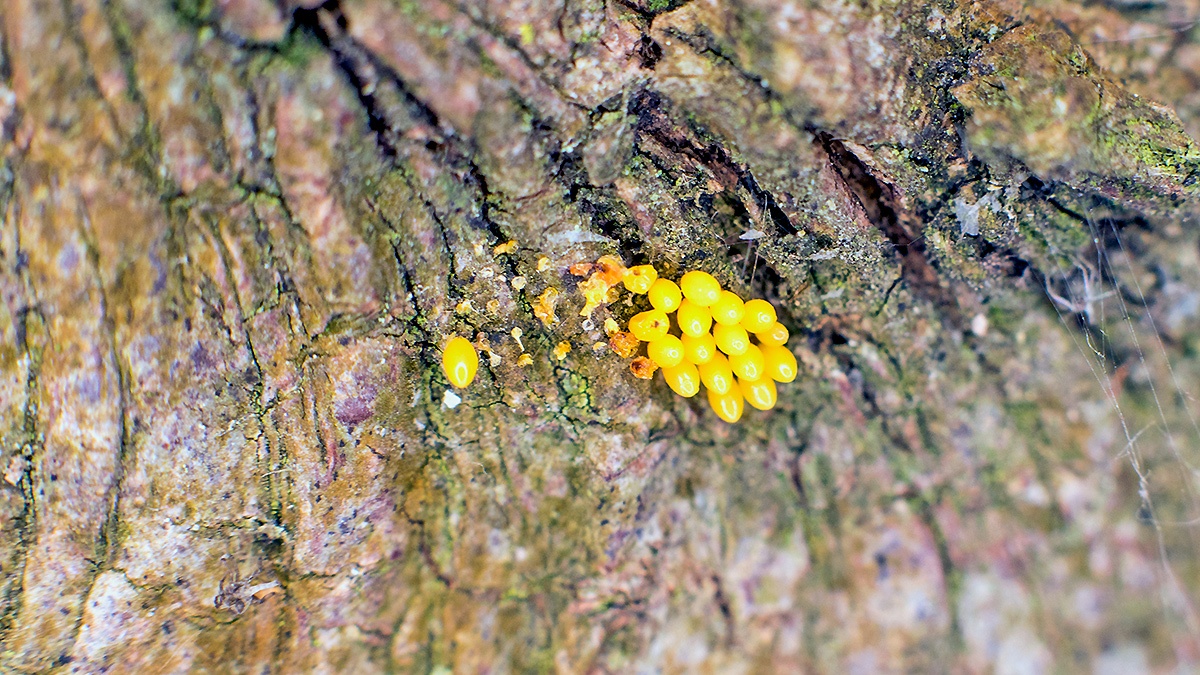
Other species found were a female Wayward Sawfly (Tenthredo temula) and Black Garden Ant (Lasius niger), as well as a cluster of eggs that I believe are those of a ladybird.
![Dotted Border [Agriopis marginaria?]](https://downsdiary.uk/wp-content/gallery/may_2026/BD2_4215_7D_TheDowns_01May2026.jpg "Dotted Border [Agriopis marginaria?]")
![The Sprawler [Asteroscopus sphinx]](https://downsdiary.uk/wp-content/gallery/may_2026/BD2_4228_7D_TheDowns_01May2026.jpg "The Sprawler [Asteroscopus sphinx]")
![The Sprawler [Asteroscopus sphinx]](https://downsdiary.uk/wp-content/gallery/may_2026/BD2_4227_7D_TheDowns_01May2026.jpg "The Sprawler [Asteroscopus sphinx]")
![Green Oak Tortrix [Tortrix viridana]](https://downsdiary.uk/wp-content/gallery/may_2026/BD2_4305_7D_TheDowns_01May2026.jpg "Green Oak Tortrix [Tortrix viridana]")
![Amber Hook-wing [Ancylis mitterbacheriana?]](https://downsdiary.uk/wp-content/gallery/may_2026/NG8_7845-BD2_4315_EOS-1D_TheDowns_01May2026.jpg "Amber Hook-wing [Ancylis mitterbacheriana?]")
![Wayward Sawfly [Tenthredo temula]](https://downsdiary.uk/wp-content/gallery/may_2026/NG8_7776_EOS-1D_TheDowns_01May2026.jpg "Wayward Sawfly [Tenthredo temula]")
![Black Garden Ant [Lasius niger?]](https://downsdiary.uk/wp-content/gallery/may_2026/BD2_4238_7D_TheDowns_01May2026.jpg "Black Garden Ant [Lasius niger?]")
New flowers noted today were Bird’s-foot Trefoil (Lotus corniculatus) and Star-of-Bethlehem (Ornithogalum umbellatum).
![Star-of-Bethlehem [Ornithogalum umbellatum]](https://downsdiary.uk/wp-content/gallery/may_2026/NG8_7775_EOS-1D_TheDowns_01May2026.jpg "Star-of-Bethlehem [Ornithogalum umbellatum]")
![Bird's-foot Trefoil [Lotus corniculatus]](https://downsdiary.uk/wp-content/gallery/may_2026/NG8_7841_EOS-1D_TheDowns_01May2026.jpg "Bird's-foot Trefoil [Lotus corniculatus]")
Nature Note for the Day
So, what exactly is “cuckoo spit” and how is it formed?
The froghopper nymphs, which live on a plant stem, use their sharp mouthparts to pierce the plant and drink its sap. However, they consume more sap than they need, so the excess is excreted and mixed with a sticky substance secreted from their abdominal glands. They then use special abdominal valves to act like bellows and blow air into the mixture to create foam, the “cuckoo spit”.
Why do they do this?
The foam acts as a hiding place, shielding the feeding nymphs from potential threats such as other insects and birds. In particular, it prevents parasitic wasps from gripping the nymphs to lay eggs in them. The moist foam also keeps the nymphs hydrated and insulates them from temperature fluctuations, providing a stable living environment.
<<<< Previous page | Next Page >>>>