Despite it being a warm, sunny day with only light winds there were still not many butterflies to be seen. For the first time Brimstone was not the most numerous, that honour went to Holly Blue. Apart from these two I saw just one each of Speckled Wood, Green Hairstreak and Small Heath.
One day-flying moth was seen too. After years of finding its yellow and black caterpillars on Ragwort flowers, I have finally seen the adult Cinnabar moth (Tyria jacobaeae).
Having found my first larval case of the Cloaked Case-bearer moth (Coleophora kuehnella) some 2 weeks ago (see post of 29 April) I located another today. This one was associated with an area of leaf grazing, illustrating the damage these caterpillars can do to an oak leaf.
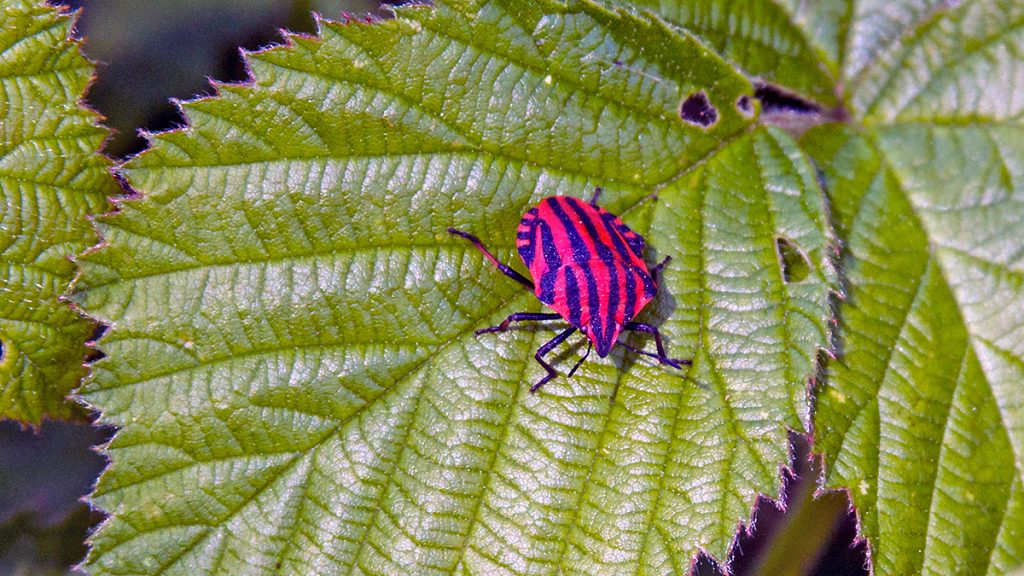
It was a good day for Hemiptera. The rare (in the UK) Striped Shieldbug (Graphosoma lineatum), first seen on 3rd July last year, was located at the same site as my first Yellow Weevil, another rarity. The latest Yellow Weevil was seen last Friday at the same spot where I found that first Striped Shieldbug last summer. So, we have two rarities both present on at least two sites on the Downs.
Other bugs photographed were Green Shieldbug (Palomena prasina) on Buddleia, Trivial Plant Bug (Closterotomus trivialis) on Sycamore, Forest Bug (Pentatoma rufipes) on Sycamore, Hairy Shieldbug (Dolycoris baccarum) on bramble and Birch Catkin Bug (Kleidocerys resedae). One bug that did not fare too well was a Four-spotted Oak Bug (Dryophilocoris flavoquadrimaculatus) that had been snared in the web of a tiny comb-footed spider (Theridiidae sp.).
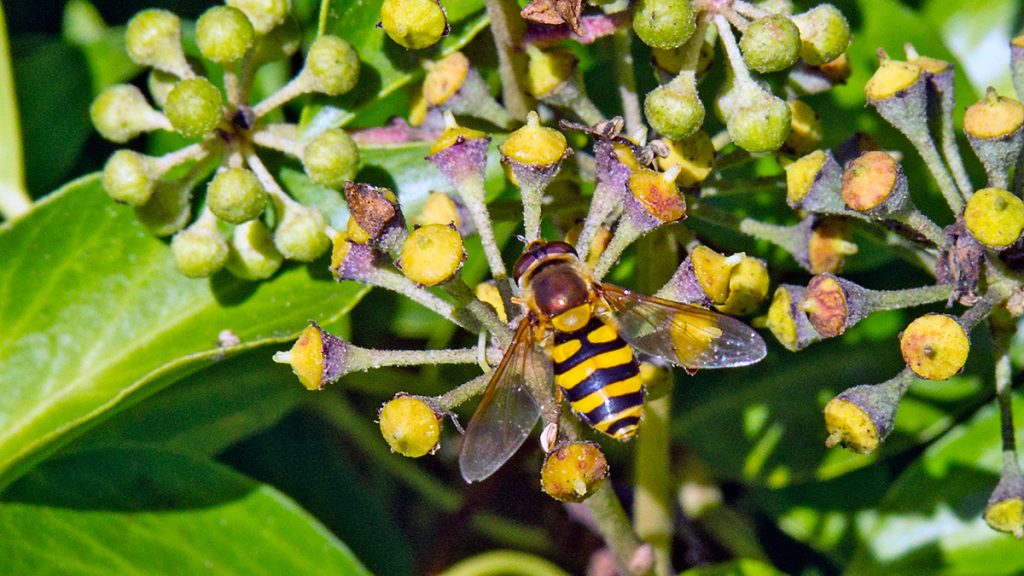
Other Hemiptera were Red-and-black Froghopper (Cercopis vulnerata) on Garlic Mustard (Alliaria petiolata) and Black Bean Aphid (Aphis fabae) on Common Buckthorn (Rhamnus cathartica). My image shows that these aphids are clustered in a rather perilous position, with a hoverfly (Syrphidae sp.) egg laid right next to them. Syrphid larvae are predatory on aphids and are voracious feeders, so would make very short work of eating all of these aphids.
![Cinnabar Moth [Tyria jacobaeae]](https://downsdiary.uk/wp-content/gallery/june_2025/NG8_1591_EOS-1D_TheDowns_25Jun2025.jpg "Cinnabar Moth [Tyria jacobaeae]")
![Cinnabar moth [Tyria jacobaeae]](https://downsdiary.uk/wp-content/gallery/may_2026/NG8_8188_EOS-1D_TheDowns_12May2026.jpg "Cinnabar moth [Tyria jacobaeae]")
![Cloaked Case-bearer [Coleophora kuehnella]](https://downsdiary.uk/wp-content/gallery/may_2026/NG8_8225_EOS-1D_TheDowns_12May2026.jpg "Cloaked Case-bearer [Coleophora kuehnella]")
![Striped Shieldbug [Graphosoma italicum]](https://downsdiary.uk/wp-content/gallery/may_2026/NG8_8191_EOS-1D_TheDowns_12May2026.jpg "Striped Shieldbug [Graphosoma italicum]")
![Green Shieldbug [Palomena prasina]](https://downsdiary.uk/wp-content/gallery/may_2026/NG8_8232_EOS-1D_TheDowns_12May2026.jpg "Green Shieldbug [Palomena prasina]")
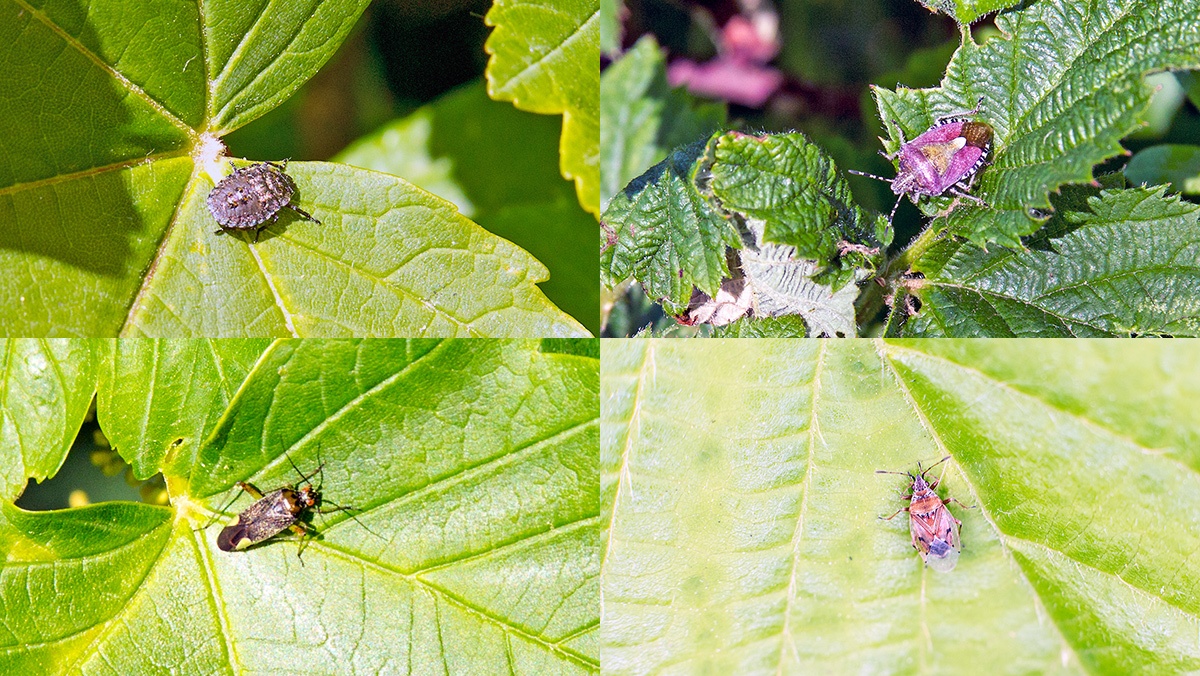
![comb-footed spider [Theridiidae sp.]](https://downsdiary.uk/wp-content/gallery/may_2026/BD2_5006_7D_TheDowns_12May2026.jpg "comb-footed spider [Theridiidae sp.]")
![Red-and-black Froghopper [Cercopis vulnerata]](https://downsdiary.uk/wp-content/gallery/may_2026/NG8_8247_EOS-1D_TheDowns_12May2026.jpg "Red-and-black Froghopper [Cercopis vulnerata]")
![Black Bean Aphid [Aphis fabae]](https://downsdiary.uk/wp-content/gallery/may_2026/BD2_5001_7D_TheDowns_12May2026.jpg "Black Bean Aphid [Aphis fabae]")
The Coleoptera were well represented also. Photographed were Red-headed Cardinal Beetle (Pyrochroa serraticornis), Garden Chafer beetle (Phyllopertha horticola), Wasp Beetle (Clytus arietis), Rustic Sailor Beetle (Cantharis rustica) and Red-tipped Flower Beetle (Malachius bipustulatus), as well as the rather unusual melanic ‘chequered form’, f. decempustulata, of the 10-Spot Ladybird (Adalia decempunctata).
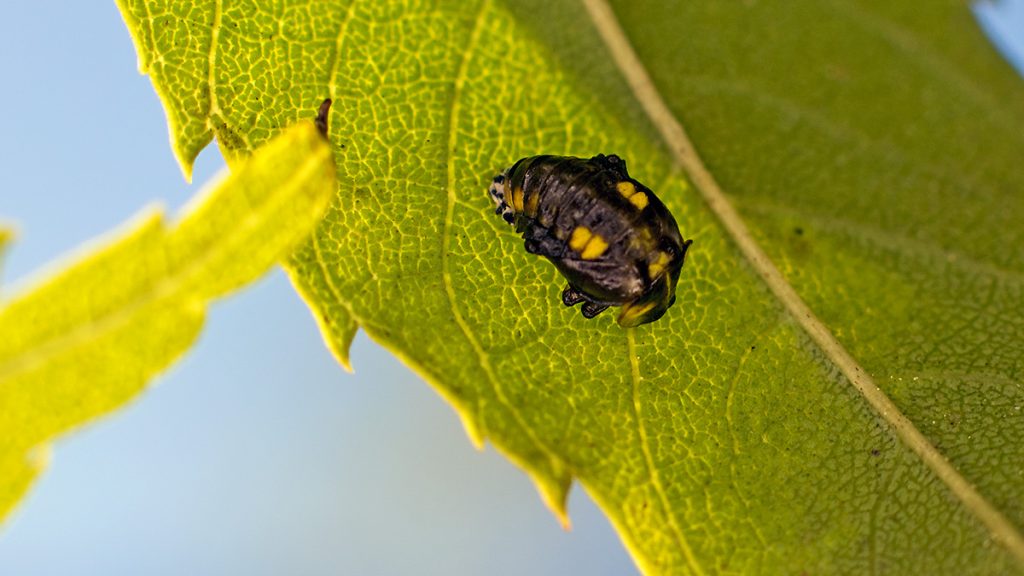
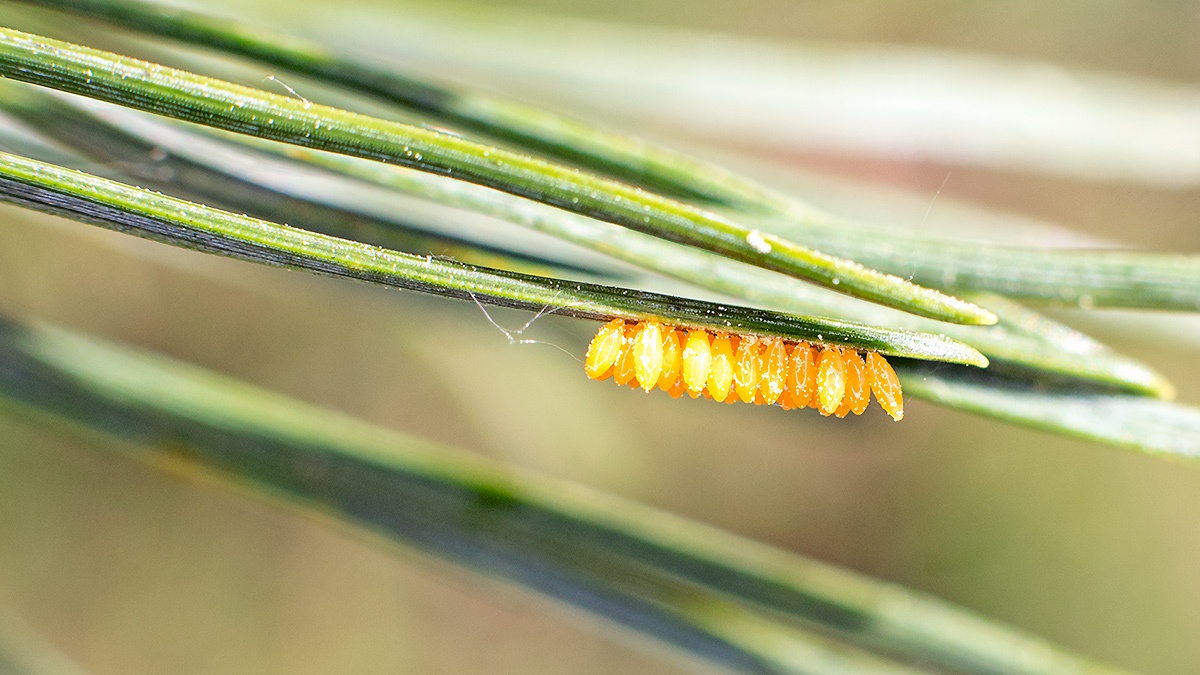
Also found were the eggs of a Harmonia sp. ladybird on a Scots Pine (Pinus sylvestris) needle.
![Red-headed Cardinal Beetle [Pyrochroa serraticornis]](https://downsdiary.uk/wp-content/gallery/may_2026/NG8_8173_EOS-1D_TheDowns_12May2026.jpg "Red-headed Cardinal Beetle [Pyrochroa serraticornis]")
![Garden Chafer [Phyllopertha horticola]](https://downsdiary.uk/wp-content/gallery/may_2026/BD2_4940_7D_TheDowns_12May2026.jpg "Garden Chafer [Phyllopertha horticola]")
![Wasp Beetle [Clytus arietis]](https://downsdiary.uk/wp-content/gallery/may_2026/NG8_8198_EOS-1D_TheDowns_12May2026.jpg "Wasp Beetle [Clytus arietis]")
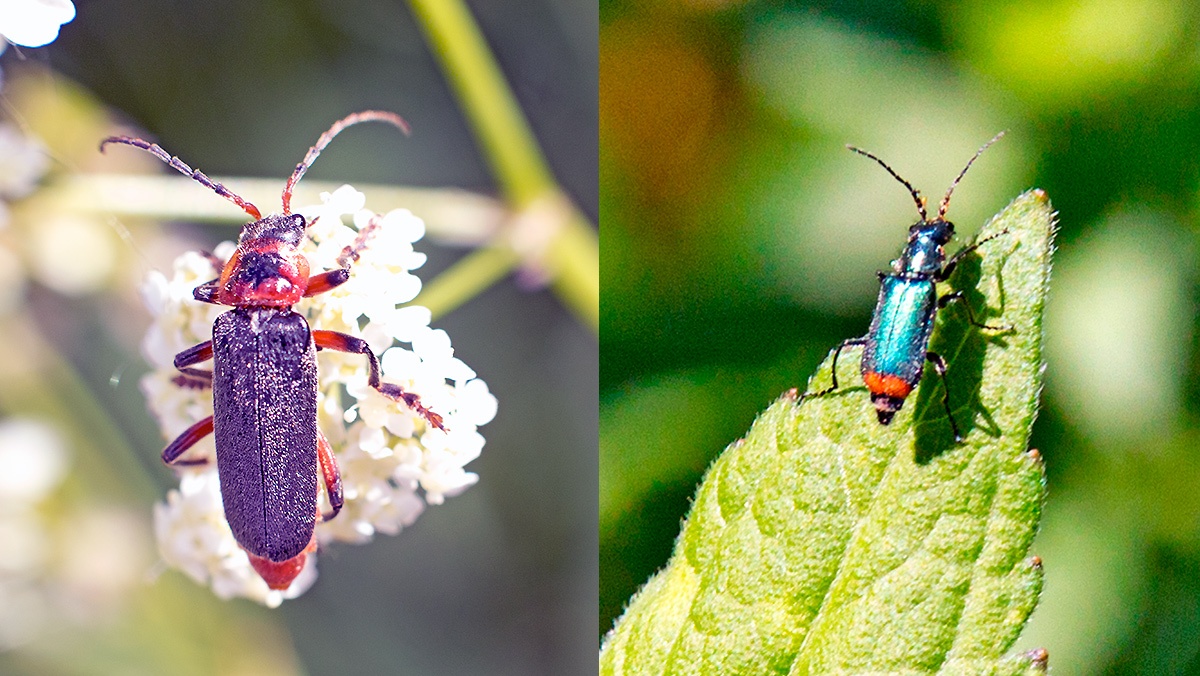
![10-Spot Ladybird [Adalia decempunctata]](https://downsdiary.uk/wp-content/gallery/may_2026/BD2_4915_7D_TheDowns_12May2026.jpg "10-Spot Ladybird [Adalia decempunctata]")
The only other sightings for the day were a Common Tachinid (Tachina fera) fly and three sawfly species, Black-collared Carver (Rhogogaster scalaris), Red-thighed Macrophya (Macrophya rufipes) and Dark Birch Fusehorn (Arge fuscipes). The last is certainly an Arge sp., and one of four very similar, black-bodied species not separable by photos, that could possibly be found in this area. I have opted for A. fuscipes as the plant associations of this species are Betula spp. and Salix spp. (birches and willows) and my sighting was on low plants beneath a Silver Birch, in an area where this is one of the dominant trees.
![Common Tachinid [Tachina fera]](https://downsdiary.uk/wp-content/gallery/may_2026/NG8_8145_EOS-1D_TheDowns_12May2026.jpg "Common Tachinid [Tachina fera]")
![Black-collared Carver [Rhogogaster scalaris]](https://downsdiary.uk/wp-content/gallery/may_2026/NG8_8151_EOS-1D_TheDowns_12May2026.jpg "Black-collared Carver [Rhogogaster scalaris]")
![Red-thighed Macrophya [Macrophya rufipes]](https://downsdiary.uk/wp-content/gallery/may_2026/NG8_8162_EOS-1D_TheDowns_12May2026.jpg "Red-thighed Macrophya [Macrophya rufipes]")
![Dark Birch Fusehorn [Arge fuscipes?]](https://downsdiary.uk/wp-content/gallery/may_2026/NG8_8237_EOS-1D_TheDowns_12May2026.jpg "Dark Birch Fusehorn [Arge fuscipes?]")
Update : Thursday, 14 May 2026. I have just had an aphid crawl along the edge of my desk in front of the PC keyboard. As I am in a first floor flat well away from any trees, I can only assume that I carried this one home 2 days ago, on my clothing or hair. It also happens to be possibly the most easily seen aphid on the Downs right now, the Common Sycamore Aphid (Drepanosiphum platanoidis). It is an adult female winged fundatrix (a ‘founding mother’ – an adult female which has developed from an overwintering fertilized egg).
![Common Sycamore Aphid [Drepanosiphum platanoidis]](https://downsdiary.uk/wp-content/gallery/may_2026/380A5057_7D_Belmont_14May2026.jpg "Common Sycamore Aphid [Drepanosiphum platanoidis]")
<<<< Previous page | Next Page >>>>