A rather cloudy afternoon and a much-shortened timeframe for my walk today. I stuck to a route that kept me off the main grassland area, so not unsurprisingly I recorded just 3 butterflies, single Brimstone, Holly Blue and Dingy Skipper.
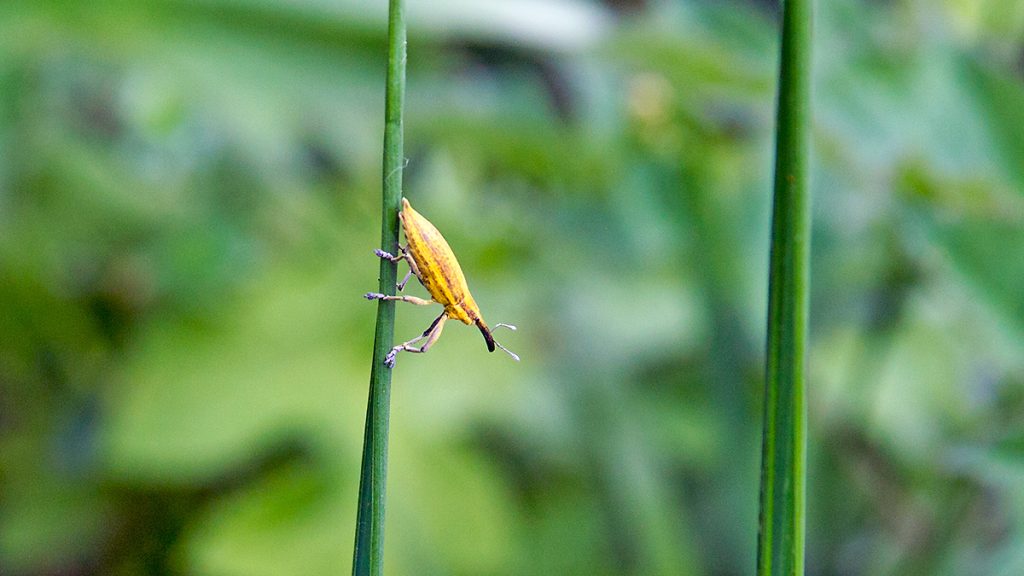
I managed to find the rather uncommon Yellow Weevil (Lixus iridis) at a second site, some 500m from the location where I first saw them 3 weeks ago.
As I was in a bit of rush to squeeze in this trip to the Downs the quality of my photos was a bit sub-par, which was a pity since I recorded 4 new species. For one of these, although good enough to ID the insect, I would rather not post the poor images I managed to get.
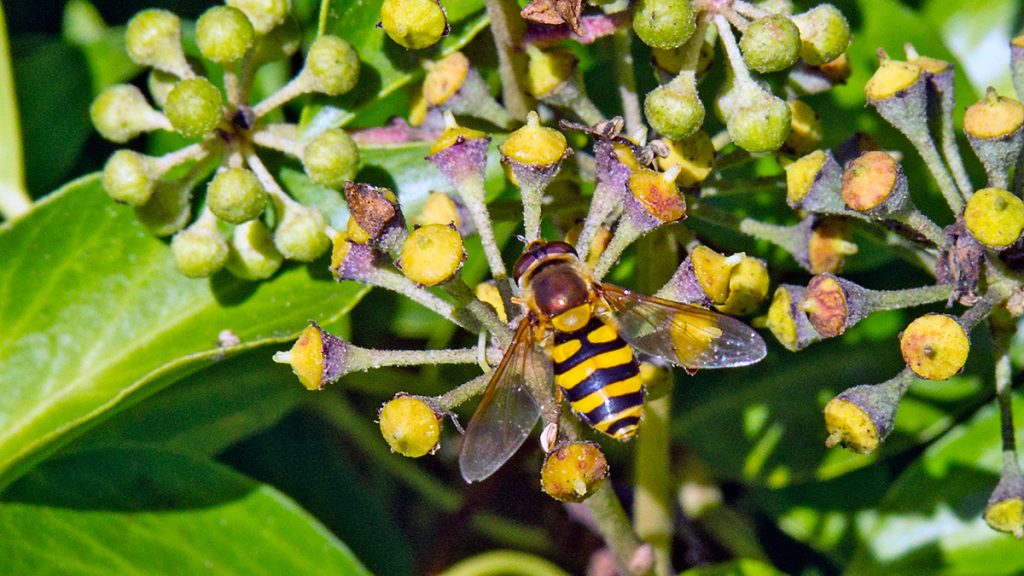
First of the new species was a female Barred Ant-hill Hoverfly (Philhelius citrofasciatum) on Cow Parsley (Anthriscus sylvestris). She would not co-operate, and I had to make do with photos from odd angles, none of which showed all the hoverfly’s body.
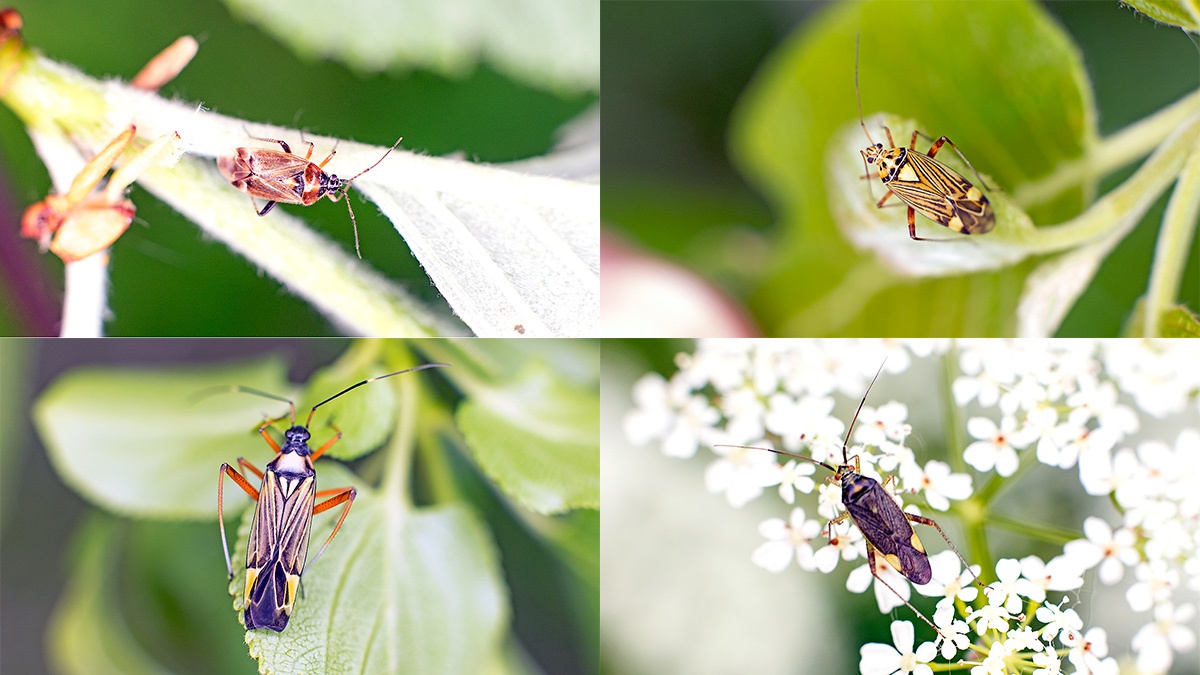
It was definitely ‘bug day’ as I found 6 different species, these being a mating pair of Parent Bug (Elasmucha grisea) on Birch, Four-spotted Oak Bug (Dryophilocoris flavoquadrimaculatus) on Oak, Trivial Plant Bug (Closterotomus trivialis) on Cow Parsley (Anthriscus sylvestris), Fine Streaked Bugkin (Miris striatus), Striped Oak Bug (Rhabdomiris striatellus) and Oak Catkin Bug (Harpocera thoracica).
The second new species was a Mottled Sedge (Glyphotaelius pellucidus) caddisfly. Not only was it a new species, but a new Order of insects for me, the Trichoptera. I thought I was photographing a moth and only realised my mistake during processing of the image, also rather sub-par but I post it anyway. The Trichoptera are a group of small moth-like insects, having two pairs of hairy membranous wings. They are closely related to Lepidoptera (moths and butterflies) which have scales, not hairs, on their wings. The other main difference is that the Trichoptera have aquatic larvae and terrestrial adults, whereas Lepidoptera larvae and adults are both terrestrial.
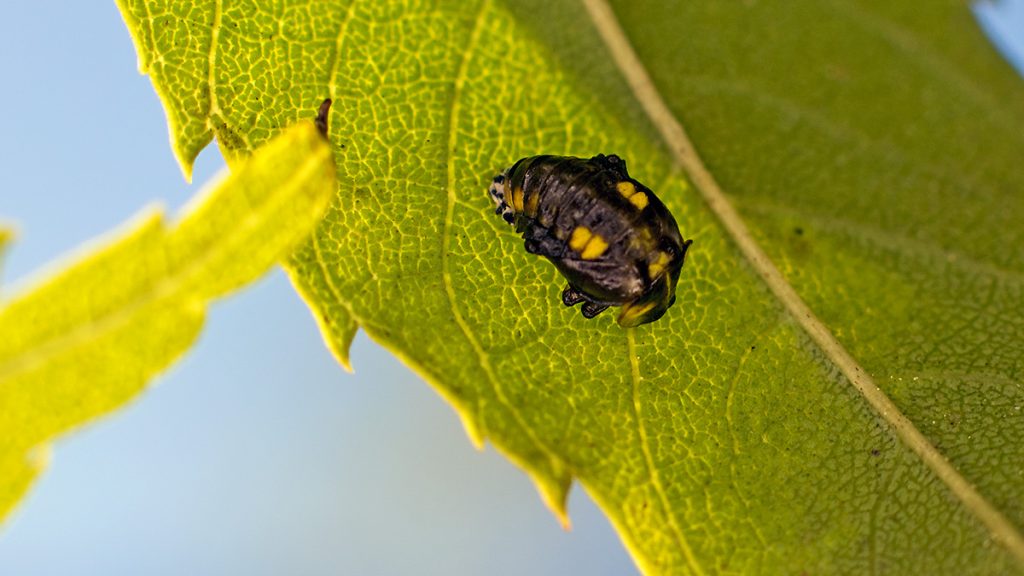
Third new species, the one for which I have not a single image good enough to post, was a 10-Spot Ladybird (Adalia decempunctata) of the form bimaculata, found on Garlic Mustard (Alliaria petiolata). Another ladybird seen for the second time this year, and rather infrequently over the years, was Pine Ladybird (Exochomus quadripustulatus).
Sycamore trees provided one of the two common aphids to be found on sycamore, Sycamore Periphyllus Aphid (Periphyllus acericola).
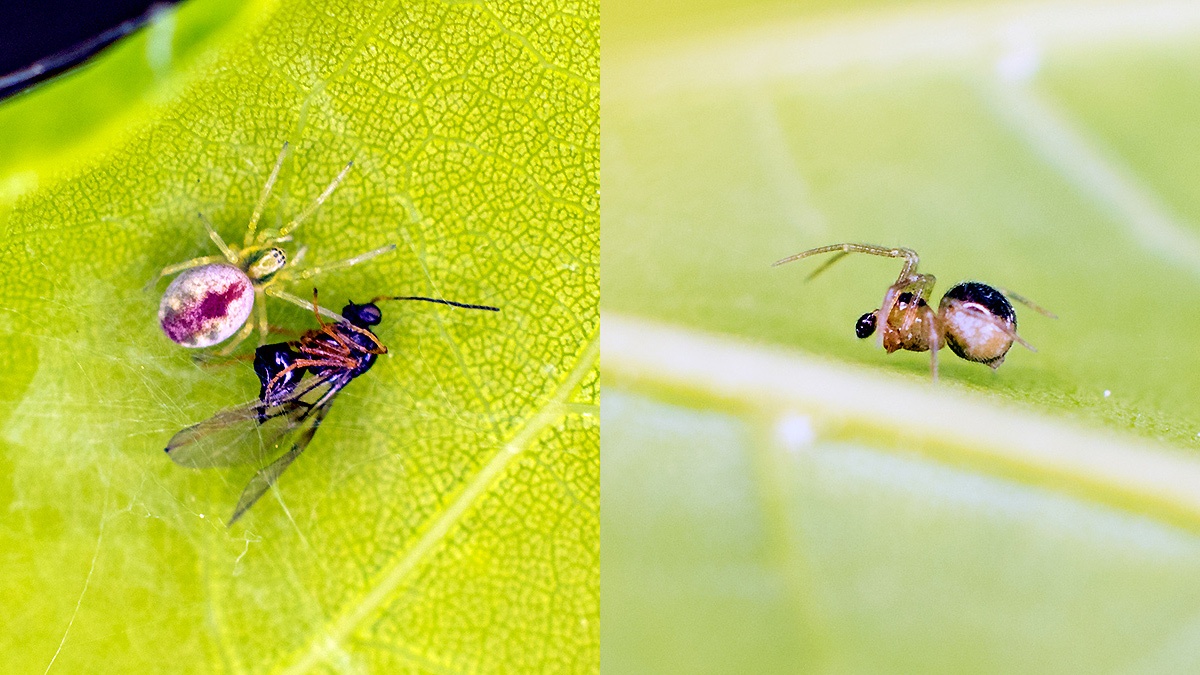
Two spiders found were a Bleeding Heart Spider (Nigma puella) with a parasitic wasp ensnared in its web, and a comb-footed spider species of the family Theridiidae.
Another arachnid and the last new species for the day was a Velvet Mite (Trombidium holosericeum), found on a Sycamore. Hard to miss this one.
![Yellow Weevil [Lixus iridis]](https://downsdiary.uk/wp-content/gallery/may_2026/NG8_8133_EOS-1D_TheDowns_08May2026.jpg "Yellow Weevil [Lixus iridis]")
![Barred Ant-hill Hoverfly [Philhelius citrofasciatus]](https://downsdiary.uk/wp-content/gallery/may_2026/NG8_8127_EOS-1D_TheDowns_08May2026.jpg "Barred Ant-hill Hoverfly [Philhelius citrofasciatus]")
![Parent Bug [Elasmucha grisea] & Four-spotted Oak Bug [Dryophilocoris flavoquadrimaculatus]](https://downsdiary.uk/wp-content/gallery/may_2026/NG8_8124-41_EOS-1D_TheDowns_08May2026.jpg "Parent Bug [Elasmucha grisea] & Four-spotted Oak Bug [Dryophilocoris flavoquadrimaculatus]")
![Mottled Sedge [Glyphotaelius pellucidus]](https://downsdiary.uk/wp-content/gallery/may_2026/BD2_4829_7D_TheDowns_08May2026.jpg "Mottled Sedge [Glyphotaelius pellucidus]")
![Sycamore Periphyllus Aphid [Periphyllus acericola]](https://downsdiary.uk/wp-content/gallery/may_2026/BD2_4812_7D_TheDowns_08May2026.jpg "Sycamore Periphyllus Aphid [Periphyllus acericola]")
![Sycamore Periphyllus Aphid [Periphyllus acericola]](https://downsdiary.uk/wp-content/gallery/may_2026/BD2_4808_7D_TheDowns_08May2026.jpg "Sycamore Periphyllus Aphid [Periphyllus acericola]")
![Velvet Mite [Trombidium holosericeum]](https://downsdiary.uk/wp-content/gallery/may_2026/BD2_4854_7D_TheDowns_08May2026.jpg "Velvet Mite [Trombidium holosericeum]")
<<<< Previous page | Next Page >>>>