I have only heard a Cuckoo (Cuculus canorus) calling on the Downs twice in the last 10 years, but there was one around this morning. I could locate the general area that he was in but could not see him.
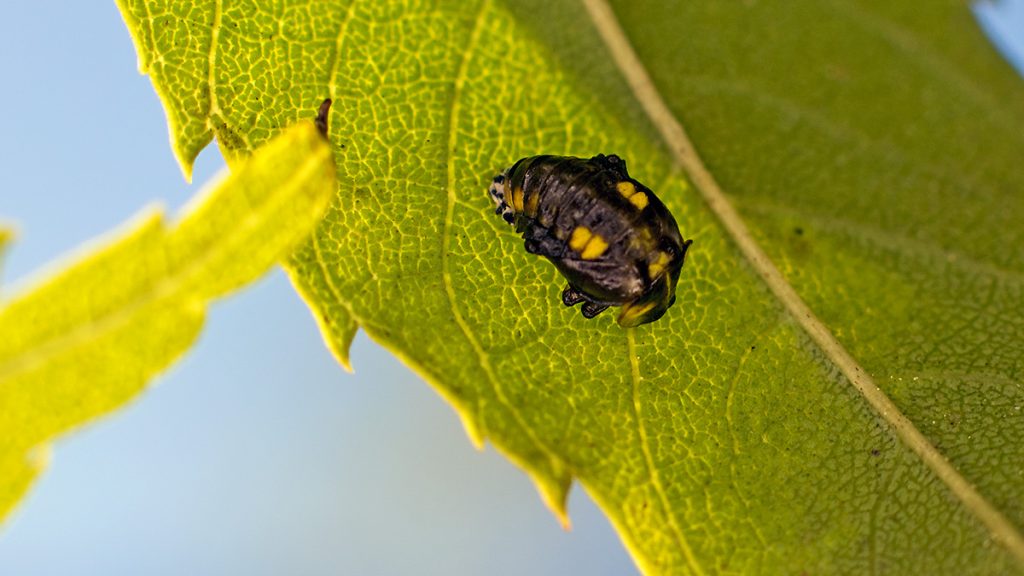
Brimstone (Gonepteryx rhamni), Small Blue (Cupido minimus) and Speckled Wood (Pararge aegeria) butterflies are still the dominant species, although Small Heath (Coenonympha pamphilus) numbers seem to be on the increase. The Common Carder Bees (Bombus pascuorum) and White-tailed Bumblebees (Bombus lucorum) are still very active on the patch of Common Comfrey (Symphytum officinale) flowers but have been joined by equal numbers of Ashy Mining Bee (Andrena cineraria). Also on the Common Comfrey I discovered some newly laid eggs (they definitely weren’t there 2 days ago) of what I think may be one of the Hemiptera (true bugs).
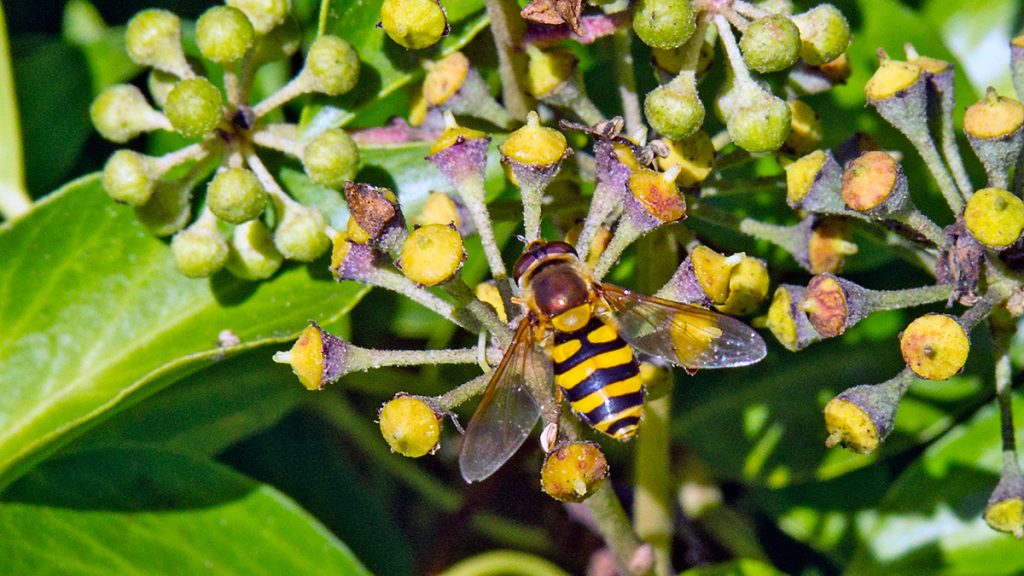
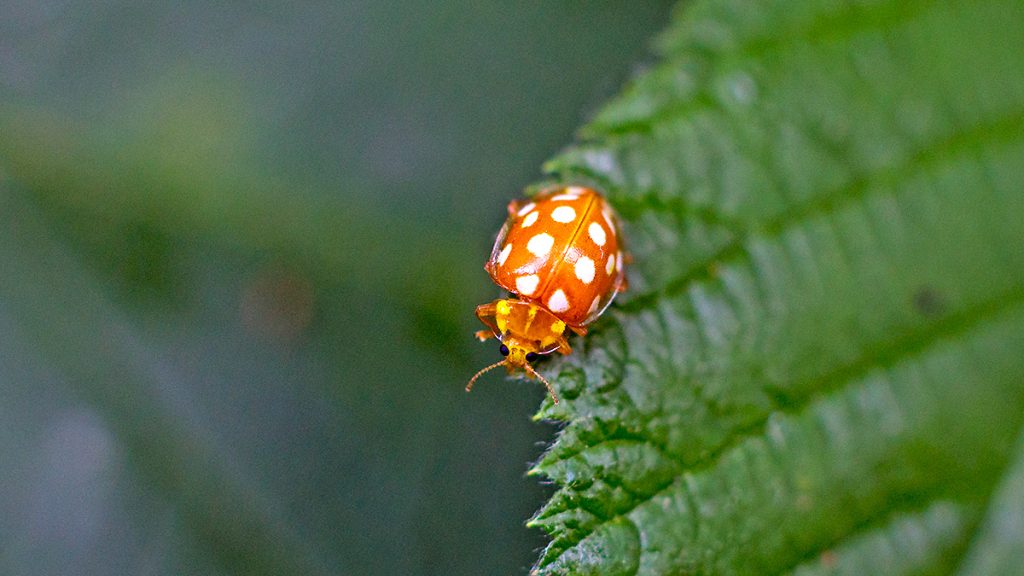
I made my first ever sighting on the Downs of Orange Ladybird (Halyzia sedecimguttata), Bramble Sawfly (Arge cyanocrocea), Large Spearhorn hoverfly (Chrysotoxum cautum) and Red-tipped Flower Beetle (Malachius bipustulatus). Other insects photographed today were Fine-streaked Bugkin (Miris striatus), Batman Hoverfly (Myathropa florea) and Garden Chafer (Phyllopertha horticola) beetle.
![Hairy Shieldbug [Dolycoris baccarum]](https://downsdiary.uk/wp-content/gallery/may_2025/NG8_0109_EOS-1D_TheDowns_19May2025.jpg "Hairy Shieldbug [Dolycoris baccarum]")
![Orange Ladybird [Halyzia sedecimguttata]](https://downsdiary.uk/wp-content/gallery/may_2025/NG8_0097_EOS-1D_TheDowns_19May2025.jpg "Orange Ladybird [Halyzia sedecimguttata]")
![Bramble Sawfly [Arge cyanocrocea]](https://downsdiary.uk/wp-content/gallery/may_2025/IMG_1025_60D_TheDowns_19May2025.jpg "Bramble Sawfly [Arge cyanocrocea]")
![Red-tipped Flower Beetle [Malachius bipustulatus]](https://downsdiary.uk/wp-content/gallery/may_2025/IMG_1052_60D_TheDowns_19May2025.jpg "Red-tipped Flower Beetle [Malachius bipustulatus]")
![Fine-streaked Bugkin [Miris striatus]](https://downsdiary.uk/wp-content/gallery/may_2025/NG8_0128_EOS-1D_TheDowns_19May2025.jpg "Fine-streaked Bugkin [Miris striatus]")
![Death's Head Fly (or Batman Hoverfly) [Myathropa florea]](https://downsdiary.uk/wp-content/gallery/may_2025/IMG_1029_60D_TheDowns_19May2025.jpg "Death's Head Fly (or Batman Hoverfly) [Myathropa florea]")
![Garden Chafer [Phyllopertha horticola]](https://downsdiary.uk/wp-content/gallery/may_2025/IMG_1065_60D_TheDowns_19May2025.jpg "Garden Chafer [Phyllopertha horticola]")
![Red-tipped Flower Beetle [Malachius bipustulatus]](https://downsdiary.uk/wp-content/gallery/coleoptera/IMG_1052_60D_TheDowns_19May2025.jpg "Red-tipped Flower Beetle [Malachius bipustulatus]")
Two galls were seen on the same lime (Tilia sp.) tree, the Lime Nail Gall caused by the mite Eriophyes tiliae and the gall of the lime mite Eriophyes exilis.
Newly flowering wildflowers are Mouse-ear Hawkweed (Pilosella officinarum) and White Clover (Trifolium repens). The hawkweed is yet another of those yellow composites that needs photos of several parts of the plant to be able to get the correct ID – well I need the photos anyway. Perhaps with time I might be able to separate them better.
![Lime Nail Gall Mite [Eriophyes tiliae]](https://downsdiary.uk/wp-content/gallery/may_2025/IMG_1032_60D_TheDowns_19May2025.jpg "Lime Nail Gall Mite [Eriophyes tiliae]")
![Lime Gall Mite [Eriophyes exilis]](https://downsdiary.uk/wp-content/gallery/may_2025/NG8_0104_EOS-1D_TheDowns_19May2025.jpg "Lime Gall Mite [Eriophyes exilis]")
![Mouse-ear Hawkweed [Pilosella officinarum]](https://downsdiary.uk/wp-content/gallery/may_2025/IMG_1076x1078_60D_TheDowns_19May2025.jpg "Mouse-ear Hawkweed [Pilosella officinarum]")
![White Clover [Trifolium repens]](https://downsdiary.uk/wp-content/gallery/may_2025/4A_5312_EOS-1D_BansteadCommon_05Jun2015.jpg "White Clover [Trifolium repens]")
<<<< Previous page | Next Page >>>>