A beautiful, cloudless sunny day with only a light breeze. Heading for over 20°C and the hottest day of the year so far, and the first day that I have ventured out in short sleeves without a jacket or sweater. These conditions have brought out the butterflies again after 12 days absence, not that there is yet a great variety.
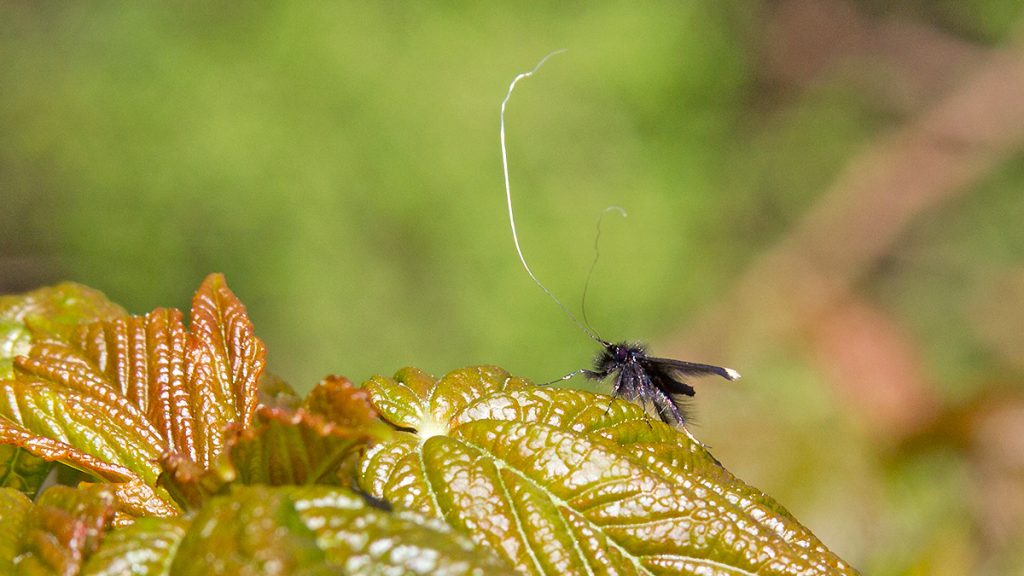
Brimstone (Gonepteryx rhamni) dominate, with dozens on the wing, with 2 Peacock (Aglais io), 2 Orange Tip (Anthocharis cardamines), and the first Green Hairstreak (Callophrys rubi) of the season. As well as butterflies, there has been an eruption of Green Longhorn moth (Adela reaumurella), with three separate swarms of these seen, each numbering some 20-30 individuals, exclusively males. These diurnal moths belong to the family Adelidae, the fairy longhorn moths, and are usually not too far from oak or birch trees.
![Peacock [Aglais io]](https://downsdiary.uk/wp-content/gallery/apr_2026/NG8_6690_EOS-1D_TheDowns_07Apr2026.jpg "Peacock [Aglais io]")
![Green Hairstreak [Callophrys rubi]](https://downsdiary.uk/wp-content/gallery/apr_2026/NG8_6681_EOS-1D_TheDowns_07Apr2026.jpg "Green Hairstreak [Callophrys rubi]")
![Green Longhorn [Adela reaumurella]](https://downsdiary.uk/wp-content/gallery/apr_2026/NG8_6716_EOS-1D_TheDowns_07Apr2026.jpg "Green Longhorn [Adela reaumurella]")
![Green Longhorn [Adela reaumurella]](https://downsdiary.uk/wp-content/gallery/apr_2026/NG8_6731_EOS-1D_TheDowns_07Apr2026.jpg "Green Longhorn [Adela reaumurella]")
![Green Longhorn [Adela reaumurella]](https://downsdiary.uk/wp-content/gallery/apr_2026/NG8_6720_EOS-1D_TheDowns_07Apr2026.jpg "Green Longhorn [Adela reaumurella]")
![Green Longhorn [Adela reaumurella]](https://downsdiary.uk/wp-content/gallery/apr_2026/NG8_6684_EOS-1D_TheDowns_07Apr2026.jpg "Green Longhorn [Adela reaumurella]")
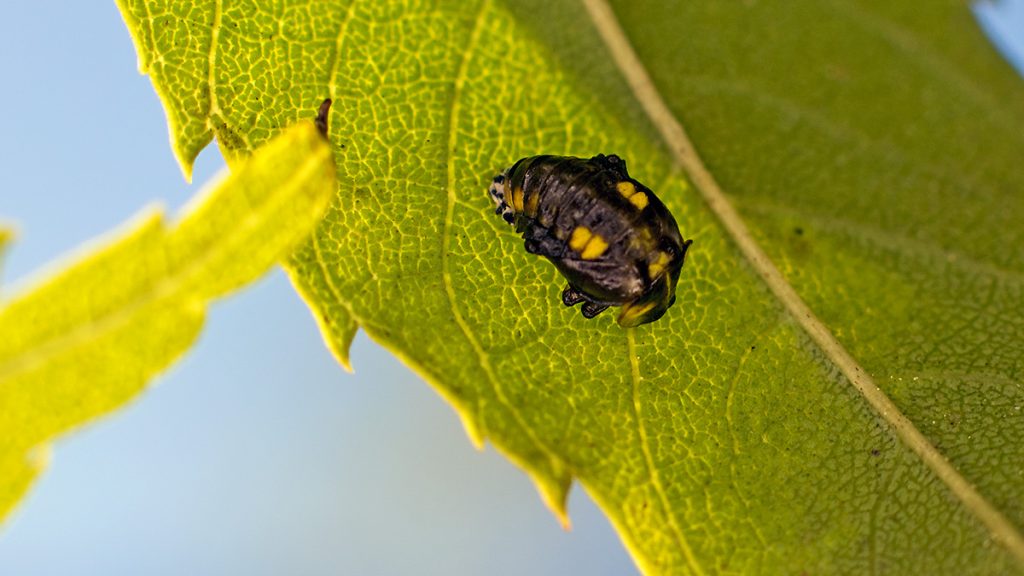
Still very prominent is the Seven-spot Ladybird (Coccinella septempunctata), which can be seen on a great variety of plants, although new bramble leaves do seem to be a favourite haunt. Two other ladybird species were seen for the first time this year, 14-spotted Ladybird (Propylea quatuordecimpunctata) also on bramble and Pine Ladybird (Exochomus quadripustulatus) on an Ash twig.
First seen on 30th March, I came across the same chalcidoid wasp species (possibly Mesopolobus tibialis of family Pteromalidae) on a Norway Maple (Acer platanoides) leaf. On the same tree I managed to get one shot of a nomad bee before it flew off. Just enough in the image to suggest that it is possibly a female Blunt-jawed Nomad Bee (Nomada striata). A female Early Mining Bee (Andrena haemorrhoa) was seen foraging on a Dandelion (Taraxacum officinale) flower.
An adult Dock Bug (Coreus marginatus) was found on a leaf of Green Alkanet (Pentaglottis sempervirens) and Common Green Lacewing (Chrysoperla carnea) on a Horse Chestnut (Aesculus hippocastanum) leaf.
The first Common Sycamore Aphid (Drepanosiphum platanoidis) was seen on the underside of a Sycamore (Acer pseudoplatanus) leaf in the company of a barkfly (Ectopsocus briggsi agg.). The aphid appears to be a 4th instar nymph with the wing buds just beginning to develop.
The newly opened leaves of a Common Lime (Tilia × europaea) provided a running crab spider (Philodromus dispar) and another Geometer moth caterpillar, possibly the next growth stage of the one seen 5 days ago.
Latest of the wildflowers to appear is Herb Robert (Geranium robertianum).
![14-spotted Ladybird [Propylea quatuordecimpunctata]](https://downsdiary.uk/wp-content/gallery/apr_2026/BD2_2387_7D_TheDowns_07Apr2026.jpg "14-spotted Ladybird [Propylea quatuordecimpunctata]")
![Pine Ladybird [Exochomus quadripustulatus]](https://downsdiary.uk/wp-content/gallery/apr_2026/BD2_2343_7D_TheDowns_07Apr2026.jpg "Pine Ladybird [Exochomus quadripustulatus]")
![chalcidoid wasp [Mesopolobus tibialis ?]](https://downsdiary.uk/wp-content/gallery/apr_2026/BD2_2317_7D_TheDowns_07Apr2026.jpg "chalcidoid wasp [Mesopolobus tibialis ?]")
![Blunt-jawed Nomad Bee [Nomada striata ?]](https://downsdiary.uk/wp-content/gallery/apr_2026/NG8_6676_EOS-1D_TheDowns_07Apr2026.jpg "Blunt-jawed Nomad Bee [Nomada striata ?]")
![Early Mining Bee [Andrena haemorrhoa]](https://downsdiary.uk/wp-content/gallery/apr_2026/NG8_6706_EOS-1D_TheDowns_07Apr2026.jpg "Early Mining Bee [Andrena haemorrhoa]")
![Dock Bug [Coreus marginatus]](https://downsdiary.uk/wp-content/gallery/apr_2026/NG8_6694_EOS-1D_TheDowns_07Apr2026.jpg "Dock Bug [Coreus marginatus]")
![Common Green Lacewing [Chrysoperla carnea]](https://downsdiary.uk/wp-content/gallery/apr_2026/BD2_2335_7D_TheDowns_07Apr2026.jpg "Common Green Lacewing [Chrysoperla carnea]")
![Common Sycamore Aphid [Drepanosiphum platanoidis]](https://downsdiary.uk/wp-content/gallery/apr_2026/BD2_2348_7D_TheDowns_07Apr2026.jpg "Common Sycamore Aphid [Drepanosiphum platanoidis]")
![Common Sycamore Aphid [Drepanosiphum platanoidis]](https://downsdiary.uk/wp-content/gallery/apr_2026/BD2_2358_7D_TheDowns_07Apr2026.jpg "Common Sycamore Aphid [Drepanosiphum platanoidis]")
![running crab spider [Philodromus dispar ?]](https://downsdiary.uk/wp-content/gallery/apr_2026/BD2_2323_7D_TheDowns_07Apr2026.jpg "running crab spider [Philodromus dispar ?]")
![Geometer moth [unidentified]](https://downsdiary.uk/wp-content/gallery/apr_2026/BD2_2327_7D_TheDowns_07Apr2026.jpg "Geometer moth [unidentified]")
![Herb Robert [Geranium robertianum]](https://downsdiary.uk/wp-content/gallery/apr_2026/BD2_2361_7D_TheDowns_07Apr2026.jpg "Herb Robert [Geranium robertianum]")
<<<< Previous page | Next Page >>>>