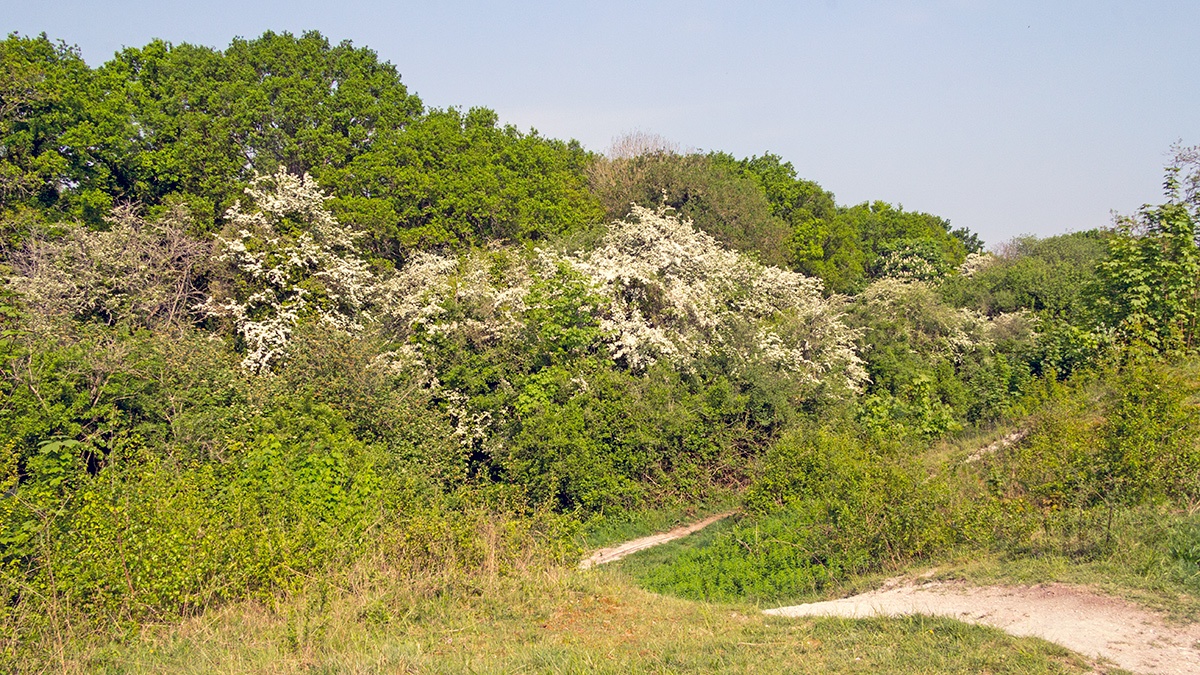
The Hawthorn (Crataegus monogyna) is now blooming across the Downs, the May blossom adding a touch of colour to the otherwise green hedges and woodland. In the grassland areas the latest flowers to appear are Star-of-Bethlehem (Ornithogalum umbellatum), Tormentil (Potentilla erecta) and Bird’s-foot Trefoil (Lotus corniculatus). On the leaf of one as yet non-flowering Salad Burnet (Sanguisorba minor) I discovered the brilliant orange-coloured fungus Burnet Rust (Phragmidium sanguisorbae).
![Star-of-Bethlehem [Ornithogalum umbellatum]](https://downsdiary.uk/wp-content/gallery/may_2025/IMG_0333_60D_TheDowns_02May2025.jpg "Star-of-Bethlehem [Ornithogalum umbellatum]")
![Tormentil [Potentilla erecta]](https://downsdiary.uk/wp-content/gallery/may_2025/IMG_0348_60D_TheDowns_02May2025.jpg "Tormentil [Potentilla erecta]")
![Bird's-foot Trefoil [Lotus corniculatus]](https://downsdiary.uk/wp-content/gallery/may_2025/IMG_0337_60D_TheDowns_02May2025.jpg "Bird's-foot Trefoil [Lotus corniculatus]")
![Burnet Rust [Phragmidium sanguisorbae]](https://downsdiary.uk/wp-content/gallery/may_2025/NG8_9733_EOS-1D_TheDowns_02May2025.jpg "Burnet Rust [Phragmidium sanguisorbae]")
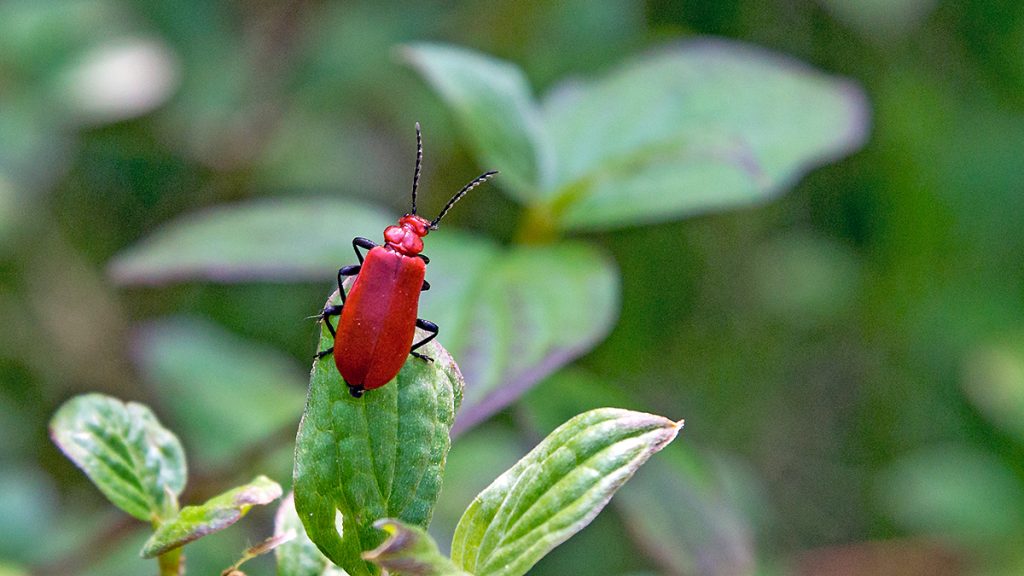
New insect sightings were Red-headed Cardinal (Pyrochroa serraticornis) beetle and Spindle Ermine (Yponomeuta cagnagella) moth caterpillars feeding gregariously safe inside silken webs on the Common Spindle (Euonymus europaeus) tree, while on English Oak (Quercus robur) trees I came across the Common Oak Thelaxid (Thelaxes dryophila) aphid and Oak Apple Galls which are caused by the gall wasps Biorhiza pallida laying their eggs in leaf buds.
The Spindle Ermine moth caterpillars are present in huge numbers this year – almost plague proportions! Don’t worry, though, as even if the caterpillars completely strip the leaves from the trees they have a second flush of leaves after the caterpillars pupate and by the end of the summer will look as good as new.
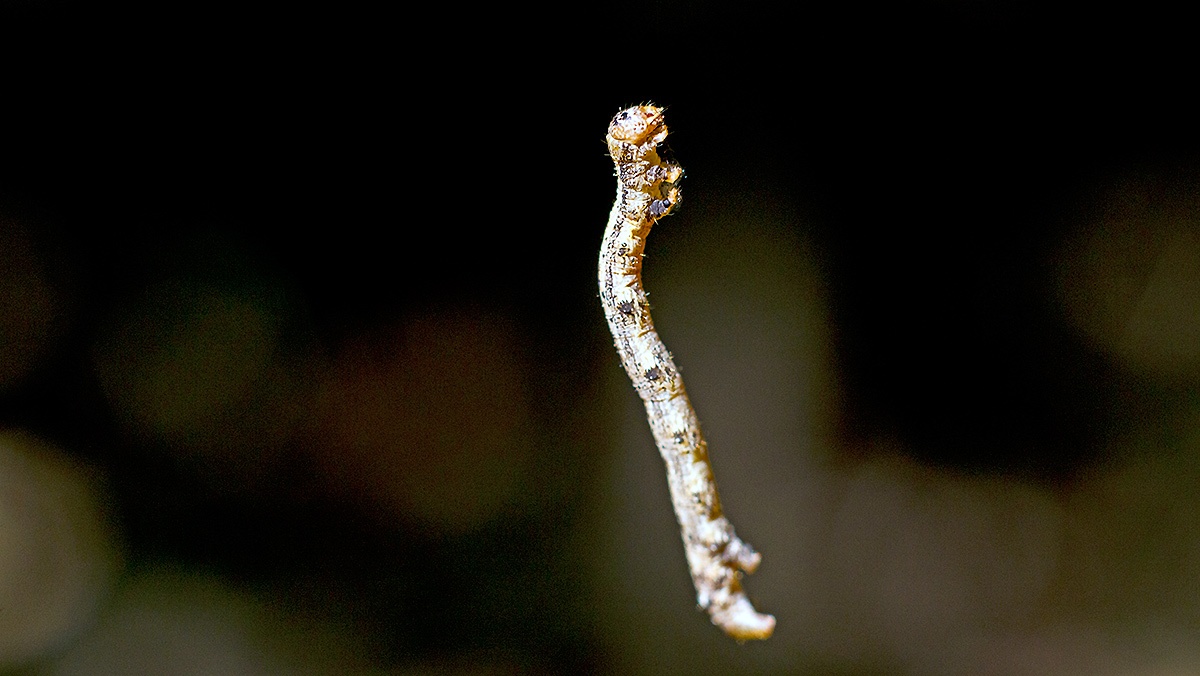
It is that time of year when many species of moth caterpillars and sawfly larvae are found dangling from silk threads, so walking along some of the woodland paths with overhanging trees calls for nimble footwork to avoid having these larvae attach themselves to your clothes. Seen today were the caterpillar of the Green Oak Tortix (Tortrix viridana) moth and an as yet unidentified ‘looper’ caterpillar possibly of a moth of the Geometridae family.
What is a ‘looper’ caterpillar? To learn more click here.
![Red-headed Cardinal Beetle [Pyrochroa serraticornis]](https://downsdiary.uk/wp-content/gallery/may_2025/IMG_0357_60D_TheDowns_02May2025.jpg "Red-headed Cardinal Beetle [Pyrochroa serraticornis]")
![Spindle Ermine [Yponomeuta cagnagella]](https://downsdiary.uk/wp-content/gallery/may_2025/IMG_0356_60D_TheDowns_02May2025.jpg "Spindle Ermine [Yponomeuta cagnagella]")
![Spindle Ermine [Yponomeuta cagnagella]](https://downsdiary.uk/wp-content/gallery/may_2025/NG8_9739_EOS-1D_TheDowns_02May2025.jpg "Spindle Ermine [Yponomeuta cagnagella]")
![Common Spindle [Euonymus europaeus]](https://downsdiary.uk/wp-content/gallery/may_2025/IMG_0352_60D_TheDowns_02May2025.jpg "Common Spindle [Euonymus europaeus]")
![English Oak [Quercus robur]](https://downsdiary.uk/wp-content/gallery/may_2025/IMG_0341_60D_TheDowns_02May2025.jpg "English Oak [Quercus robur]")
![Common Oak Thelaxid [Thelaxes dryophila]](https://downsdiary.uk/wp-content/gallery/may_2025/NG8_9705_EOS-1D_TheDowns_02May2025.jpg "Common Oak Thelaxid [Thelaxes dryophila]")
![Oak Apple Gall Wasp [Biorhiza pallida]](https://downsdiary.uk/wp-content/gallery/may_2025/IMG_0339_60D_TheDowns_02May2025.jpg "Oak Apple Gall Wasp [Biorhiza pallida]")
![Green Oak Tortix [Tortrix viridana]](https://downsdiary.uk/wp-content/gallery/may_2025/NG8_9696_EOS-1D_TheDowns_02May2025.jpg "Green Oak Tortix [Tortrix viridana]")
Nature note for the day
The English Oak (Quercus robur), by far the commonest oak species on Banstead Common, is also known as the Pedunculate Oak. So what does pedunculate mean? Quite simply that the acorns grow at the end of a stalk, or peduncle, as opposed to the acorns on the other native oak species, the Sessile Oak (Quercus petraea), which grow directly on a leaf stem. Sessile essentially means without a stalk, or peduncle. The only other oak species apart from English Oak that I have seen on Banstead Downs, and then only a single tree, is the Turkey Oak (Quercus cerris), which is a non-native but widely planted and naturalised species in the United Kingdom.
Further information on how to tell the English Oak and Sessile Oak apart can be found here.
![Turkey Oak [Quercus cerris]](https://downsdiary.uk/wp-content/gallery/may_2025/IMG_0915_60D_TheDowns_17May2025.jpg "Turkey Oak [Quercus cerris]")
<<<< Previous page | Next Page >>>>