The Brimstone butterflies are back and in much larger numbers this time. A single Small Tortoiseshell (Aglais urticae) was also spotted.
A surprise was a small flock of Redpoll (Acanthis flammea cabaret), a bird I had not seen on the Downs before today. Best of all was that I did not miss out on a photo as two of the flock were very accommodating and I could get close enough with the 135mm lens. This bird is the sub-species cabaret of Acanthis flammea known as the Lesser Redpoll and was until recently regarded as a full species before being lumped with the Redpoll.
Having reported on finding a Roe Deer scrape on 2nd March, today I found fresh Roe Deer droppings within 100m of that scrape. Deer sightings on the Downs are rather uncommon. I’ve seen them myself on only 3 occasions in the past 12 years. So, discovering the scrape and droppings is a good indication that they are still in the area.
![Redpoll [Acanthis flammea cabaret]](https://downsdiary.uk/wp-content/gallery/mar_2026/NG8_6149_EOS-1D_TheDowns_05Mar2026.jpg "Redpoll [Acanthis flammea cabaret]")
![Redpoll [Acanthis flammea cabaret]](https://downsdiary.uk/wp-content/gallery/mar_2026/NG8_6151_EOS-1D_TheDowns_05Mar2026.jpg "Redpoll [Acanthis flammea cabaret]")
![Roe Deer [Capreolus capreolus]](https://downsdiary.uk/wp-content/gallery/mar_2026/NG8_6171_EOS-1D_TheDowns_05Mar2026.jpg "Roe Deer [Capreolus capreolus]")
On the same felled oak stump where I found the rove beetle two days ago I was able to photograph a species of dark-winged fungus gnat (Family : Sciaridae), possibly a Sciara sp.
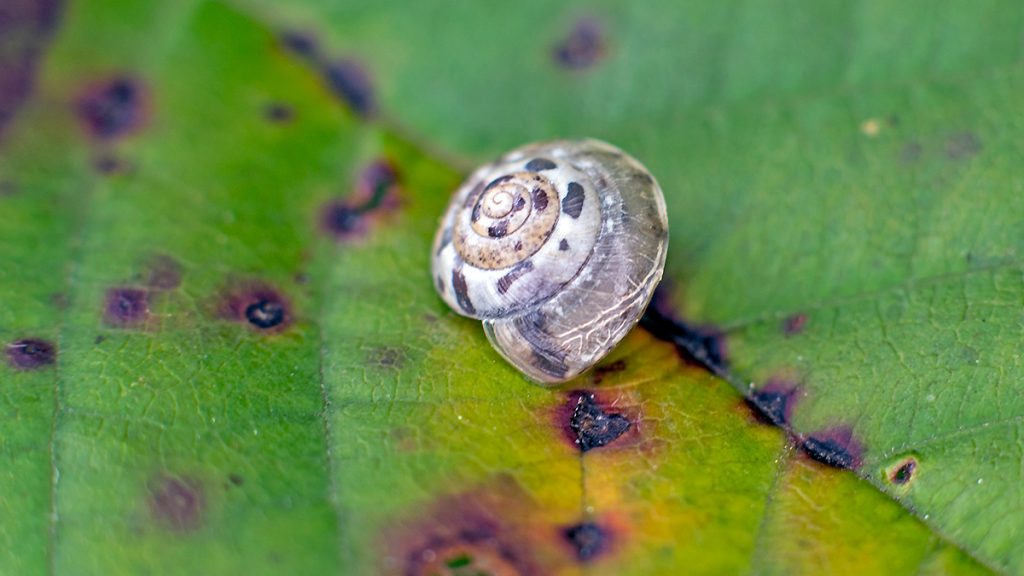
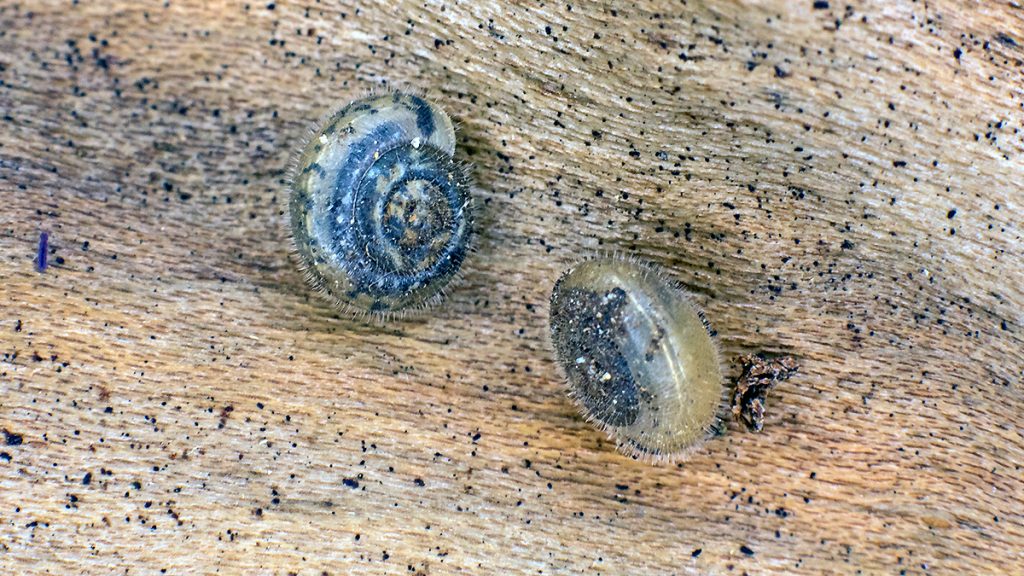
Of late I have been trying my luck looking under flaps of bark among the leaf litter. This afternoon I rolled over a moss-covered fallen birch trunk. Waiting until the inevitable scattering in all directions of the resident woodlouse population had finished, I was able to take close-up photos of a White-lipped Snail (Cepaea hortensis) and a new snail species for me, the Hairy Snail (Trochulus hispidus). The pair in the image have shells that are 5-6mm diameter.
One woodlouse that had not joined the mass exodus was found next to a shed exoskeleton (exuvia). What is interesting with woodlice is that, unlike most arthropods, their moulting process (ecdysis) is two-phase, first shedding the rear half, then a few days later the front half, which is what this image of a Common Striped Woodlouse (Philoscia muscorum) shows. Indeed, the woodlouse in the image may well be the one that has just shed the front half exoskeleton.
![White-lipped Snail [Cepaea hortensis]](https://downsdiary.uk/wp-content/gallery/mar_2026/BD2_1243_7D_TheDowns_05Mar2026.jpg "White-lipped Snail [Cepaea hortensis]")
![Hairy Snail [Trochulus hispidus]](https://downsdiary.uk/wp-content/gallery/mar_2026/BD2_1251_7D_TheDowns_05Mar2026.jpg "Hairy Snail [Trochulus hispidus]")
![Common Striped Woodlouse [Philoscia muscorum]](https://downsdiary.uk/wp-content/gallery/mar_2026/BD2_1261_7D_TheDowns_05Mar2026.jpg "Common Striped Woodlouse [Philoscia muscorum]")
![dark-winged fungus gnat [Sciara sp?]](https://downsdiary.uk/wp-content/gallery/mar_2026/BD2_1274_7D_TheDowns_05Mar2026.jpg "dark-winged fungus gnat [Sciara sp?]")
Nature Note for the Day
Hairy snail shell! Are those real hairs? What is their purpose?
The outer layer of a snail’s shell, known as the periostracum, is a thin organic covering of the main shell. The shell itself consists of an aggregate of aragonite (calcium carbonate) crystals in a matrix of conchiolins, which are a mix of complex proteins and polysaccharides (examples of polysaccharides are starch and cellulose). Conchiolins are essentially the organic cement that binds the mineral component of the shell together. The periostracum is composed primarily of these conchiolins, which gives the shell a tough, yet flexible, resilient outer protective layer. The hairs of the ‘hairy snails’, also composed of conchiolins, are formed separately from, but attached to, the periostracum.
So that is what they are, but why do some snails have these hairy shells?
It is believed that they provide several benefits for the snails. They may act as a defence against predators, but the main advantages are related to environmental stress factors, such as abrasion and heat. They act as extra armour against abrasion of the main shell during the life of the snail, gradually wearing down or breaking off. So, the more hairs there are on the shell, the younger the snail. They help the snail retain moisture against the shell in hotter weather, acting very much like an air conditioner for the shell. Additionally, since these small land snails live mainly among the leaf litter of the woodland floor, they also provide better adhesion to wet, slippery leaves – the snail’s very own 4×4 mode.
<<<< Previous page | Next Page >>>>