Well spring starts officially at the Spring Equinox, which this year is on 20th March. ‘Meteorological Spring’ started yesterday. This is to make the use of data collected and grouped by calendar months easier to use for year-to-year comparisons. Whichever start date you prefer for spring the weather today and for the next few days is decidedly spring-like, sunny and warmer than average. This is already apparent on the Downs.
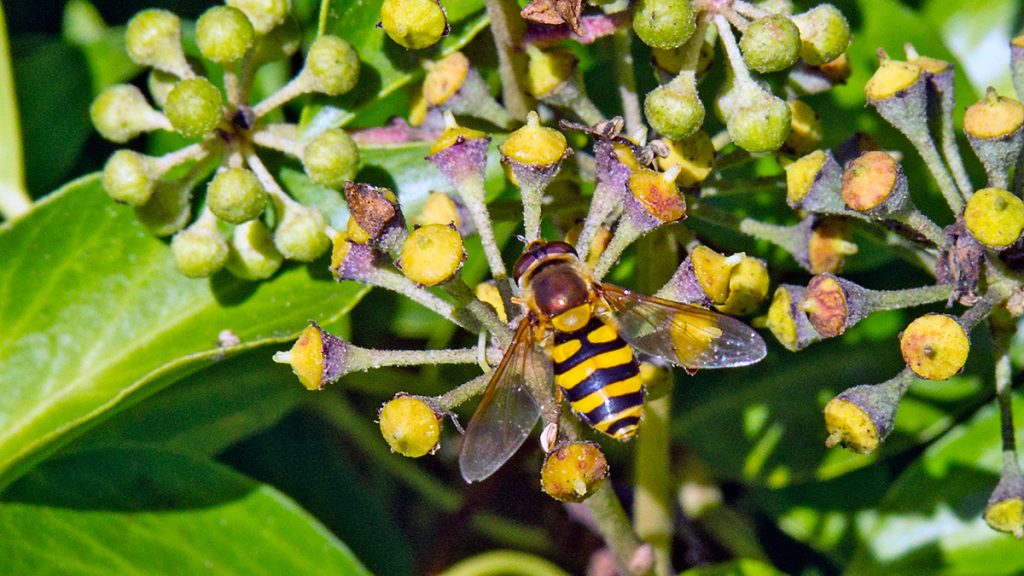
Some of the Common Hawthorn (Crataegus monogyna) is beginning to produce new leaves. Many of the Goat Willow (Salix caprea) catkins are now fully open. On one of these I found my first hoverfly of the year, a female Spotted Thintail (Meliscaeva auricollis). Although I have seen them elsewhere already, I found my first Dandelion (Taraxacum officinale) of the season on the Downs this morning. A bonus was that my first solitary bee of the year was also found on it. This was a Lasioglossum sp., possibly a Common Furrow Bee (Lasioglossum calceatum).
![Spotted Thintail [Meliscaeva auricollis ?]](https://downsdiary.uk/wp-content/gallery/mar_2026/BD2_0965_7D_TheDowns_02Mar2026.jpg "Spotted Thintail [Meliscaeva auricollis ?]")
![Goat Willow [Salix caprea]](https://downsdiary.uk/wp-content/gallery/mar_2026/BD2_0971_7D_TheDowns_02Mar2026.jpg "Goat Willow [Salix caprea]")
![Common Furrow Bee [Lasioglossum calceatum ?]](https://downsdiary.uk/wp-content/gallery/mar_2026/BD2_1072_7D_TheDowns_02Mar2026.jpg "Common Furrow Bee [Lasioglossum calceatum ?]")
![Dandelion [Taraxacum officinale]](https://downsdiary.uk/wp-content/gallery/mar_2026/NG8_6097_EOS-1D_TheDowns_02Mar2026.jpg "Dandelion [Taraxacum officinale]")
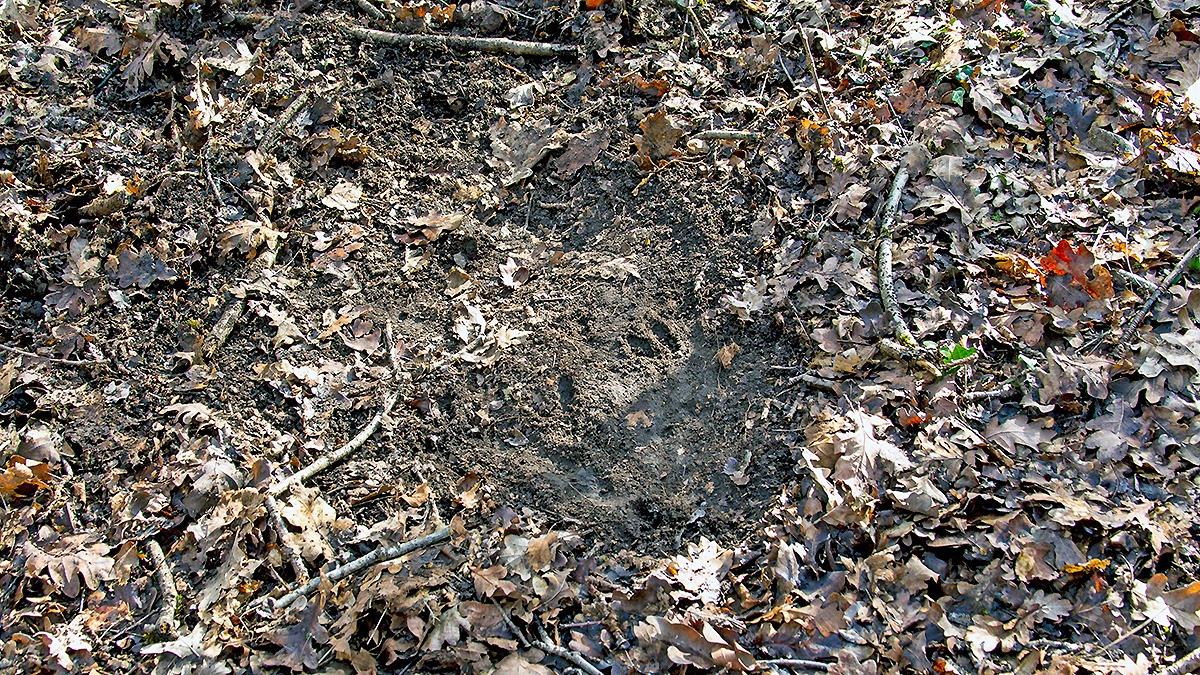
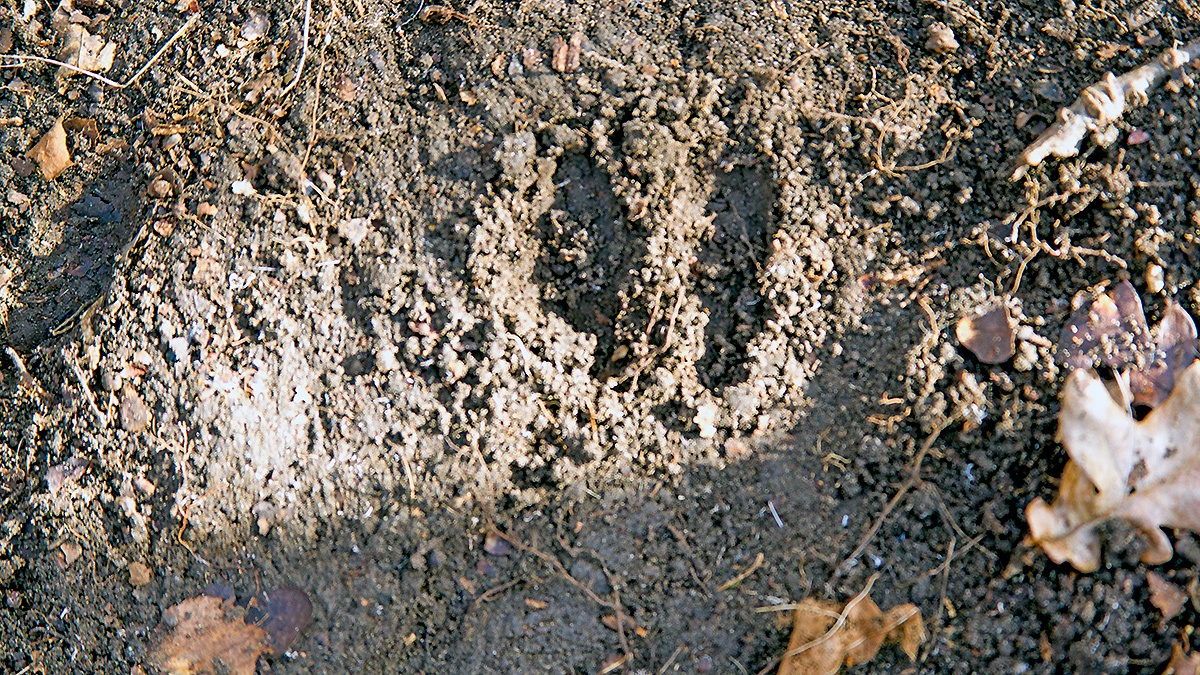
Entering the woodland the first thing that I noticed was an area scraped clean of the leaf litter, which had the unmistakeable hoof prints of a Roe Deer (Capreolus capreolus) imprinted on the bare soil. This was, I imagine, the spot the deer had chosen to sleep last night. During the winter months Roe deer tend to scrape away the leaf litter to prepare a warmer and drier sleeping ‘couch’ rather than lying directly on the wet leaves.
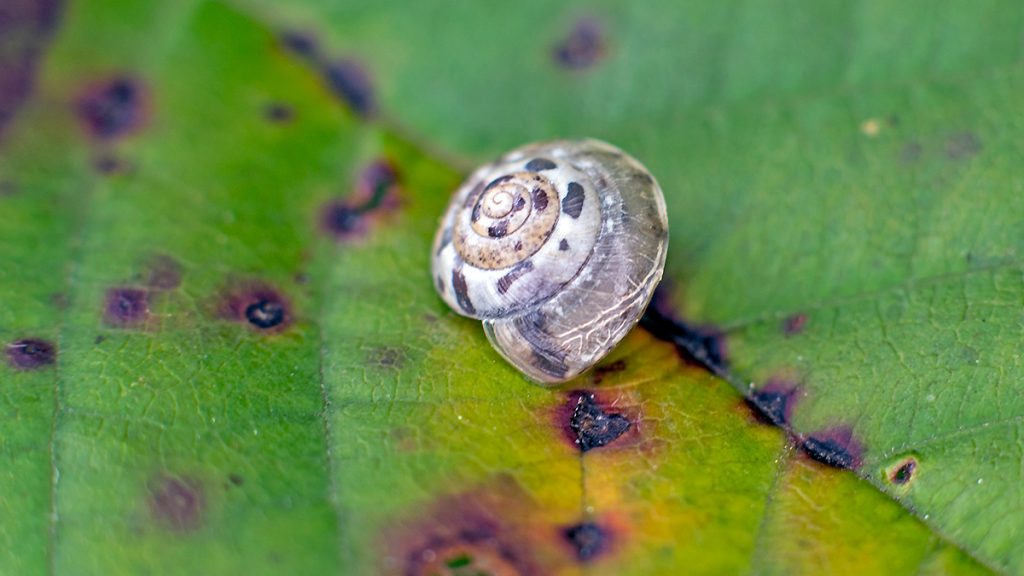
Nearby, I came across some mushrooms, possibly Glistening Inkcap (Coprinellus micaceus). Under one of them I found a slug, possibly a Darkface Arion (Arion distinctus), feasting on the gills of the mushroom. On decaying bark fragments in the leaf litter I came across two further slug species, a Hedgehog Slug (Arion intermedius) and an Orange-banded Arion (Arion fasciatus).
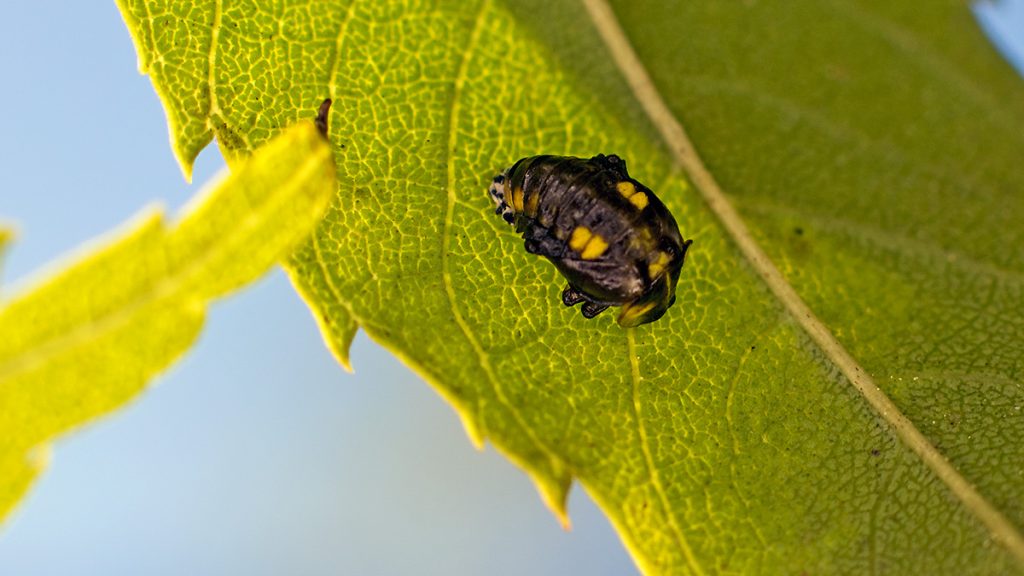
On another bark fragment I located a 3mm immature Common Pill Millipede (Glomeris marginata) with unusual patterning and in a crevice on the bark of a living tree that was also almost entirely covered with moss a White-legged Snake Millipede (Tachypodoiulus niger).
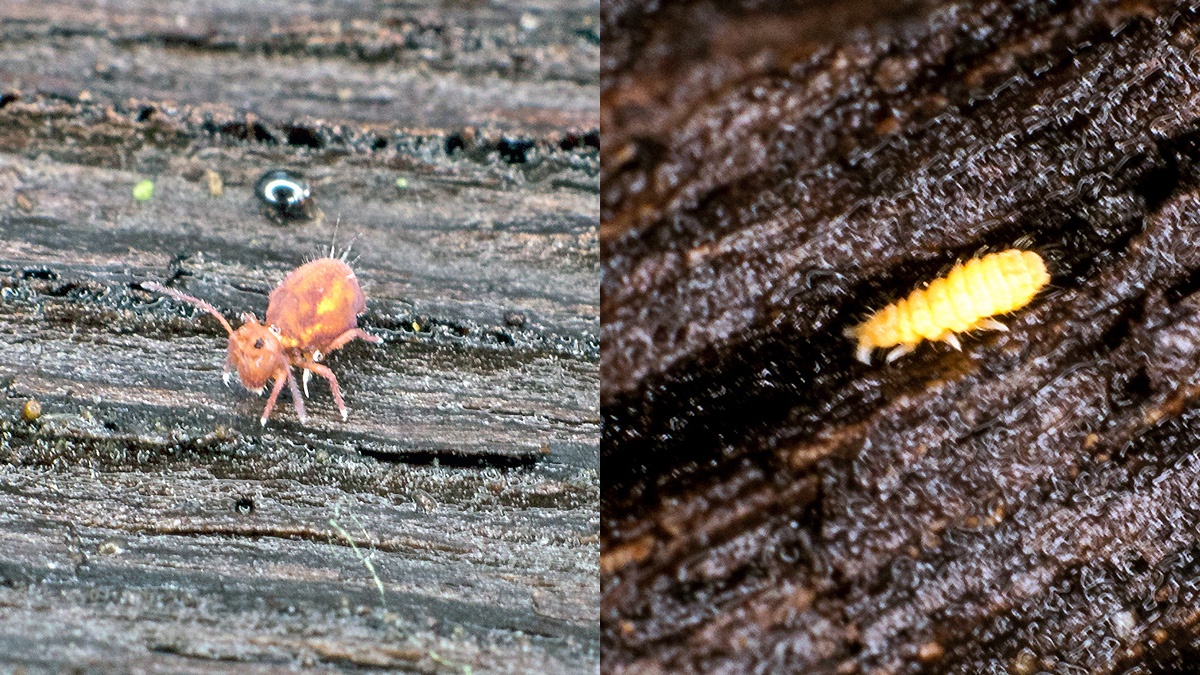
Other images obtained on bark fragments were of a Damaeidae mite, possibly the same species seen in this same area on 27th February, and a tiny (2.5mm) unidentified beetle, as well as two springtails, the globular springtail Dicyrtoma fusca, and the short-legged springtail Monobella grassei. The springtails were in the periphery of images taken of something else, which is why they are not quite in focus.
![Glistening Inkcap [Coprinellus micaceus ?]](https://downsdiary.uk/wp-content/gallery/mar_2026/NG8_6092_EOS-1D_TheDowns_02Mar2026.jpg "Glistening Inkcap [Coprinellus micaceus ?]")
![Darkface Arion [Arion distinctus ?]](https://downsdiary.uk/wp-content/gallery/mar_2026/BD2_0992_7D_TheDowns_02Mar2026.jpg "Darkface Arion [Arion distinctus ?]")
![Hedgehog Slug [Arion intermedius ?]](https://downsdiary.uk/wp-content/gallery/mar_2026/BD2_0984_7D_TheDowns_02Mar2026.jpg "Hedgehog Slug [Arion intermedius ?]")
![Orange-banded Arion [Arion fasciatus ?]](https://downsdiary.uk/wp-content/gallery/mar_2026/BD2_1065_7D_TheDowns_02Mar2026.jpg "Orange-banded Arion [Arion fasciatus ?]")
![Common Pill Millipede [Glomeris marginata]](https://downsdiary.uk/wp-content/gallery/mar_2026/BD2_1028_7D_TheDowns_02Mar2026.jpg "Common Pill Millipede [Glomeris marginata]")
![White-legged Snake Millipede [Tachypodoiulus niger]](https://downsdiary.uk/wp-content/gallery/mar_2026/BD2_0997_7D_TheDowns_02Mar2026.jpg "White-legged Snake Millipede [Tachypodoiulus niger]")
![Oribatid mite [Damaeidae sp.]](https://downsdiary.uk/wp-content/gallery/mar_2026/BD2_1050_7D_TheDowns_02Mar2026.jpg "Oribatid mite [Damaeidae sp.]")
![beetle [unidentified]](https://downsdiary.uk/wp-content/gallery/mar_2026/BD2_1063_7D_TheDowns_02Mar2026.jpg "beetle [unidentified]")
<<<< Previous page | Next Page >>>>