Two days of heavy showers has seen a lush greenness return to the Downs.
Chalk Hill Blue (Lysandra coridon) still predominates, but I have a first ever sighting anywhere of Purple Hairstreak (Favonius quercus). A rather worn specimen but still a Purple Hairstreak!
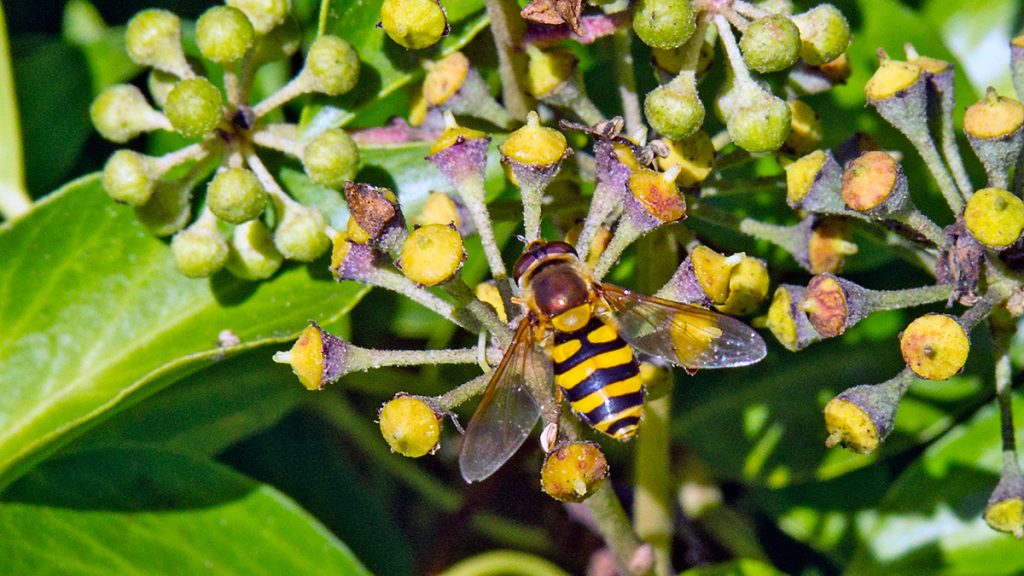
Other new sightings were a female ichneumon wasp (Ichneumon suspiciosus?), a female Red Harvestman (Opilio canestrinii) and a Red Spotted Parasite Fly (Eriothrix rufomaculata).
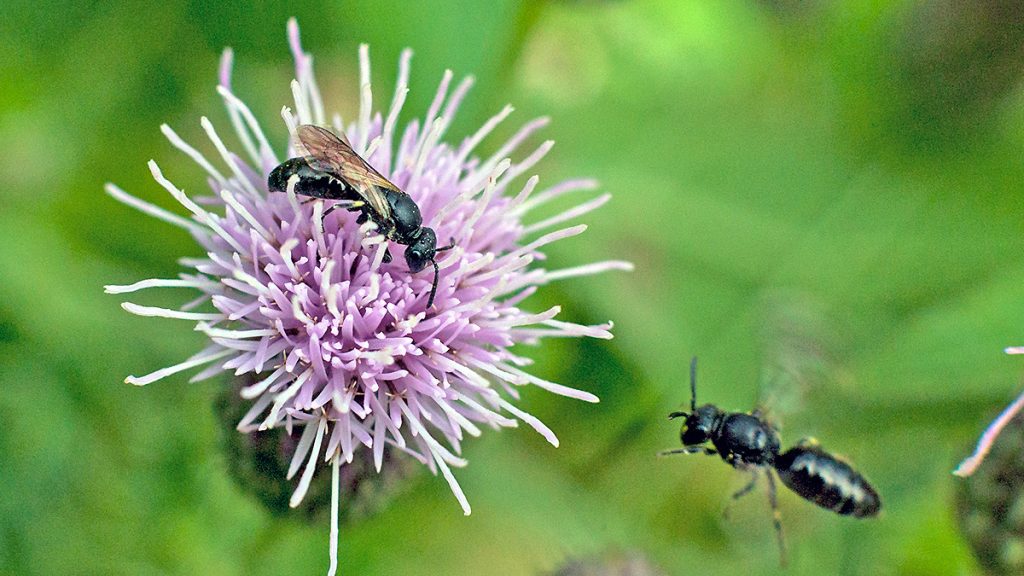
A week after seeing the first for the year I got a new image of a female Common Yellow-face Bee (Hylaeus communis) on Creeping Thistle (Cirsium arvense).
![Chalk Hill Blue [Polyomattus coridon]](https://downsdiary.uk/wp-content/gallery/july_2025/NG8_2603_EOS-1D_TheDowns_25Jul2025.jpg "Chalk Hill Blue [Polyomattus coridon]")
![Chalk Hill Blue [Polyomattus coridon]](https://downsdiary.uk/wp-content/gallery/july_2025/NG8_2593_EOS-1D_TheDowns_25Jul2025.jpg "Chalk Hill Blue [Polyomattus coridon]")
![Purple Hairstreak [Favonius quercus]](https://downsdiary.uk/wp-content/gallery/july_2025/NG8_2597_EOS-1D_TheDowns_25Jul2025.jpg "Purple Hairstreak [Favonius quercus]")
![ichneumon wasp [Ichneumon suspiciosus?]](https://downsdiary.uk/wp-content/gallery/july_2025/JO8V0650_EOS-1D_TheDowns_25Jul2025.jpg "ichneumon wasp [Ichneumon suspiciosus?]")
![Red Harvestman [Opilio canestrinii]](https://downsdiary.uk/wp-content/gallery/july_2025/NG8_2583_EOS-1D_TheDowns_25Jul2025.jpg "Red Harvestman [Opilio canestrinii]")
![Red Spotted Parasite Fly [Eriothrix rufomaculata]](https://downsdiary.uk/wp-content/gallery/july_2025/NG8_2550_EOS-1D_TheDowns_25Jul2025.jpg "Red Spotted Parasite Fly [Eriothrix rufomaculata]")
![Common Yellow-face Bee [Hylaeus communis]](https://downsdiary.uk/wp-content/gallery/july_2025/JO8V0642_EOS-1D_TheDowns_25Jul2025.jpg "Common Yellow-face Bee [Hylaeus communis]")
Latest wildflower is Burnet-saxifrage (Pimpinella saxifraga), which at a cursory glance could be mistaken for Wild Carrot.
![Burnet-saxifrage [Pimpinella saxifraga]](https://downsdiary.uk/wp-content/gallery/july_2025/NG8_2604_EOS-1D_TheDowns_25Jul2025.jpg "Burnet-saxifrage [Pimpinella saxifraga]")
Nature note for the day
Is a harvestman a spider? No.
Is a harvestman an arachnid? Yes.
So, what is the difference between spider and arachnid?
Arachnid refers to any member of the Class Arachnida, which includes spiders, scorpions, harvestmen, ticks and mites, among others. Each of these belongs to a different Order – spiders (Araneae), scorpions (Scorpiones), harvestmen (Opiliones), ticks (Ixodida) and mites (Trombidiformes). So just as a scorpion is not a spider, so a harvestman is not a spider.
Once you get past the obvious similarity between harvestmen and spiders, that they both have eight legs, there are some big differences. Spiders have a head/thorax (cephalothorax) and abdomen that are joined at a narrow waist, whereas harvestmen have a one-piece body. Spiders have multiple eyes, variously 2-4 pairs, whereas harvestmen have just two eyes. From the human perspective harvestmen do not produce venom, have no fangs and cannot bite. Nor do they produce silk and spin webs like spiders.
They are also sometimes called ‘daddy longlegs’, but this term is also applied to crane flies.
<<<< Previous page | Next Page >>>>