During the past 3 weeks or so I have watched the spring flowers coming into bloom on my regular walks into Sutton town centre. First were the crocuses, followed by the daffodils. Then the first of the wildflowers, Lesser Celandine (Ficaria verna) the earliest flowering member of the buttercup family, a day or two before the emergence of the first grape hyacinths.
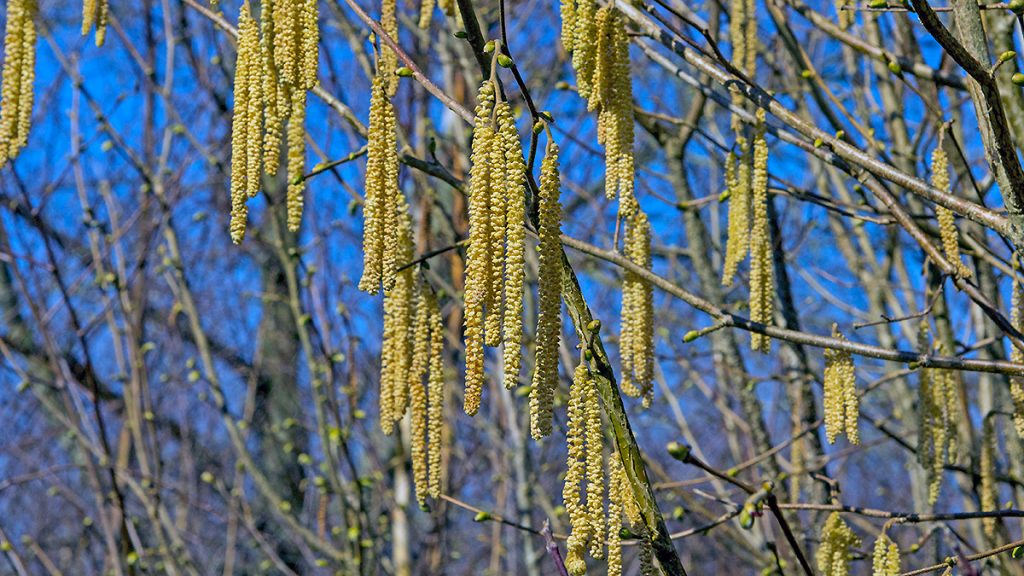
With the summer-like temperatures of the past few days I decided it was time for my first walk on Banstead Downs this year, up till now a little too soggy and muddy for decent walking. The only wildflowers yet to be seen are a few Dandelion (Taraxacum officinale) here and there. Gorse (Ulex europaeus) is starting to bloom, the Blackthorn (Prunus spinosa) is in full bloom and both Common Hazel (Corylus avellana) and Goat Willow/Sallow (Salix caprea) are resplendent with their catkins. The latter are attracting the early Western Honey Bee (Apis mellifera) in great numbers and the warm weather has brought dozens of Brimstone (Gonepteryx rhamni) butterflies out of hibernation. The Brimstone is one of a few butterflies that actually overwinters in the adult (imago) state. Most other butterflies spend the winter months as pupae and emerge as adults from their cocoons in spring. The only other butterflies seen were a single rather early Large White (Pieris brassicae) and a single Comma (Polygonia c-album).
![Lesser Celandine [Ficaria verna]](https://downsdiary.uk/wp-content/gallery/march-april_2025/IMG_1142_SX270_BansteadCommon_09Apr2016.jpg "Lesser Celandine [Ficaria verna]")
![Dandelion [Taraxacum officinale]](https://downsdiary.uk/wp-content/gallery/march-april_2025/IMG_2049_60D_BansteadCommon_10Apr2016.jpg "Dandelion [Taraxacum officinale]")
![Gorse [Ulex europaeus]](https://downsdiary.uk/wp-content/gallery/march-april_2025/IMG_2044_60D_BansteadCommon_10Apr2016.jpg "Gorse [Ulex europaeus]")
![Blackthorn [Prunus spinosa]](https://downsdiary.uk/wp-content/gallery/march-april_2025/IMG_2211_60D_FreedownLane03May2016.jpg "Blackthorn [Prunus spinosa]")
![Common Hazel [Corylus avellana]](https://downsdiary.uk/wp-content/gallery/march-april_2025/IMG_0191_60D_BansteadDowns_20Mar2025.jpg "Common Hazel [Corylus avellana]")
![Goat Willow [Salix caprea]](https://downsdiary.uk/wp-content/gallery/march-april_2025/IMG_0188_60D_BansteadDowns_20Mar2025.jpg "Goat Willow [Salix caprea]")
![Comma [Polygonia c-album]](https://downsdiary.uk/wp-content/gallery/march-april_2025/IMG_8100_60D_BansteadCommon_15May2020.jpg "Comma [Polygonia c-album]")
Nature note for the day
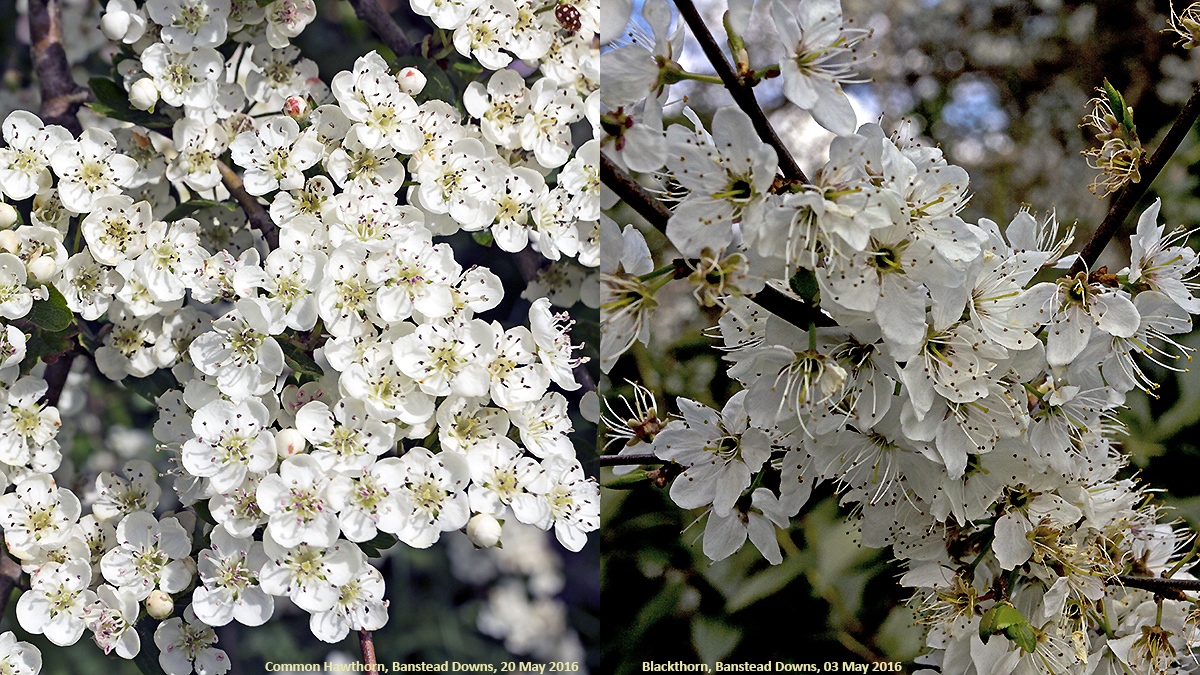
It is easy to confuse Blackthorn (Prunus spinosa) and Common Hawthorn (Crataegus monogyna) as superficially both produce masses of white blossom in spring. However, Blackthorn flowers appear much earlier than Hawthorn in March-April as compared with May for Hawthorn and also appear before the leaf buds open, whereas the leaves and flowers of the Hawthorn appear together.
The flowers themselves look similar with both having 5 white petals, but Hawthorn appears slightly creamy rather than pure white and overall the flowers look rounder and more compact. Once the leaves have appeared though it becomes more obvious which is which, as Hawthorn has lobed leaves with jagged edges and Blackthorn oval leaves with finely serrated edges.
For further information there is a very useful article by the Woodland Trust.
<<<< Previous page | Next page >>>>