As I mentioned on 1st July it is becoming a much more uncommon sight to see a Song Thush, but this morning I had a pair on the path ahead of me near the south-eastern corner.
There has been a major eruption of Chalkhill Blue (Lysandra coridon) butterflies. Particularly along the northern edge of the main grassland area it seems that with every step you take another Chalkhill Blue flies up.
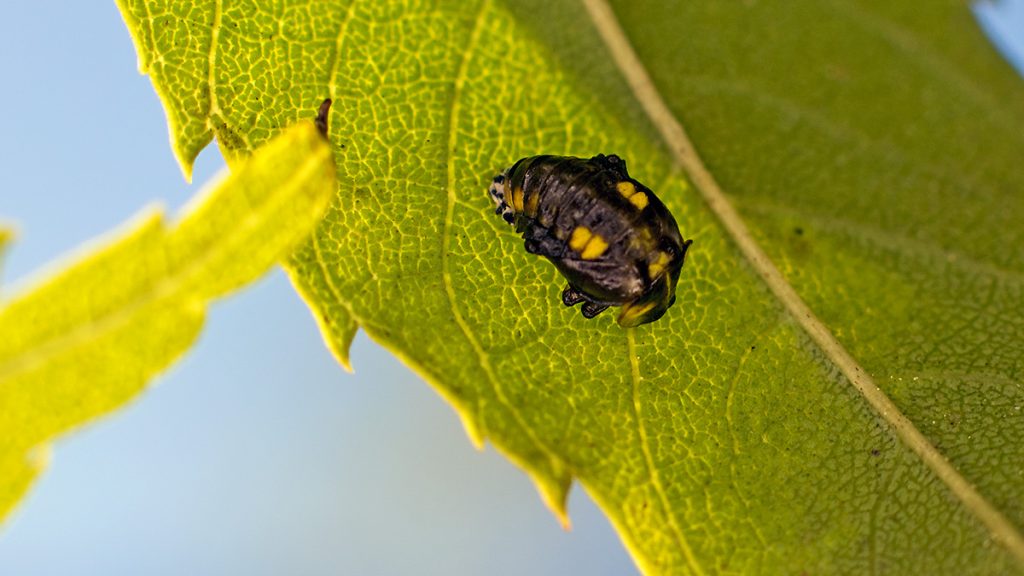
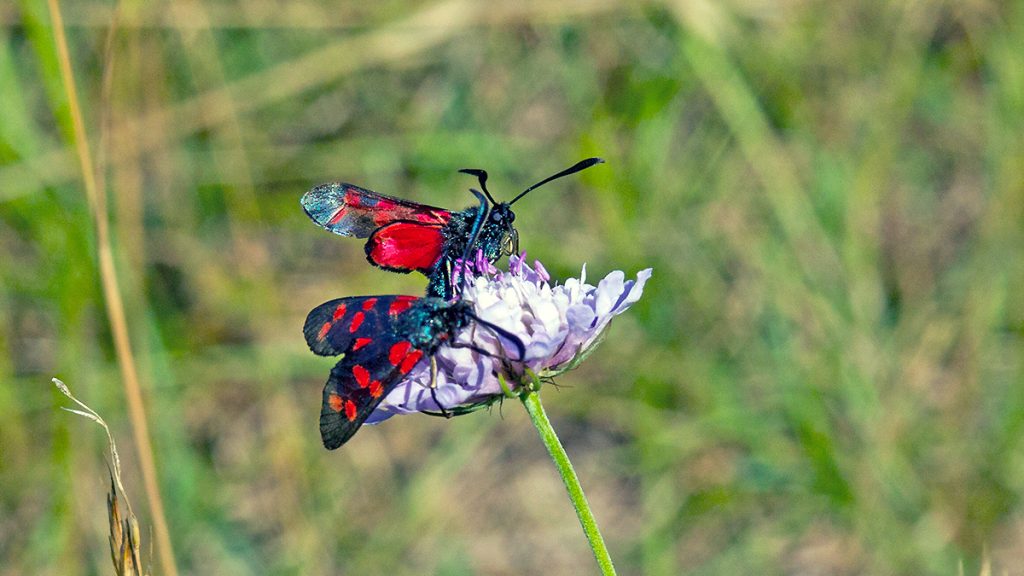
Chalkhill Blues were not the only insects in large numbers this morning as 7-spot ladybird (Coccinella septempunctata) were abundant on Hogweed and every other Small Scabious (Scabiosa columbaria) was occupied by a Six-spot Burnet (Zygaena filipendulae) moth.
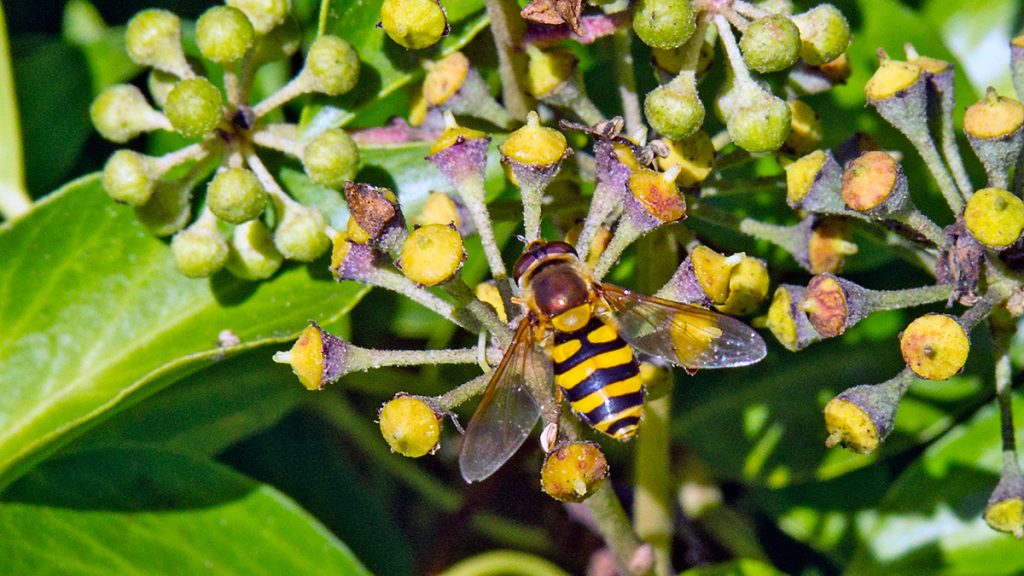
New insects added were Ladybird Fly (Gymnosoma rotundatum) that was quite abundant on one patch of Hogweed, a hoverfly, Black-tailed Aphideater (Eupeodes luniger), Yellow Swarming Fly (Thaumatomyia notata), a plant bug, Orthops campestris and a Trombididae sp. red velvet mite. The mite can only be categorised at family level, it could belong to one of several genera (I’d take a stab at Balaustium) and a multitude of species. It belies its name of mite as it is probably about 5 mm size.
![Chalkhill Blue [Lysandra coridon]](https://downsdiary.uk/wp-content/gallery/july_2025/NG8_2108_EOS-1D_TheDowns_11Jul2025.jpg "Chalkhill Blue [Lysandra coridon]")
![Chalkhill Blue [Lysandra coridon]](https://downsdiary.uk/wp-content/gallery/july_2025/NG8_2124_EOS-1D_TheDowns_11Jul2025.jpg "Chalkhill Blue [Lysandra coridon]")
![7-spot Ladybird [Coccinella septempunctata]](https://downsdiary.uk/wp-content/gallery/july_2025/NG8_2095_EOS-1D_TheDowns_11Jul2025.jpg "7-spot Ladybird [Coccinella septempunctata]")
![Six-spot Burnet [Zygaena filipendulae]](https://downsdiary.uk/wp-content/gallery/july_2025/NG8_2103_EOS-1D_TheDowns_11Jul2025.jpg "Six-spot Burnet [Zygaena filipendulae]")
![Six-spot Burnet [Zygaena filipendulae]](https://downsdiary.uk/wp-content/gallery/july_2025/NG8_2148_EOS-1D_TheDowns_11Jul2025.jpg "Six-spot Burnet [Zygaena filipendulae]")
![Ladybird Fly [Gymnosoma rotundatum]](https://downsdiary.uk/wp-content/gallery/july_2025/NG8_2075_EOS-1D_TheDowns_11Jul2025.jpg "Ladybird Fly [Gymnosoma rotundatum]")
![Black-tailed Aphideater [Eupeodes luniger]](https://downsdiary.uk/wp-content/gallery/july_2025/NG8_2074_EOS-1D_TheDowns_11Jul2025.jpg "Black-tailed Aphideater [Eupeodes luniger]")
![mirid bug [Orthops campestris]](https://downsdiary.uk/wp-content/gallery/july_2025/NG7_3272_EOS-1D_BansteadDowns_15Jul2021.jpg "mirid bug [Orthops campestris]")
![red velvet mite [Trombidiidae sp.]](https://downsdiary.uk/wp-content/gallery/july_2025/NG8_2169_EOS-1D_TheDowns_11Jul2025.jpg "red velvet mite [Trombidiidae sp.]")
Latest wildflowers are Betony (Betonica officinalis) and Garden Asparagus (Asparagus officinalis), while the early flowering Hogweed is now seeding.
![Betony [Betonica officinalis]](https://downsdiary.uk/wp-content/gallery/july_2025/NG8_2195_EOS-1D_TheDowns_11Jul2025.jpg "Betony [Betonica officinalis]")
<<<< Previous page | Next Page >>>>